
RAM 1500 & Dodge 5.7L Hemi Exhaust Manifold Bolt Snap: Cold-Start Ticking, Broken Stud Extraction & Remflex Fix Guide
Automotive Research, ASE Master Technicians & Fact-Checking
Direct Technical Summary
Forensic engineering analysis of chronic exhaust manifold bolt shearing and cylinder head warpage across RAM 1500, 2500, Dodge Charger, Challenger, and Durango (5.7L and 6.4L Hemi V8, 2009–2024). We break down thermal expansion mismatch, cold-start exhaust tick vs. lifter tap diagnosis, in-chassis template drill extraction, and the permanent Remflex graphite gasket and Grade 8 stud overhaul.
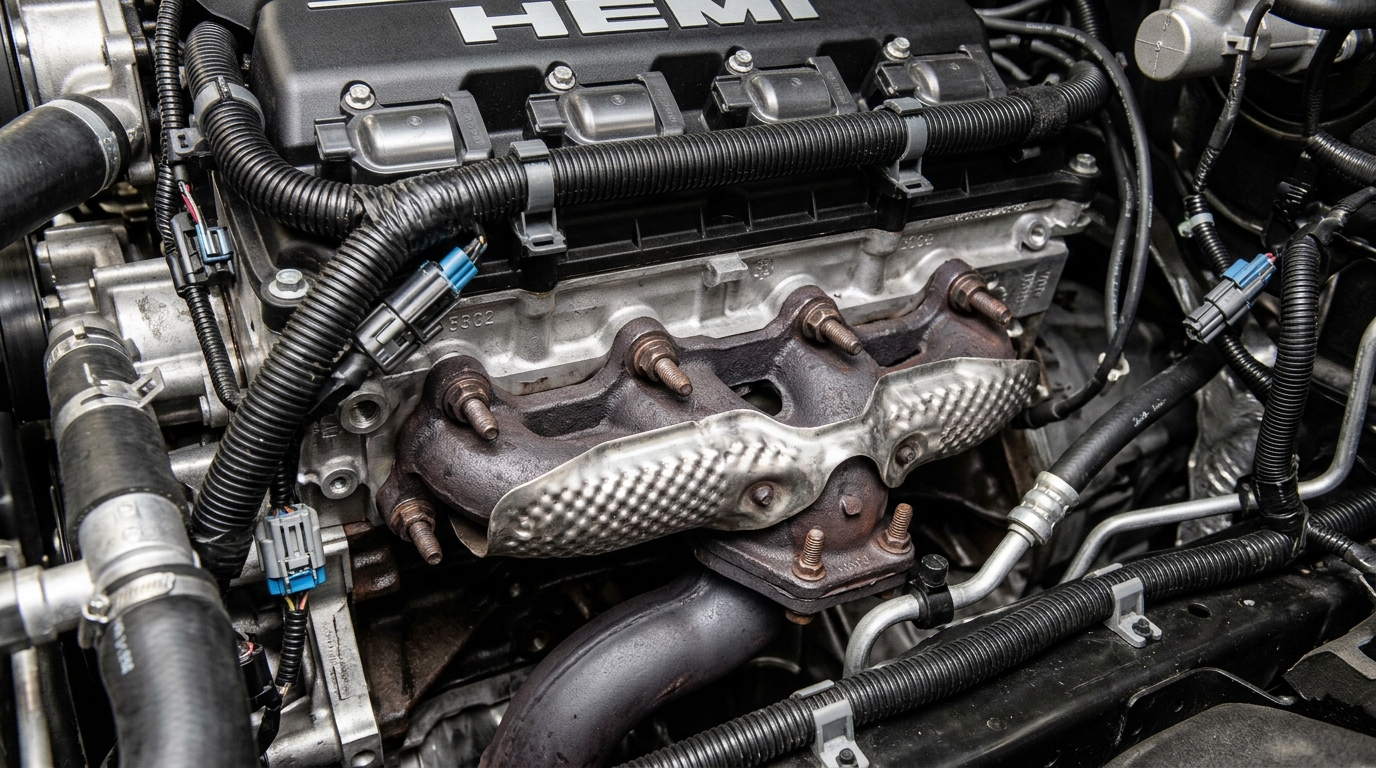
Every winter morning across North America, hundreds of thousands of RAM 1500, 2500, and 3500 pickup trucks—along with Dodge Charger R/T, Challenger R/T, Durango, and Jeep Grand Cherokee models equipped with the 5.7L or 6.4L Eagle / Apache Hemi V8—start up with a sharp, rhythmic, metallic tapping sound echoing from beneath the wheel wells: the notorious "Cold-Start Hemi Tick." While truck owners frequently panic assuming their roller lifters and camshaft have catastrophically failed, more than 75% of cold-start ticking cases on late-model Hemi V8s stem from a predictable, metallurgically guaranteed design flaw: snapped exhaust manifold bolts and warped cast iron flanges on cylinders 7 and 8.
The root cause is a fundamental thermal expansion mismatch. The Hemi uses lightweight A319-T7 aluminum alloy cylinder heads bolted to heavy gray cast iron exhaust manifolds. Aluminum expands at roughly 23 µm/m·K, while cast iron expands at only 11 µm/m·K—meaning the cylinder head expands and contracts at more than twice the rate of the manifold during every single operating cycle. Because the rear-most exhaust ports (cylinders 7 and 8 on the passenger side, cylinders 5 and 7 on the driver side) endure the highest cumulative thermal gradient, the factory M8x1.25 Grade 5 carbon steel bolts are subjected to intense cyclical bending shear. Eventually, metal fatigue causes the bolt heads to sheer clean off, leaving threaded stubs flush with or recessed inside the aluminum head. Exhaust gas blasts through the blown multi-layer steel (MLS) gasket, producing the telltale tick until thermal expansion temporarily seals the gap after 2 to 3 minutes of idle.
Based on official Stellantis technical bulletins (TSB 09-001-14, TSB 11-002-17, Star Case S1409000004), metallurgical thermal imaging, and master dealership technician teardowns, AutoZonic delivers the comprehensive forensic diagnosis to distinguish exhaust tick from camshaft wipeout, in-chassis bolt extraction procedures without dropping the cylinder head, and the permanent Remflex 100% compressible graphite gasket and Grade 8 / stainless stud installation that stops the failure cycle permanently.
i Quick Engineering Summary: RAM & Dodge Hemi Exhaust Manifold Failure Profile
Affected Vehicles: 2009–2024 RAM 1500, 2500, 3500; 2011–2023 Dodge Charger, Challenger, Durango; Jeep Grand Cherokee (5.7L / 6.4L Hemi V8).
Primary Failure Mode: Sheared M8x1.25 manifold mounting bolts flush in cylinder head due to 2:1 aluminum-to-cast iron thermal expansion differential.
Most Vulnerable Locations: Rear cylinder 7 & 8 on passenger side (Bank 1/2 rear); cylinder 5 & 7 on driver side.
Diagnostic Symptoms: Loud ticking on cold start that fades after 90–180 seconds; fuel smell in cabin; black carbon soot on heat shield; DTC P0420/P0430 or P0171/P0174.
Average Mileage Window: 45,000 – 85,000 miles (accelerated by heavy towing, plowing, and sub-freezing climates).
Permanent Fix: In-chassis drill jig extraction + Remflex 100% flexible graphite gaskets + Grade 8 / Inconel studs with prevailing-torque lock nuts.
Forensic Metallurgy: Why the 5.7L Hemi Exhaust Bolts Snap
To understand why replacing broken factory bolts with new OEM bolts results in repeat failure every 40,000 to 60,000 miles, one must analyze the physical forces acting upon the Hemi cylinder head during engine warm-up. In an internal combustion engine, exhaust gas temperatures (EGT) exiting the combustion chamber reach 1,200°F to 1,450°F (650°C to 790°C) under moderate load.
When you start a cold Hemi V8 at 20°F (-7°C), the components expand along their longitudinal axis from front to rear:
- The Thermal Coefficient Gap: The aluminum cylinder head expands at approximately 23 × 10-6 m/(m·K), whereas the thick cast iron exhaust manifold expands at only 11 × 10-6 m/(m·K). Over the 20-inch length of the Hemi cylinder head, the aluminum expands almost 0.040 inches (1.0 mm) more than the iron manifold bolted directly to it.
- Longitudinal Shear at Rear Cylinders: The front bolts on cylinders 1 and 2 act as the mechanical anchor. As heat builds, the differential expansion creates cumulative lateral shearing force that multiplies as you move rearward toward cylinders 7 and 8. The rear bolts are physically bent sideways by thousands of pounds of hydraulic thermal expansion force.
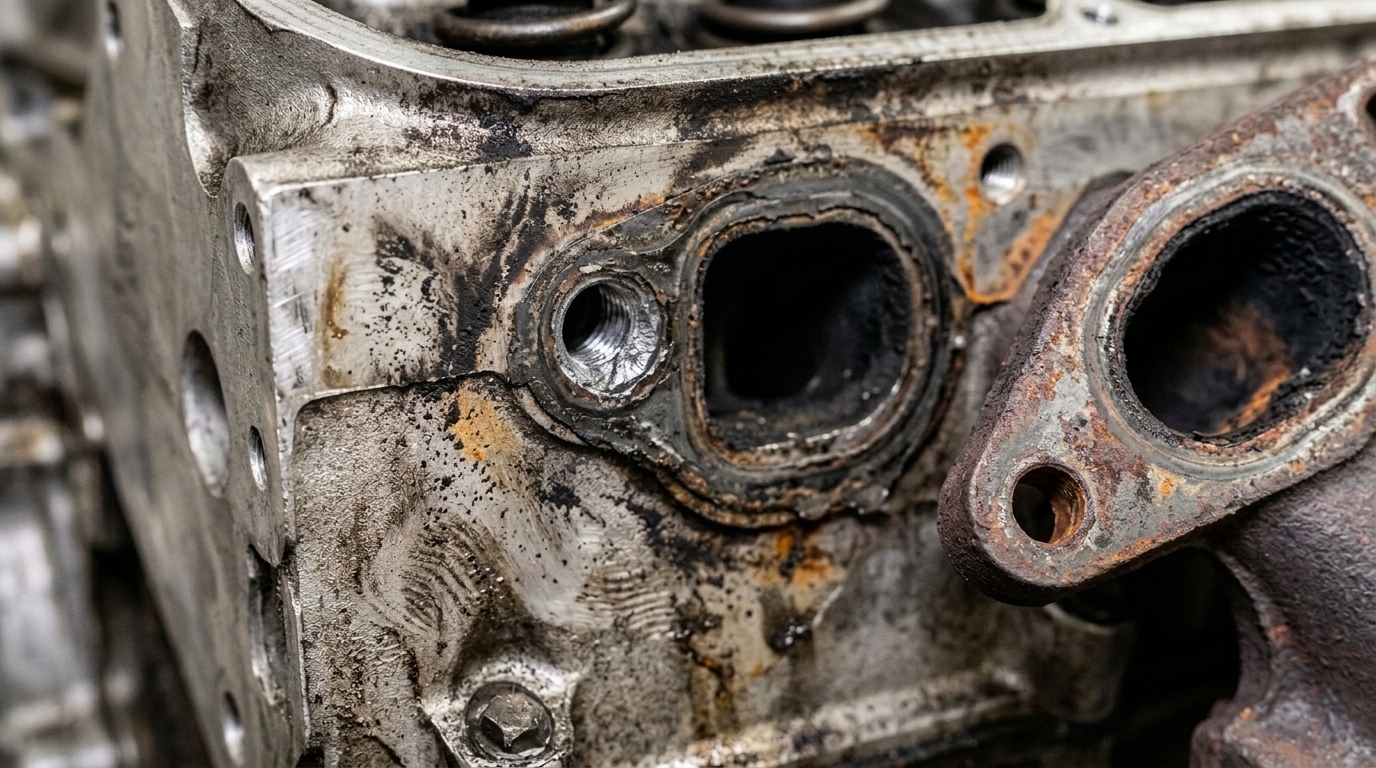
- Bending Fatigue & Flange Warpage: Factory M8x1.25 bolts are standard Grade 5 carbon steel with limited tensile elasticity. Repeated thermal cycling causes low-cycle thermal fatigue. Simultaneously, the cast iron manifold experiences internal stress relief, warping into a permanent "banana" bow—often lifting up to 1/16-inch (0.0625") off the cylinder head surface at the rear corners. When the bolt exceeds its yield strength, the head snaps off right at the first thread engagement inside the aluminum cylinder head.
Diagnostic Matrix: Exhaust Manifold Tick vs. Lifter/Camshaft Tap
The single greatest anxiety for any 5.7L or 6.4L Hemi owner is differentiating between an inexpensive exhaust manifold leak ($150–$300 DIY) and catastrophic MDS roller lifter / camshaft failure ($3,500–$5,500 engine teardown). Because both produce a rhythmic tapping sound, shops often misdiagnose or exploit truck owners. Use this forensic comparison protocol:
| Diagnostic Parameter | Exhaust Manifold Leak (Snapped Bolt) | Roller Lifter / Wiped Cam Lobe Failure |
|---|---|---|
| Cold-Start Behavior | Loud, sharp ticking immediately on cold startup (first 10 seconds). | Metallic click or tapping; often quiet initially until oil warms and thins. |
| Warm Engine Behavior (Operating Temp) | Completely disappears or fades by 80% after 2–3 minutes as manifold expands. | PERSISTS permanently. Does NOT quiet down when engine reaches 200°F (93°C). |
| Sound Frequency & Pitch | Puffing/snapping tick like an intense air compressor leak or playing card in spokes. | Hard, heavy metallic steel-on-steel clack or sewing machine tap from valvetrain. |
| Visual Inspection Under Wheel Well | Black carbon soot streaks around heat shield; loose/wiggly heat shield tabs on rear bolts. | Exhaust area clean. Noise radiates through valve covers and upper intake manifold. |
| OBD-II Fault Codes (DTC) | P0420 / P0430 (Catalyst Efficiency), P0171 / P0174 (Lean Bank 1/2 from false O2 air draw). | P0300 (Random Misfire) or specific cylinder P0301, P0303, P0305, P0307 under load. |
| Oil Filter Pleat Cut Inspection | 100% clean oil. Zero magnetic steel or copper flakes in pleats. | Dense silver glitter and needle-like shavings from pulverized cam lobe. |
⚠️ Master Technician Field Warning: The Heat Shield Finger Test
Before spending hundreds on diagnostic fees, let the engine sit overnight until completely cold. Reach through the front wheel well opening (past the rubber splash shield) and grab the rear edges of the aluminum heat shield bolted to the exhaust manifold on cylinders 7 and 8. If the heat shield moves freely, rattles, or you can physically pull a severed bolt head and spacer out with your fingers, your manifold bolts are snapped. Never perform this test on a warm engine—exhaust manifolds reach over 500°F within 60 seconds.
In-Chassis Extraction: Removing Broken Bolts Without Pulling the Cylinder Head
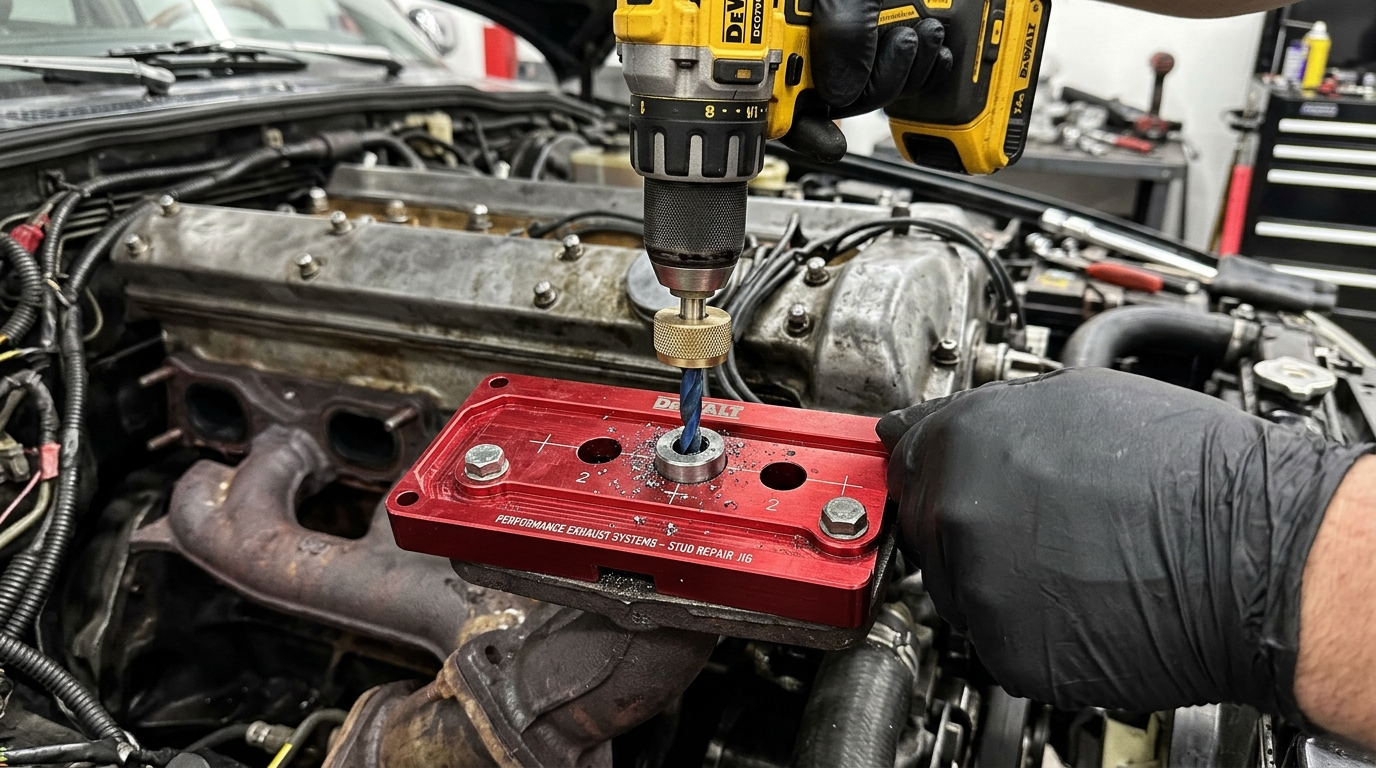
When a dealership quotes $1,800 to $2,500 to repair Hemi exhaust manifolds, the labor estimate typically assumes either pulling the entire engine or dropping the cylinder heads to extract the broken studs on a drill press. In reality, master diesel and truck technicians complete this repair directly inside the chassis through the front wheel arch using precision alignment template jigs.
Step-by-Step Extraction Protocol:
- Access Clearance: Jack up the front axle, secure on heavy-duty jack stands, remove the front wheel, and unclip the inner plastic fender liner (8mm screws and plastic push pins). On the driver side, unbolt the steering intermediate shaft coupler (13mm pinch bolt) and slide it aside to gain direct line-of-sight to cylinders 5 and 7.
- Flange Removal: Spray all remaining intact manifold nuts with high-penetration lubricant (Kroil or PB Blaster). Remove the two 15mm exhaust flange collector bolts connecting the manifold to the catalytic converter downpipe. Back out all remaining manifold bolts using a 10mm socket. Slide the manifold and heat shield out through the fender well.
- Expose the Sheared Studs: Inspect the cylinder head. In 90% of cases, the rear upper bolt on cylinder 8 and the lower bolt on cylinder 7 have snapped flush or slightly below the deck surface.
- Mount the Alignment Drill Template: Never attempt to freehand drill a broken steel bolt out of an aluminum cylinder head. The hard steel drill bit will inevitably wander off-center into the soft aluminum, destroying the head threads. Bolt a precision template guide plate (such as the Pro-MAXX or Craigsford Hemi jig) to adjacent undamaged threaded holes.
- Precision Drilling: Insert the hardened guide bushing. Using a left-handed cobalt drill bit (1/8-inch pilot followed by 3/16-inch) on a right-angle drill set to low speed with cutting fluid, drill directly down the center axis of the bolt. In many cases, the counter-clockwise rotation and friction of the left-handed bit will back the broken stud right out of the threads.
- Spiral Extractor Engagement: If the stud remains seated, tap a heavy-duty spiral flute or multi-spline extractor into the centered bore. Apply gentle, steady counter-clockwise torque with a tap handle to back the remaining threaded shank out of the cylinder head. Run an M8x1.25 thread chaser through the hole to remove carbon debris.
⚠️ Critical Workshop Caveat: The Water Jacket Breach Risk
The threaded M8 holes on the 5.7L and 6.4L Hemi cylinder heads are "blind" holes with approximately 0.75 inches (19 mm) of thread depth before reaching the internal engine coolant jacket. If you drill deeper than 0.65 inches without a calibrated depth-stop collar, you will punch directly into the pressurized cooling system, turning a simple bolt extraction into an emergency cylinder head replacement or high-risk thread sealant patch.
The Permanent Cure: Why Remflex Graphite Gaskets End the Warpage Cycle
If you take your warped factory cast iron exhaust manifold, bolt it back up with a new OEM stamped-steel multi-layer (MLS) gasket and new factory Grade 5 bolts, the bolts will snap again within 30,000 to 50,000 miles. The iron manifold has already heat-cycled into a permanent bow, and the factory MLS gasket requires perfectly flat surfaces (less than 0.002" warpage) to seal.
To permanently solve the Hemi exhaust tick without buying expensive aftermarket headers, you must implement two critical mechanical upgrades:
1. Remflex 100% Flexible Graphite Gaskets
Unlike OEM multi-layer steel gaskets that cannot conform to warped cast iron, Remflex gaskets are manufactured from 100% flexible graphite with no rubber binders. Measuring 1/8-inch thick, they compress up to 50% under standard torque, filling surface gaps up to 1/16-inch (0.0625"). Remflex gaskets withstand continuous temperatures up to 3,000°F (1,650°C)—far exceeding Hemi exhaust gas temperatures—and never shrink, harden, or blow out.
2. Grade 8 / Stainless Stud & Lock Nut Conversion
Discard factory Grade 5 M8 bolts. Upgrade to high-tensile Grade 8 zinc-plated or 316 stainless steel studs paired with copper-coated prevailing-torque lock nuts. Studs thread permanently into the aluminum cylinder head, transferring all shear and tension clamping force to the outer nut threads. This eliminates friction wear on the delicate aluminum cylinder head threads and provides superior elasticity under differential thermal expansion.
Eliminating cylinder 7 & 8 exhaust manifold warpage leaks and diagnosing real-time fuel trim imbalances (STFT / LTFT) requires professional-grade hardware and OBD-II telemetry:
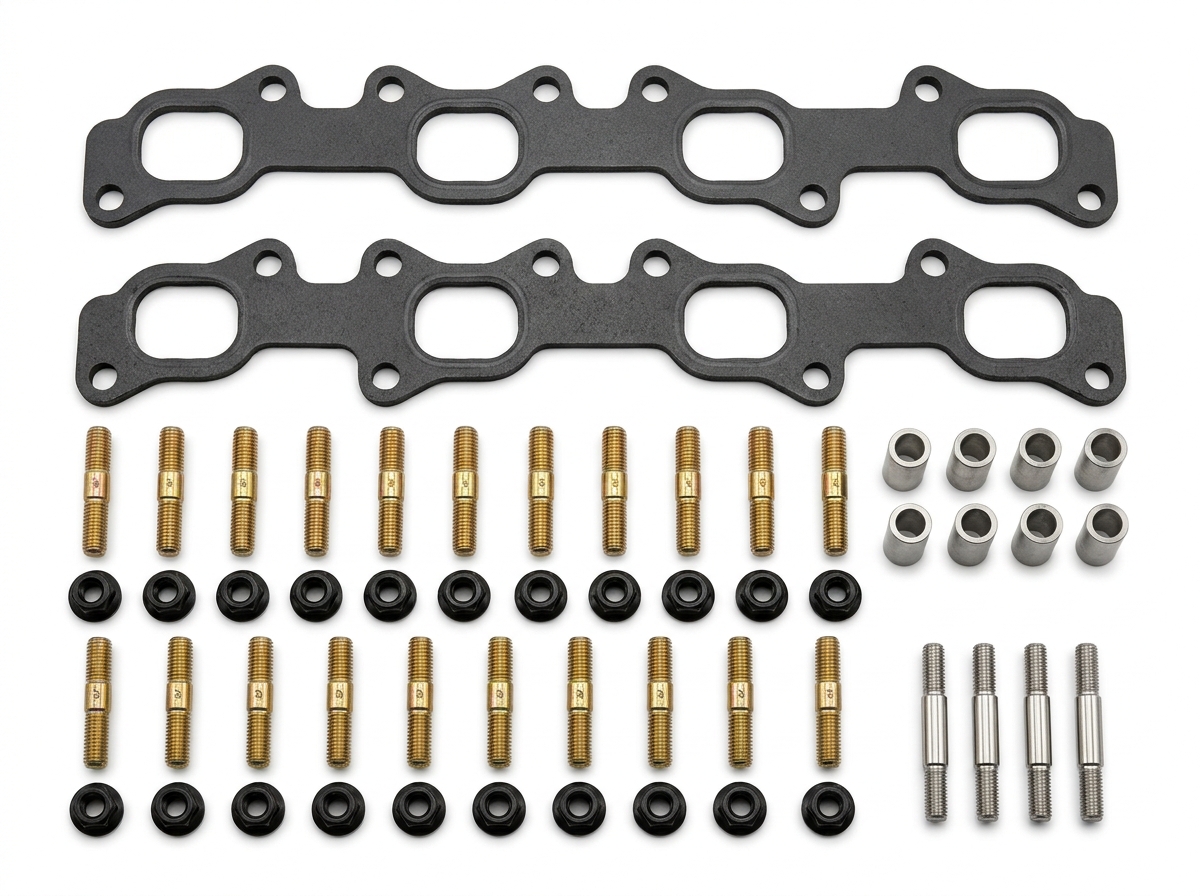
RAM 1500 & Dodge 5.7L Hemi Heavy-Duty Exhaust Manifold Bolt & Remflex Graphite Gasket Kit
Eliminates Cylinder 7 & 8 Bolt Shearing • 100% Flexible Compressible Graphite
- ✓Grade 8 High-Tensile Stainless Hardware: Withstands 3,000°F thermal cycles without stretching, snapping, or seizing in aluminum heads.
- ✓Remflex 100% Flexible Graphite: Compresses up to 50% to fill 1/16-inch manifold warpage and eliminate cold-start tick forever.
- ✓Complete Cylinder 7 & 8 Kit: Includes all 9 studs, prevailing-torque lock nuts, and factory heat shield standoffs.

BlueDriver Bluetooth Pro OBD-II Diagnostic Scan Tool
Technician Recommended for Enhanced OEM PIDs
- ✓Enhanced Diagnostics: Reads proprietary manufacturer ABS, Airbag, transmission, and body codes.
- ✓Real-Time Telemetry: Graph live oil pressure, coolant temp (ECT), and cam phaser angular deviation.
- ✓Wireless Bluetooth: Full iOS & Android integration with zero monthly subscription fees.
Torque Sequence & Factory Specifications
Proper torque sequencing is essential to allow the exhaust manifold to settle flat against the cylinder head without inducing artificial mechanical binding. Always tighten from the center cylinders outward toward the front and rear:
| Pass / Step | Specification (Torque) | Sequence Order | Technical Notes |
|---|---|---|---|
| Pass 1: Snug | 10 ft-lbs (13.5 Nm) | Center bolts (Cyl 3/5 on driver; Cyl 4/6 on passenger) | Pull manifold flat against head; do not over-compress gasket. |
| Pass 2: Final Torque | 18 ft-lbs (25 Nm) | Spiral outward: Center ➡️ Front (1/2) ➡️ Rear (7/8) | Do NOT exceed 18 ft-lbs with Remflex graphite gaskets (they seal at lower torque). |
| Heat Shield Bolts | 8 ft-lbs (11 Nm) | Outer standoffs | Secure aluminum shield over manifold to protect spark plug boots. |
| Exhaust Flange Collector | 25 ft-lbs (34 Nm) | Dual lower flange bolts | Apply anti-seize paste to flange collector threads. |
Long-Term Ownership Checklist: Preventing Repeat Hemi Ticks
By executing this permanent repair, you eliminate the single most common maintenance headache on the 5.7L and 6.4L Hemi platform. Follow these best practices to ensure your exhaust system remains whisper-quiet for the life of your truck:
- Skip the OEM MLS Gaskets: Standard multi-layer steel gaskets cannot flex with a warped manifold. Always insist on 100% compressible graphite gaskets (Remflex).
- Check Manifold Planarity: Place a precision machinist straight edge across the four exhaust ports of your removed manifold. If a 0.010" feeler gauge slides under the straight edge at cylinders 7 or 8, have a machine shop mill the flange flat ($40–$60) or install a quality replacement manifold before bolting it back up.
- Verify O2 Sensor Telemetry Post-Repair: After completing the repair, clear all OBD codes with your diagnostic scan tool. Monitor live Short Term Fuel Trim (STFT) and Long Term Fuel Trim (LTFT) on Bank 1 and Bank 2. Eliminating the exhaust leak will prevent atmospheric air from skewing the upstream oxygen sensor readings, restoring optimal air-fuel ratios and improving fuel economy by 1 to 2 MPG.
Researching this vehicle or comparing used inventory?
Always cross-reference factory service bulletins, verify warranty coverage, and compare dealer financing rates or insurance quotes before purchasing.
Reader Feedback
Was this technical guide helpful?
Your verification vote informs our ongoing automotive research schedule.