
Subaru Boxer Head Gasket Failure: EJ25 & FB25 Oil Leaks, Coolant Overheating & Permanent MLS Repair Guide
Automotive Research, ASE Master Technicians & Fact-Checking
Direct Technical Summary
Diagnose the chronic head gasket failure and oil consumption across Subaru Outback, Forester, Crosstrek, and Impreza (EJ25 & FB25). We dissect graphite delamination, low-tension ring sticking, block deck flatness tolerances (0.002 in), and the mandatory 6-step torque sequence with Multi-Layer Steel (MLS) gaskets.
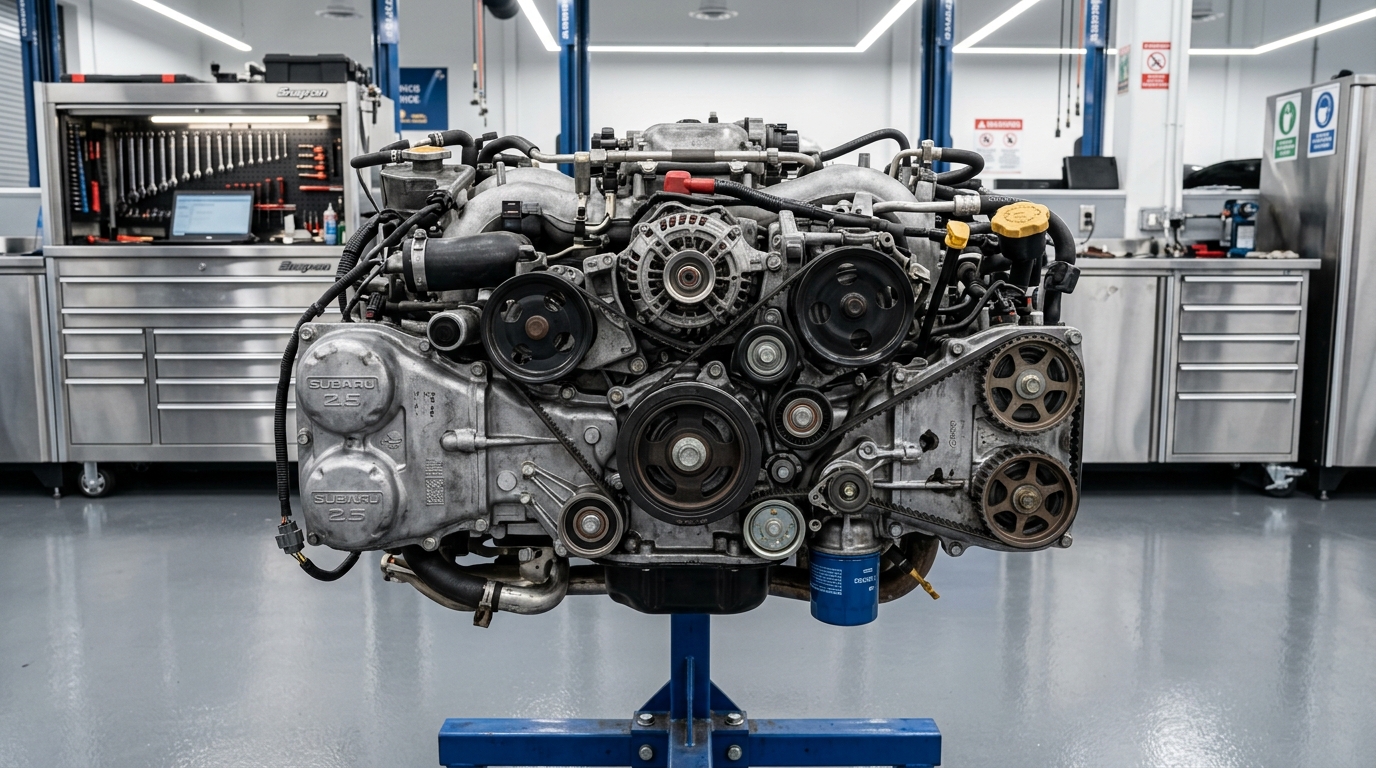
Across North America, more than eight million vehicles—including the Subaru Outback, Forester, Legacy, Impreza, and Crosstrek—are powered by Subaru's iconic 2.5-liter horizontally-opposed 4-cylinder Boxer engine (EJ25 & FB25 series). Revered for an exceptionally low center of gravity and symmetrical all-wheel-drive balance, the Subaru Boxer engine harbors the most widely discussed, recurring valvetrain failure mode in modern import automotive history: Chronic Cylinder Head Gasket Failure and Severe Oil Consumption.
Unlike traditional inline or V-configured engines where gravity allows oil and coolant to drain downward away from cylinder head sealing surfaces when parked, a Boxer engine places its cylinders completely flat at 180 degrees. Engine oil and acidic ethylene-glycol coolant pool continuously against the lower head gasket seams 24 hours a day, 365 days a year. On naturally aspirated EJ25 engines (EJ25D, EJ251, EJ252, EJ253), the factory-installed single-layer composite gaskets inevitably suffer from graphite coating delamination between 90,000 and 130,000 miles, manifesting as external oil weeping or sudden pressurized exhaust gas intrusion into the radiator overflow bottle. Dealerships routinely charge $2,200 to $3,200 for engine-out reseals.
Furthermore, on the newer timing-chain FB25 engine generation (2011–2018), low-tension oil control rings frequently carbon-pack into their piston grooves, resulting in oil burn rates exceeding one quart per 1,000 miles and prompting nationwide class-action lawsuits and official factory remediation bulletins (Subaru TSB 02-157-14R). Based on official Subaru technical service bulletins, SAE thermal expansion engineering data, and master-technician engine overhauls, AutoZonic delivers the definitive forensic diagnostic and permanent repair manual for Subaru Boxer engines.
Quick Workshop Diagnostic: Subaru Boxer Gasket Failure at a Glance
- Affected Powertrains: Subaru 2.5L SOHC/DOHC
EJ25(1996–2012 Outback, Forester, Legacy, Impreza, Baja) andFB25(2011–2018 Forester, 2013–2018 Outback/Legacy). - Phase I vs. Phase II Failure Modes: Early Phase I DOHC engines (EJ25D) suffer internal combustion-to-coolant leaks (pressurized overheating and blown overflow tanks); Phase II SOHC engines (EJ251/EJ253) suffer external leaks (oil weeping from the lower rear cylinder head seams and dried green/blue crust).
- Root Cause Mechanism: Differential thermal expansion rates between the open-deck aluminum block and cylinder heads scrub the fragile single-layer graphite-coated gasket back and forth. Combined with pooled acidic coolant, the coating dissolves and blows out.
- Official Subaru Technical Bulletins: TSB 02-157-14R (Oil Consumption Test & Short Block Replacement Procedure); TSB 02-160-15 (Surface Roughness Ra & Flatness Guidelines).
- The Permanent Mechanical Solution: Discard OEM composite gaskets; install Multi-Layer Steel (MLS) Head Gaskets (Subaru OEM Turbo Gasket
11044AA642, Six-Star, or Fel-Pro PermaTorque MLS) with verified deck flatness within 0.002 inches (0.05 mm).
1. The Forensic Chemistry: Why Do Subaru Head Gaskets Fail?
To understand why Subaru Boxer head gaskets fail while other Japanese 4-cylinders run for 300,000 miles on original gaskets, one must examine the intersection of thermal scrub, open-deck block physics, and chemical breakdown.
In the naturally aspirated EJ25, Subaru employed an "open deck" aluminum cylinder block design where the tops of the cylinder liners stand unsupported by the outer casing wall. When the engine accelerates, the combustion pressures cause the cylinder barrels to microscopically flex and shift. Simultaneously, the cylinder head and the block expand at slightly different thermal rates during warmup. This generates a continuous microscopic scrubbing motion across the head gasket mating surface—a phenomenon known in engineering as thermal shear.
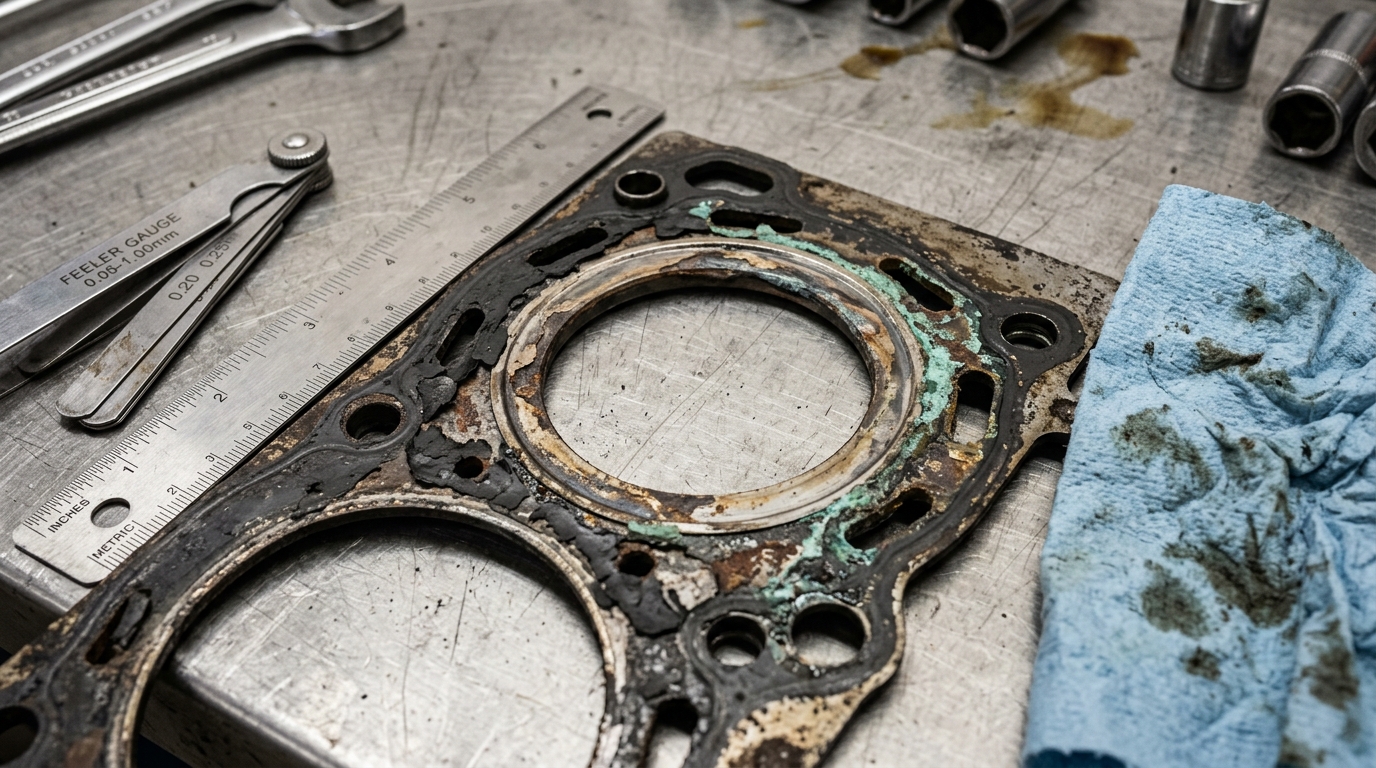
Compounding this mechanical shear, Subaru's original factory head gasket was manufactured from a single steel core coated with a thin layer of carbon-graphite elastomer. As coolant ages beyond 30,000 miles, its corrosion inhibitors deplete, turning the fluid mildly acidic (pH dropping below 7.0). In an upright inline engine, coolant drains out of the head ports when the engine cools. In a Boxer engine, acidic coolant permanently pools directly against the lowest head gasket ports. Over 7 to 10 years of daily thermal cycles, the acidic coolant dissolves the graphite coating, scrubbing it away until raw coolant and oil breach the outer seam.
2. Live Diagnostic Protocol: Internal Combustion Leaks vs. External Weeping
Diagnosing a Subaru head gasket failure requires distinguishing between the two distinct mechanical manifestations:
| Diagnostic Inspection Parameter | Phase I Internal Breach (EJ25D) | Phase II External Seep (EJ251 / EJ253) |
|---|---|---|
| Primary Visual Symptom | Coolant reservoir tank boiling over / vomiting coolant while driving; radiator low on fluid. | Black oil drops dripping onto the hot exhaust crossover pipe; dried crusty blue/green coolant residue along cylinder head bottom seam. |
| Chemical Combustion Gas Test (Block Tester) | Blue bromothymol chemical test fluid turns bright yellow within 60 seconds of idling over radiator neck. | Test fluid stays blue (combustion seal remains intact; only outer oil/water transfer ports are leaking). |
| Cabin Heater Core Behavior | Heater blows freezing cold air at idle, then suddenly turns warm when engine is revved (exhaust gas pocket airlocks the heater core). | Normal heat operation; steady temperature output. |
| Associated Diagnostic Codes | P0300, P0301–P0304 (Cylinder misfires caused by coolant fouling spark plugs upon cold start). |
Often zero check engine codes stored; purely hydraulic external leakage. |
⚠️ Workshop Field Note: The "Subaru Coolant Conditioner" Myth
In response to early external leaks, Subaru introduced OEM Cooling System Conditioner (Part SOA635071, actually Holts Radweld stop-leak). While this additive was poured into radiators during factory recall campaigns (Campaign WXW-80) to seal microscopic external seeps, it is merely a temporary chemical band-aid. It does nothing to repair torn graphite coatings or internal combustion chamber breaches, and over-application can plug the vehicle's miniature heater core passages.
3. The Permanent Engineering Solution: Multi-Layer Steel (MLS) Upgrades
The secret that elite Subaru specialty shops have known for two decades is simple: Subaru turbocharged engines (WRX, STI, XT models) rarely suffer from head gasket failures. Why? Because from the factory, Subaru equipped turbo models with Multi-Layer Steel (MLS) gaskets constructed from three full spring-steel layers coated with high-temperature Viton fluoropolymer.
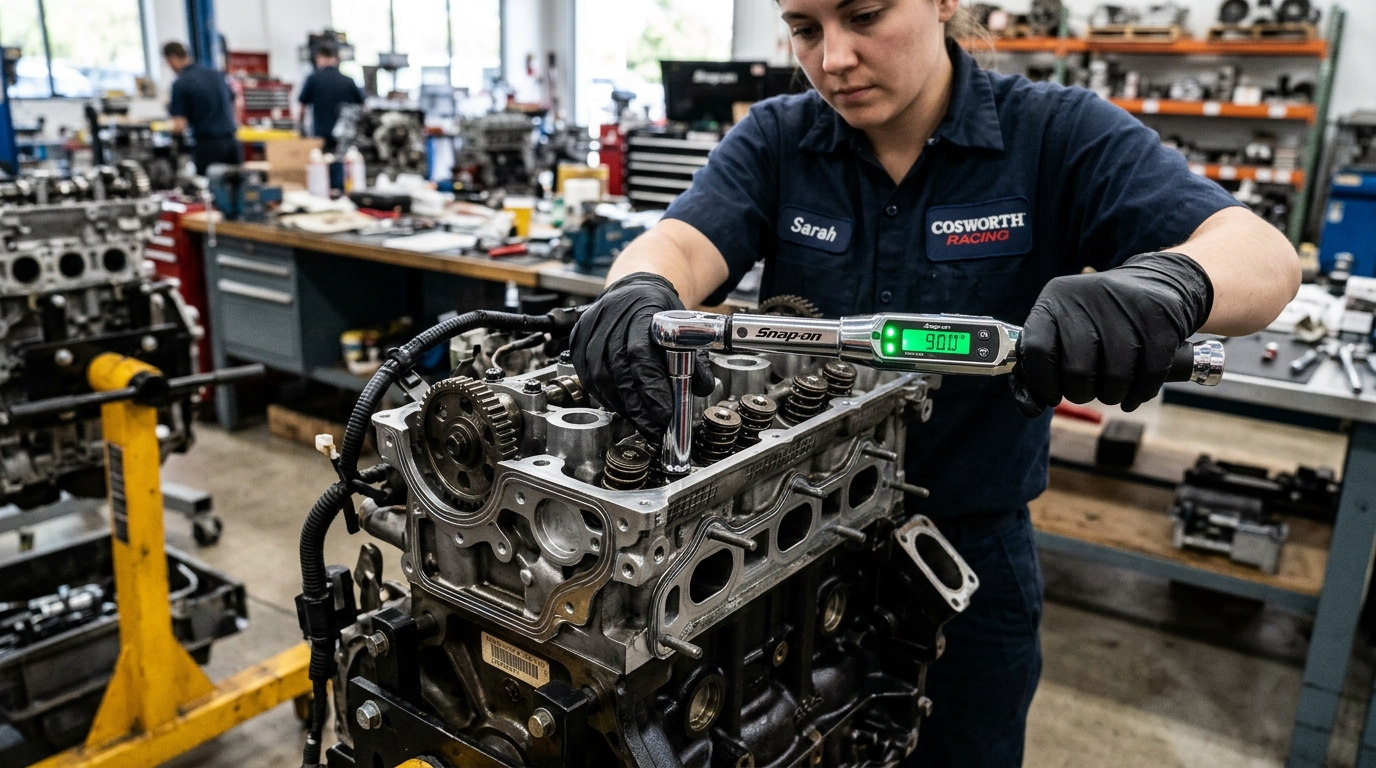
Critical Step-by-Step Overhaul Guidelines
- Pull the Engine (Do Not Attempt In-Car Reseal): While some DIYers attempt to squeeze cylinder heads off with the engine inside the bay, achieving the mandatory 30–50 Ra micro-inch surface finish and precise torque angle steps in the tight frame rails is virtually impossible. Dropping the bellhousing bolts and pulling an EJ engine takes an experienced mechanic under two hours.
- Precision Block & Head Deck Resurfacing: Place a precision machinist straight edge across the block deck and cylinder head. Maximum allowable warpage is strictly 0.002 inches (0.05 mm). If a 0.002" feeler gauge slips under the straight edge at any point, the cylinder heads must be milled at an automotive machine shop.
- Select the Correct MLS Gasket: Discard all standard aftermarket composite gaskets. For SOHC EJ251/EJ253 engines, install the genuine Subaru OEM MLS Turbo Gasket (Part 11044AA642) or the legendary Six-Star MLS Gasket Kit. The triple-layer stainless construction withstands thermal shear and never degrades in acidic coolant.
- Execute the Mandatory OEM 6-Step Torque Sequence: Clean bolt threads meticulously and lubricate washers with clean engine oil. Follow Subaru's specific non-linear sequence:
- Step 1: Torque all bolts in criss-cross order to 29 N·m (22 lb-ft).
- Step 2: Torque all bolts in order to 69 N·m (51 lb-ft).
- Step 3: Back off all bolts 180 degrees in reverse order.
- Step 4: Back off all bolts another 180 degrees (completely loose).
- Step 5: Re-torque center bolts (1 & 2) to 42 N·m (31 lb-ft); torque outer bolts (3, 4, 5, 6) to 15 N·m (11 lb-ft).
- Step 6: Rotate all bolts in sequence clockwise 90 degrees, then rotate all bolts an additional 90 degrees (180° total final stretch).
Accurately monitoring thermal cooling trends, identifying pending misfires, and inspecting oil filter pleats for bottom-end starvation debris requires dedicated diagnostic hardware:

BlueDriver Bluetooth Pro OBD-II Diagnostic Scan Tool
Technician Recommended for Enhanced OEM PIDs
- ✓Enhanced Diagnostics: Reads proprietary manufacturer ABS, Airbag, transmission, and body codes.
- ✓Real-Time Telemetry: Graph live oil pressure, coolant temp (ECT), and cam phaser angular deviation.
- ✓Wireless Bluetooth: Full iOS & Android integration with zero monthly subscription fees.
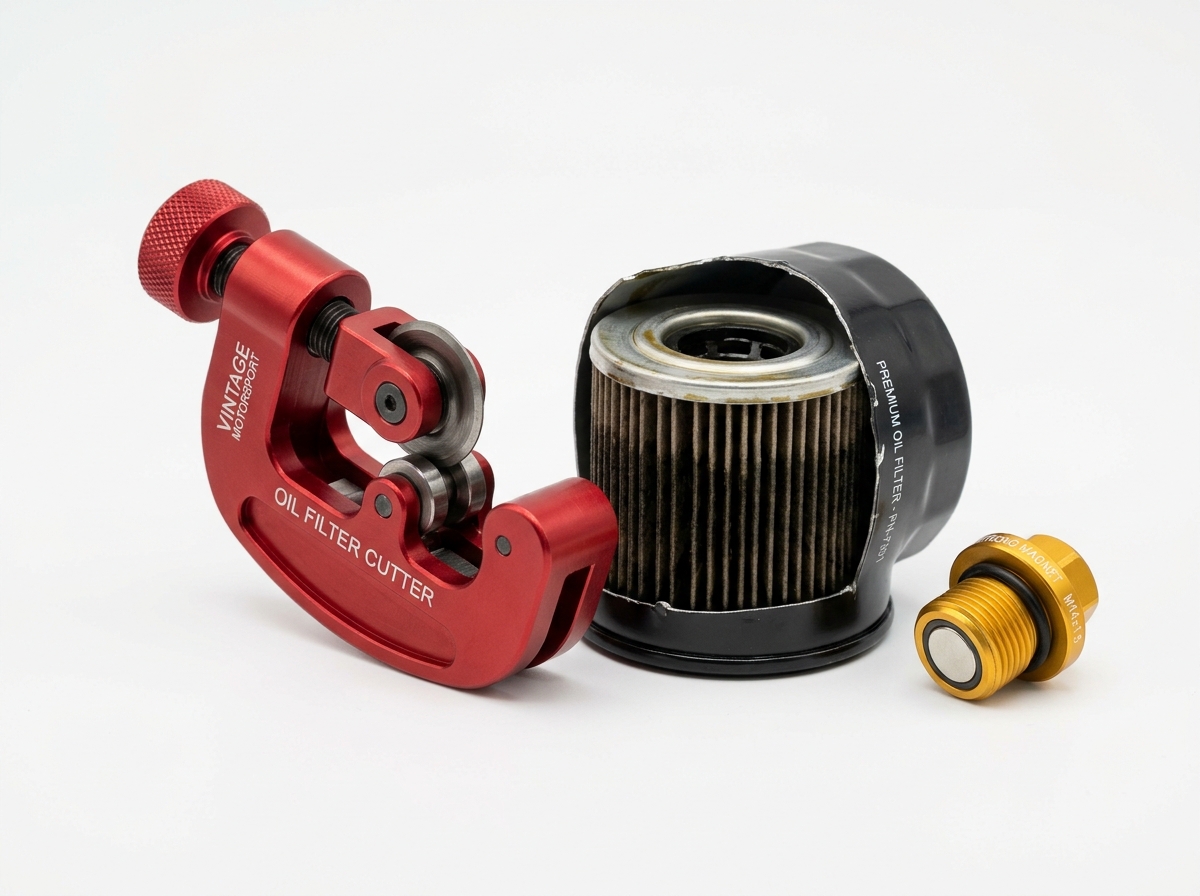
Billet Aluminum Oil Filter Inspection Cutter Tool
Early Metal Swarf & Bearing Flake Detection
- ✓Clean Billet Cutting: Hardened roller bearings slice filter canister without creating metal filings.
- ✓Irrefutable Dealer Proof: Microscopic inspection of paper pleats for copper/bronze bearing flakes.
- ✓Universal Fitment: Accommodates spin-on and cartridge filters from 2-3/8" to 5" diameter.
4. The FB25 Generation (2011–2018): Severe Oil Consumption Protocol
When Subaru transitioned from the EJ to the third-generation FB25 Boxer engine (featuring timing chains instead of rubber belts), the classic head gasket graphite failure was cured by factory-installed MLS gaskets. However, a new, equally pervasive mechanical defect emerged: Catastrophic Oil Consumption.
To reduce internal mechanical friction and achieve federal EPA fuel economy targets, Subaru engineered the FB25 with ultra-thin, low-tension piston oil control rings and recommended 0W-20 synthetic motor oil. Over 30,000 to 60,000 miles of driving, direct combustion carbon bakes into the miniature oil return drain holes behind the piston rings. The rings seize tightly inside their ring lands, losing radial tension against the cylinder walls.
Uncontrolled engine oil is swept past the pistons into the combustion chambers, burning off at rates of one quart every 800 to 1,200 miles. Vehicles routinely run completely out of oil between standard 6,000-mile service intervals, resulting in spun rod bearings and camshaft journal scoring.
⚠️ Subaru TSB 02-157-14R: The Official Oil Consumption Test Protocol
Under nationwide class-action settlements, Subaru established an official 1,200-Mile Oil Consumption Test. A dealership tops off the crankcase, applies tamper-proof yellow paint seals to the dipstick, drain plug, and oil cap, and instructs the owner to return in precisely 1,200 miles. If the engine consumes more than 1/3 of a quart (approx. 10.7 oz) in 1,200 miles, the vehicle fails the test, qualifying for a brand-new, redesigned short block assembly featuring upgraded piston ring packs at zero customer expense.
Summary & Buyer Inspection Checklist
Whether you are purchasing a used Subaru or overhauling an existing vehicle, apply these forensic rules:
- On any 1999–2012 Subaru with an EJ25 engine, crawl underneath with a high-intensity flashlight and inspect the rear lower cylinder head-to-block seam. Wet oil residue or crusty dried coolant confirms the composite gasket has delaminated and requires replacement.
- Always replace single-layer composite gaskets with Multi-Layer Steel (MLS) gaskets (Subaru Part 11044AA642) and verify deck flatness with a precision straight edge within 0.002 inches.
- On 2011–2018 FB25 models (Forester, Outback, Legacy), inspect the dipstick at every fuel fill-up. If the engine burns more than 1 quart per 1,200 miles, demand an official TSB 02-157-14R Oil Consumption Test at an authorized Subaru franchise dealer.
Researching this vehicle or comparing used inventory?
Always cross-reference factory service bulletins, verify warranty coverage, and compare dealer financing rates or insurance quotes before purchasing.
Reader Feedback
Was this technical guide helpful?
Your verification vote informs our ongoing automotive research schedule.