
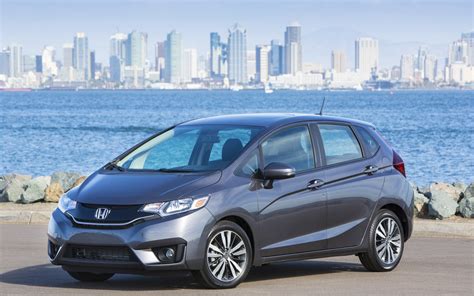
Is the Honda Fit low to the ground? Yes. The 2018–2020 U.S. Honda Fit is commonly listed with about 4.4 inches of minimum ground clearance, which is low compared with a small crossover. That is usually adequate for normal paved roads, but steep driveways, tall parking stops, deep snow and rough tracks require extra care.
Honda Fit Ground Clearance: Quick Answer
| Question | Practical answer |
|---|---|
| Is the Fit a low car? | Yes, relative to an SUV or crossover |
| Commonly published 2018–2020 clearance | About 4.4 inches (11.2 cm) |
| Suitable for normal paved roads? | Generally yes |
| Best for deep snow or off-road use? | No |
| Does trim, tire wear or load matter? | Yes; real clearance can change |
Ground-clearance figures are not always measured or published the same way. Tires, suspension condition, passengers, cargo, aftermarket parts and the exact generation can alter the lowest point. Owners who need a precise number should measure their vehicle at normal operating load.
Where Is the Fit Most Likely to Scrape?
- steep driveway entrances and exits;
- high parking curbs or concrete stops;
- speed bumps taken too quickly;
- deep potholes and broken pavement;
- snow ridges between traffic lanes;
- unpaved roads with a raised center;
- ramps approached straight on instead of at an angle.
The front bumper or underbody may contact an obstacle before the center of the car does. Approach unfamiliar ramps slowly and, where safe, at a shallow diagonal so one wheel rises before the other.
Is the Honda Fit Lower Than an HR-V?
Yes. A 2020 HR-V is officially listed at roughly 6.7–7.4 inches of unladen ground clearance depending on drivetrain and trim, substantially more than the Fit’s commonly published 4.4 inches. The HR-V is therefore better suited to deep snow, rutted roads and steep transitions, although neither figure alone makes a vehicle an off-roader.
Does a Low Ride Height Improve Handling?
Ride height is only one factor. The Fit’s compact dimensions, suspension tuning, tire choice, track width and center of mass all influence handling. Honda describes the 2020 Fit as using a MacPherson-strut front suspension, torsion-beam rear suspension and a substantial front stabilizer bar to balance ride comfort and cornering control. It is inaccurate to claim that low clearance alone guarantees shorter stopping distances, perfect stability or easier maneuvering.
Is It Easy to Get In and Out?
That depends on mobility and body proportions. The Fit’s doors open into a tall cabin, but the seat is lower than in an HR-V or CR-V. Some people find the modest step-in easy; others with knee, hip or back limitations prefer a higher crossover seat because it requires less lowering and lifting of the body.
A proper test should include entering and exiting both front and rear seats several times, not just sitting in the driver’s seat. For driver-position guidance, see our short-driver and tall-driver guides.
Can the Fit Handle Snow?
Light snow on plowed roads is primarily a tire and driver-preparation question. The Fit’s front-wheel-drive layout can work well with suitable winter tires, but its low clearance becomes a disadvantage as snow depth increases. Packed snow beneath the car can damage underbody panels or lift weight from the tires. Avoid using the Fit as a snowplow and do not enter drifts that approach the lower bumper or underbody.
Can You Raise a Honda Fit?
Aftermarket springs, spacers and larger-diameter tires exist, but changing ride height can affect alignment, steering geometry, braking behavior, wheel-well clearance, speedometer accuracy, ride quality and component life. It may also create insurance, inspection or warranty issues. Any modification should be engineered and installed by a qualified specialist rather than assembled solely to gain a small clearance increase.
Used-Car Clearance Inspection
- Look beneath the front bumper and rocker panels for scrapes.
- Inspect splash shields and undertrays for missing fasteners.
- Check the exhaust and oil-pan area for impact damage or leaks.
- Confirm all four tires are the correct size and evenly worn.
- Look for sagging springs or mismatched suspension parts.
- Test the car over a normal driveway transition at low speed.
- Ask whether the car has lowering springs or wheel modifications.
Incorrect Claims Removed From the Old Page
The legacy article claimed both an unspecified “very low” height and 5.9 inches of clearance, described a nonexistent 1.6-liter U.S. engine, and made unsupported claims about braking, stability and easier cleaning. It also used externally hotlinked images. Those statements have been removed.
How We Verified This Guide
AutoZonic reviewed American Honda’s 2020 Fit chassis and dimensional information, Honda’s official HR-V ground-clearance table for comparison, and published 2018–2020 Fit clearance data. We label the 4.4-inch figure as commonly published rather than presenting it as a universal measurement for every generation and market. Reviewed by the AutoZonic Editorial Team on August 2, 2026.
- Honda: 2020 Fit Specifications
- Honda: Fit Ride and Handling
- Honda: 2020 HR-V Specifications
- Published Honda Fit Clearance Data
Frequently Asked Questions
What is the ground clearance of a 2020 Honda Fit?
Published specification databases commonly list about 4.4 inches. Actual clearance can vary with load, tire condition and modifications.
Will a Honda Fit scrape on speed bumps?
It can on tall or sharply shaped bumps, especially when heavily loaded. Approach slowly and avoid straddling unusually high obstacles.
Is the Fit lower than a Civic?
The answer depends on the Civic body style and model year. Compare exact specifications and the lowest bumper or underbody point, not only overall vehicle height.
Is the Fit good on gravel roads?
It can handle maintained gravel at low speed, but low clearance and road tires make rough, rutted or rocky tracks unsuitable.
Does adding passengers reduce clearance?
Yes. Additional load compresses the suspension and can reduce real underbody clearance.
Related Guides
Is a Honda Pilot Considered a Standard SUV? Why Classifications Differ
How to Improve Honda Fit Fuel Economy: 15 Safe Steps
Why Was the Honda Fit Discontinued in the U.S.?
How Long Does a Honda Fit Last? Mileage and Lifespan Guide