
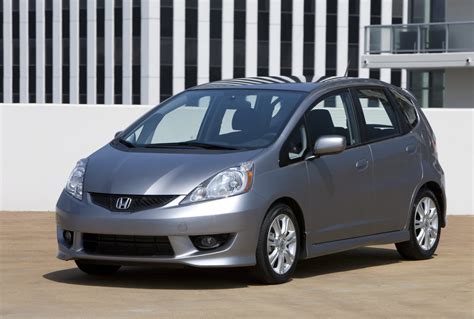
How long does a Honda Fit last? Current iSeeCars data estimates an average usable lifespan of about 180,023 miles, or roughly 17.5 years, with a 35.4% chance of reaching at least 200,000 miles. A well-maintained Fit can go beyond that, but mileage alone does not tell you how much useful life remains.
At used-car age, the deciding factors are maintenance history, rust, previous collision damage, cooling-system health, transmission condition and whether age-related repairs have been handled as they appeared. A documented 160,000-mile Fit can be a better buy than an 85,000-mile car that has been neglected.
Honda Fit Lifespan at a Glance
| Mileage | What it usually means for a used buyer |
|---|---|
| Under 100,000 miles | Often early-to-mid life, but age, rust and service history still matter |
| 100,000-150,000 miles | Wear items, fluids, suspension and ignition history become more important |
| 150,000-200,000 miles | Condition varies widely; inspect the whole car, not only the engine |
| 200,000+ miles | Achievable, but expect a stricter repair budget and more age-related maintenance |
| Current data-based average | About 180,023 miles / 17.5 years |
| Chance of 200,000+ miles | 35.4% in current iSeeCars model-level data |
Can a Honda Fit Last 200,000 Miles?
Yes. Two hundred thousand miles is a realistic outcome for a meaningful share of Fits, but it is not automatic. Reaching that mileage usually requires more than regular oil changes. Transmission-fluid service, cooling-system care, brake maintenance, suspension repairs, rust prevention and prompt attention to warning lights all contribute to how long the car remains safe and economical.
The important distinction is between engine life and vehicle life. An engine may still run well at 220,000 miles while structural corrosion, A/C failure, suspension wear, wheel bearings, exhaust, electrical faults or transmission problems make the whole car uneconomical to keep.
Can a Honda Fit Reach 300,000 Miles?
It is possible, but 300,000 miles should be treated as an exceptional ownership outcome rather than the expected lifespan. At that point, even a Fit with its original engine may have needed substantial work elsewhere on the vehicle.
When someone advertises a 250,000- or 300,000-mile Fit as proof that “these cars run forever,” remember that the odometer does not show how many suspension parts, wheel bearings, A/C components, seals, mounts, batteries or other parts were replaced along the way.
Lifespan by U.S. Generation
| Generation | U.S. years | Longevity priorities |
|---|---|---|
| First U.S. generation | 2007-2008 | Rust, seals, suspension, A/C, leaks and deferred maintenance dominate because of age |
| Second U.S. generation | 2009-2013 | Ignition performance, mounts, suspension, corrosion, leaks and service records become important |
| Third U.S. generation | 2015-2020 | CVT service history, drivability, direct-injection related symptoms, electronics and recall completion deserve attention |
There is not enough public model-year-specific survival data to prove that one U.S. Fit year always lasts longest. The condition of the actual car can easily outweigh small year-to-year differences.
What Shortens a Honda Fit’s Life?
- running low on engine oil or coolant;
- ignoring overheating or repeated misfires;
- using the wrong transmission fluid;
- extending fluid service indefinitely because the car still “feels fine”;
- road salt and untreated underbody corrosion;
- poor collision repairs or flood damage;
- driving for long periods with worn tires or bad alignment;
- ignoring suspension, wheel-bearing or brake problems;
- unresolved recalls and service campaigns;
- cheap or incorrect repairs that create new problems.
Maintenance That Matters Most for Longevity
Follow the Maintenance Minder and the Correct Owner’s Manual
Honda’s Maintenance Minder changes service recommendations according to operating conditions. Do not copy a fixed interval from another Fit year or another Honda model. Use the manual and Maintenance Minder for the exact car.
Use the Correct Fluids
Engine-oil grade, coolant and transmission fluid must match the model year and transmission. This matters especially on 2015-2020 CVT cars. A “universal” fluid that is merely compatible on paper is not a good reason to ignore Honda’s specification.
Respond to Misfires Quickly
A flashing check-engine light can indicate a catalyst-damaging misfire. Continuing to drive can turn a manageable ignition or fueling issue into a more expensive repair.
Protect the Structure From Rust
Wash road salt from the underbody, keep drain areas clear and repair damaged paint. Structural corrosion can end a Fit’s useful life even when the drivetrain is still healthy.
Take Cooling-System Symptoms Seriously
Coolant loss, overheating, a weak heater, sweet odors or repeated fan operation should be diagnosed. Overheating can shorten engine life quickly.
What to Check at Higher Mileage
| Mileage range | Questions to ask |
|---|---|
| 100,000-125,000 miles | Are maintenance records complete? Are fluids current? Any repeated misfire or suspension history? |
| 125,000-150,000 miles | How are engine mounts, wheel bearings, struts, bushings, brakes, A/C and charging system? |
| 150,000-200,000 miles | Is there oil consumption, coolant loss, structural rust, transmission shudder or major deferred work? |
| 200,000+ miles | What has already been replaced, and what major age-related systems are still original? |
This is not a replacement for Honda’s maintenance schedule. It is a used-car inspection framework for deciding how much risk remains in an older Fit.
Is Age or Mileage More Important?
Both matter. A low-mileage Fit can still have old tires, hardened seals, corrosion, stale brake fluid, weak A/C components and a neglected battery. Highway mileage can also be easier on brakes and drivetrain than years of short cold trips.
When two Fits have similar prices, ask how each one accumulated its mileage. Service invoices, ownership location and physical inspection usually tell you more than the odometer by itself.
How Much Life Is Left at 150,000 Miles?
There is no reliable formula. At 150,000 miles, estimate remaining life from engine health, oil consumption, cooling-system condition, rust, transmission behavior, maintenance records and the number of repairs currently waiting to be done.
A rust-free car with smooth drivetrain operation and recent wear-item maintenance may have many useful years left. A car with structural corrosion, overheating history and transmission symptoms may be near the end of its economical life even at lower mileage.
Should You Buy a 200,000-Mile Honda Fit?
Only if the price reflects the mileage and the car passes an independent inspection. A 200,000-mile Fit can still be useful, but you should budget for repairs rather than assuming the reputation for reliability means nothing will fail.
At this mileage, ask specifically about:
- engine oil use and coolant loss;
- transmission-fluid history and current behavior;
- underbody and suspension-point corrosion;
- wheel bearings, struts, bushings and mounts;
- A/C operation;
- charging-system and battery health;
- exhaust condition;
- open recalls;
- previous collision repairs.
Repair or Replace a High-Mileage Fit?
Compare the repair cost with the condition of the whole car and the cost of replacing it. A $1,500 repair can make sense on a rust-free, documented Fit with no other major needs. The same repair may not make sense when structural corrosion, transmission problems and A/C failure are present together.
Do not compare the repair only with the car’s resale value. Replacing a known, maintained car with another unknown used vehicle also has a cost and a risk.
High-Mileage Honda Fit Buying Checklist
- Obtain maintenance invoices and verify the VIN.
- Run the VIN through Honda and NHTSA for open recalls.
- Start the engine completely cold.
- Scan for current, pending and recently cleared fault codes.
- Check for oil, coolant and transmission-fluid leaks.
- Test manual or CVT operation cold and fully warm.
- Inspect underbody corrosion, brake lines and suspension mounting areas.
- Check tire age, uneven wear, wheel bearings and suspension noise.
- Test A/C, windows, locks, lights and warning lamps.
- Pay for an independent pre-purchase inspection.
For model-level context, see our Honda Fit used-car guide, Honda Fit reliability guide and Honda Fit common problems guide.
How We Evaluated Honda Fit Lifespan
AutoZonic uses current model-level survival data as a baseline and separates it from exceptional high-mileage anecdotes. We reviewed iSeeCars’ current Honda Fit lifespan data together with Honda maintenance information and official recall resources. The 180,023-mile figure is an estimated average useful life, not a maximum mileage or a guarantee for an individual car.
- iSeeCars: Honda Fit reliability and lifespan
- Honda: service and maintenance information
- NHTSA: VIN recall lookup
Frequently Asked Questions
What is high mileage for a Honda Fit?
Above 150,000 miles is high mileage in normal used-car shopping, but it is not automatically excessive. Records, rust and inspection results determine whether the car remains a sound purchase.
How many years can a Honda Fit last?
Current iSeeCars data estimates an average useful life of about 17.5 years. Climate, mileage, maintenance and corrosion can move an individual car well above or below that figure.
Is 100,000 miles too much for a Honda Fit?
No. A documented and inspected Fit at 100,000 miles can have substantial useful life remaining.
Can the Honda Fit CVT last 200,000 miles?
Some do, but there is no guarantee. Correct fluid, service history and current operating condition are essential.
Should I buy a Honda Fit with 200,000 miles?
Only after an independent inspection and with a realistic repair budget. At that mileage, whole-car condition matters more than the model’s general reputation.
Related Guides
Is a Honda Pilot Considered a Standard SUV? Why Classifications Differ
How to Improve Honda Fit Fuel Economy: 15 Safe Steps
Why Was the Honda Fit Discontinued in the U.S.?
Honda Fit Common Problems by Year: What to Check Before Buying
1 thought on “How Long Does a Honda Fit Last? Mileage and Lifespan Guide”