
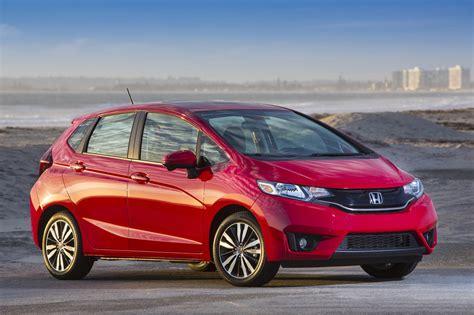
Is the Honda Fit easy to maintain? Generally, yes. U.S.-market Fits use a compact naturally aspirated four-cylinder engine, common service items and Honda’s Maintenance Minder. RepairPal estimates average annual repair and maintenance spending at about $390, below its $456 subcompact-car average. The main caution is to use the correct fluids and follow the exact model-year instructions—especially for CVT-equipped 2015–2020 cars.
Honda Fit research hub: Explore related ownership, buying and feature guides in the Honda Fit model hub.
Honda Fit Maintenance: Quick Verdict
| Question | Assessment |
|---|---|
| Routine service difficulty | Generally straightforward |
| RepairPal annual average | $390 across model years |
| Unscheduled shop visits | About 0.4 per year |
| Major-repair probability | 8%, below subcompact and all-vehicle averages |
| Special maintenance concern | Correct transmission fluid and Maintenance Minder codes |
| DIY suitability | Good for basic work; diagnosis and safety-critical jobs need expertise |
These are fleet averages, not a fixed yearly bill. Age, mileage, labor rates, climate, previous neglect and parts quality can move an individual owner’s cost far above or below the average.
Why the Fit Is Usually Simple to Own
- naturally aspirated 1.5-liter gasoline engine in U.S. models;
- front-wheel drive with no U.S. all-wheel-drive system to service;
- common tire, brake, filter and ignition parts;
- wide Honda dealer and independent-shop knowledge;
- Maintenance Minder codes that adjust service timing to use;
- no U.S.-market Fit hybrid battery system to maintain.
Follow the Maintenance Minder—Not a Generic Schedule
Honda’s Maintenance Minder monitors operating conditions and displays a wrench plus service codes. The main code identifies oil service, while subcodes can call for tire rotation, filters, transmission fluid, spark plugs, valve-clearance inspection, coolant or brake fluid depending on year.
Do not copy a fixed interval from another Fit generation. Read the owner’s manual and decode the exact message shown in the car. Resetting the reminder without performing the work can erase useful service timing.
Key Maintenance Items
| Item | Why it matters | Owner check |
|---|---|---|
| Engine oil and filter | Lubrication and timing-component protection | Check level between services and investigate consumption/leaks |
| Transmission fluid | Shift/CVT operation and component life | Use the exact Honda-specified fluid; avoid universal substitutes |
| Coolant | Prevents overheating and corrosion | Check only when safe and diagnose loss |
| Brake fluid and brakes | Stopping performance and corrosion control | Inspect pads, rotors, hoses and fluid condition |
| Spark plugs/valve clearance | Prevents misfire and poor performance | Follow model-year Minder/manual requirements |
| Tires/alignment | Safety, economy and suspension life | Check pressure, date codes and uneven wear |
| Battery | Starting and stable electronics | Test before failure, especially in heat/cold |
Is the Honda Fit Easy to Work on Yourself?
Basic jobs such as checking fluids, changing wiper blades, replacing some filters, inspecting tires and performing an oil change can be approachable for an experienced DIY owner with the correct manual, tools, lifting equipment and disposal process.
Difficulty rises with spark-plug thread repair, valve adjustment, CVT diagnosis, air-conditioning work, airbags, wheel bearings, electrical modules and structural corrosion. Brakes and suspension are safety-critical; a low purchase price does not justify learning through an unsafe repair.
Manual, Automatic and CVT Maintenance
Manual Transmission
Inspect clutch operation and hydraulic leaks and use the specified manual-transmission fluid. Clutch replacement is a wear repair rather than routine annual maintenance.
Conventional Automatic
Earlier automatic Fits require the correct Honda fluid and proper level-check procedure. Harsh shifting or delayed engagement should be diagnosed rather than treated with additives.
CVT
2015–2020 automatic Fits use a CVT. Service history and correct fluid are especially important. Do not perform an indiscriminate high-pressure flush or use generic fluid without confirming Honda’s instructions for that vehicle.
Maintenance by Vehicle Age
Under 100,000 Miles
Focus on documented routine service, tires, brakes, battery, fluids and recall completion. Low mileage does not eliminate age-related tire or fluid needs.
100,000–150,000 Miles
Expect more attention to plugs, valve clearance, mounts, suspension, bearings, coolant, leaks and transmission history.
Over 150,000 Miles
Preventive maintenance remains valuable, but inspect rust, oil consumption, compression, air conditioning and cumulative repair needs before authorizing major work.
What Makes Maintenance Expensive?
- buying a car with missing records or overdue services;
- ignoring a flashing warning light or overheating;
- using incorrect CVT/automatic fluid;
- salt corrosion and seized fasteners;
- cheap diagnostic guesses instead of testing;
- dealer-only labor rates for work a qualified independent shop can perform;
- aftermarket modifications that complicate parts and alignment.
Used Honda Fit Maintenance Checklist
- Match records to the VIN and odometer.
- Verify Maintenance Minder services were completed, not merely reset.
- Check engine oil and coolant for level, leaks and contamination.
- Confirm transmission type and fluid history.
- Inspect plugs, coils and cold-start behavior.
- Check tires, brakes, bearings, suspension and alignment.
- Test battery, charging, A/C and every electrical function.
- Run a VIN recall check.
- Obtain an independent pre-purchase inspection.
Related Ownership Guides
How We Evaluated Maintenance
AutoZonic reviewed Honda’s official Maintenance Minder/service information and RepairPal’s current cost, frequency and severity data. We treat $390 as a cross-model-year average, not a quote, and removed generic fixed intervals and unsupported claims from the legacy article. Reviewed by the AutoZonic Editorial Team on August 2, 2026.
- Honda: Maintenance Minder and Service
- RepairPal: Honda Fit Reliability and Costs
- RepairPal: Honda Fit Service and Repair Costs
Frequently Asked Questions
Is the Honda Fit cheap to maintain?
RepairPal’s $390 annual average is below its subcompact and all-vehicle averages, but an older neglected car can still require expensive catch-up repairs.
Does a Honda Fit need special transmission fluid?
Yes. Use the Honda-specified fluid for the exact manual, conventional automatic or CVT. Do not assume one fluid fits every year.
Can I maintain a Honda Fit myself?
Basic tasks can be DIY-friendly for a competent owner. Diagnosis, airbags, A/C, transmission work and safety-critical repairs require suitable training and equipment.
How often should a Honda Fit be serviced?
Follow the Maintenance Minder and exact owner’s manual rather than one universal mileage interval.
Related Guides
Is a Honda Pilot Considered a Standard SUV? Why Classifications Differ
How to Improve Honda Fit Fuel Economy: 15 Safe Steps
Why Was the Honda Fit Discontinued in the U.S.?
How Long Does a Honda Fit Last? Mileage and Lifespan Guide