
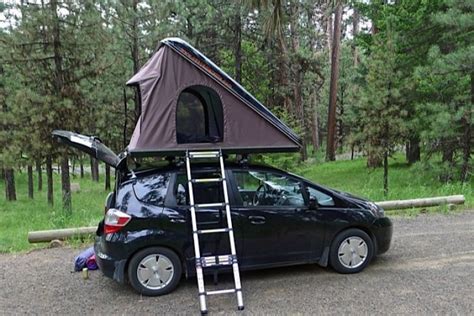
Can you camp in a Honda Fit? Yes. The Fit can support simple one- or two-person car camping because its 60/40 Magic Seat creates up to 52.7 cubic feet of cargo volume behind the front seats. It works best at legal, developed campsites and on maintained roads—not as an off-road camper or a substitute for a climate-controlled RV.
Honda Fit Camping: Quick Verdict
| Use | Assessment |
|---|---|
| Solo overnight trip | Very workable with a tested setup |
| Two adults sleeping inside | Possible but narrow |
| Tent camping with gear in the car | Strong use case |
| Off-road or deep-snow camping | Poor fit due to low clearance |
| Running climate control all night | Unsafe in a gasoline Fit |
| Camping in any parking lot | Not legal or permitted everywhere |
Best Ways to Camp With a Honda Fit
Sleep in a Tent and Use the Fit for Gear
This is the easiest setup. Keep the rear seats upright for passengers or fold one section for a cooler, tent, bedding and chairs.
Sleep Inside the Car
Fold both rear seatbacks, move the front seats forward and add a fitted pad or secured platform. One adult generally has more practical space than two. Measure the exact vehicle before buying a mattress.
Use the Fit as a Base Camp
The compact exterior is useful at developed campsites, while the tall hatch and Magic Seat simplify gear organization. Any hatch awning must fit the car and comply with campsite rules.
How Much Camping Gear Fits?
The 2020 Fit provides 16.6 cubic feet behind the upright rear seat and 52.7 cubic feet behind the front seats when folded. Volume does not guarantee that every object will pass through the hatch, so pack by shape as well as capacity.
| Configuration | Typical use |
|---|---|
| All seats upright | Passengers with limited soft luggage |
| One rear section folded | Two or three people plus long gear |
| Both rear seats folded | Maximum gear or sleeping area |
| Rear cushions raised | Cooler, water or tall equipment behind front seats |
Camping Setup Checklist
- legal campsite or written overnight-parking permission;
- sleeping pad/platform tested before departure;
- temperature-rated bedding;
- window screens and removable privacy covers;
- battery lantern or headlamp;
- charged phone and power bank;
- water, first-aid and roadside kits;
- weather forecast, route and emergency contact plan.
Road and Clearance Limits
The 2018–2020 Fit is commonly listed at about 4.4 inches of clearance. It suits paved access roads and maintained gravel but is vulnerable to rocks, ruts, washouts, high road crowns and deep snow. Check campground road conditions and turn around before terrain exceeds the car’s clearance or tires.
Carbon Monoxide and Fire Safety
Never sleep with the gasoline engine idling. Carbon monoxide is colorless and odorless and can be fatal, particularly while occupants are asleep. Never run the car in a garage or partially enclosed shelter, and keep the tailpipe clear of snow, mud and vegetation.
Do not use charcoal, candles, propane stoves or unvented heaters inside the Fit. Cook outside at the distance required by the appliance and campsite rules.
Ventilation, Heat and Cold
Cracking two opposite windows with insect screens can reduce condensation, but it does not make extreme heat safe. In cold weather, use properly rated bedding rather than idling the engine. Move to safer accommodation when conditions exceed the equipment or occupants’ health needs.
Food and Wildlife
Follow campground food-storage rules. In bear country, a vehicle may or may not satisfy local requirements, and scented items include toiletries, trash and cooking gear. Use provided lockers where required.
Legal Campsite Rules
Vehicle sleeping is not automatically allowed wherever parking is permitted. National parks, forests, rest areas, cities and private properties have different rules. Some parks require a registered campsite and prohibit sleeping in vehicles at trailheads, overlooks or day-use lots. Verify the exact site through its official source.
Fit Camping vs. a Small SUV
The Fit is cheaper to fuel, easier to park and exceptionally space-efficient. A small SUV usually offers more ground clearance, wider sleeping space and easier entry. Choose the Fit for developed-site simplicity, not difficult terrain.
Related Guides
- Sleeping inside a Honda Fit
- Magic Seat folding guide
- Honda Fit ground clearance
- Honda Fit cargo volume
How We Evaluated It
AutoZonic used Honda’s official cargo and Magic Seat information, CDC carbon-monoxide guidance and public-land examples showing that vehicle-sleeping rules are location-specific. Unsupported claims, fabricated accessories and hotlinked images from the old article were removed. Reviewed by the AutoZonic Editorial Team on August 2, 2026.
Frequently Asked Questions
Is the Honda Fit good for car camping?
Yes for developed campsites and compact setups. Its low clearance makes rough-road access the main limitation.
Can two people camp inside?
They may fit, but the cabin is narrow and gear storage becomes difficult. Test the complete setup first.
Can you attach a tent to the hatch?
Some aftermarket shelters may fit, but compatibility, weather sealing, battery drain and campground rules must be checked.
Can you sleep with the heater running?
No. Do not sleep with a gasoline Fit idling because exhaust and carbon-monoxide hazards can be fatal.
Related Guides
Is a Honda Pilot Considered a Standard SUV? Why Classifications Differ
How to Improve Honda Fit Fuel Economy: 15 Safe Steps
Why Was the Honda Fit Discontinued in the U.S.?
How Long Does a Honda Fit Last? Mileage and Lifespan Guide