
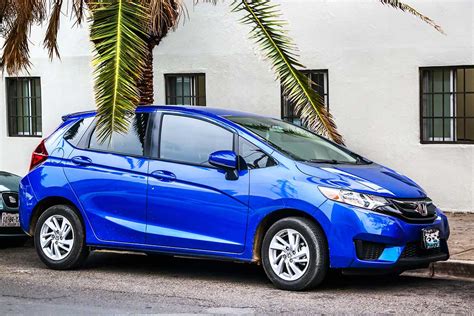
Honda discontinued the Fit in the United States after the 2020 model year, but it did not discontinue the Fit worldwide. A newer generation continued in Japan and other markets under the Fit and Jazz names. The U.S. decision was mainly about product strategy: subcompact-car demand was shrinking, American buyers were moving toward small crossovers, and Honda already had the HR-V serving much of that practical entry-level market.
The Fit was not dropped because Honda declared it unreliable, unsafe or technologically obsolete. It was a market-specific decision not to bring the newer global generation to the United States.
Honda Fit Discontinuation at a Glance
| Question | Answer |
|---|---|
| Final U.S. model year | 2020 |
| Discontinued worldwide? | No |
| Did the Jazz replace the Fit? | No. Jazz is another regional name for the same model family. |
| Direct U.S. replacement | None announced one-for-one |
| Main U.S. reason | Weakening subcompact-car demand and a shift toward small crossovers |
| Closest Honda alternatives | HR-V for small-crossover buyers; Civic Hatchback for buyers wanting a hatchback car |
The Fit Continued Outside the United States
Honda launched an all-new Fit in Japan in February 2020. That newer generation was not brought to the U.S., but the model family continued overseas and received later updates. In many markets Honda uses the Jazz name instead of Fit, so seeing a current Honda Jazz does not mean a different car replaced the Fit. It is the same model family sold under another regional name.
Why Honda Stopped Selling the Fit in America
The strongest evidence points to demand and product mix rather than a single technical reason. By 2020, U.S. buyers had been moving away from inexpensive subcompact hatchbacks and toward small SUVs and crossovers. Honda already sold the HR-V in that faster-growing category.
Contemporary reporting from Car and Driver cited Honda’s slow-sales explanation and showed the size of the gap. Honda sold 35,414 Fits in the U.S. in 2019, compared with 99,104 HR-Vs. That does not prove profit margins by itself, but it clearly shows where customer demand was moving.
Was the Honda Fit Discontinued Because It Was Unreliable?
No evidence supports that conclusion. The Fit retained a strong durability reputation, and current iSeeCars data still gives the model an 8.1/10 reliability score with an estimated average usable life of about 180,023 miles.
Like any long-running model, specific Fit years have recalls and known inspection points. That is different from Honda discontinuing the entire U.S. model because of reliability.
See our Honda Fit reliability guide.
Was the Fit Dropped Because of Electric Cars?
There is no strong evidence that EV growth was the primary reason. Honda continued the Fit/Jazz family overseas, including electrified versions. The timing fits a broader U.S. market shift toward crossovers much better than a simple “Honda replaced the Fit with EVs” explanation.
Did the HR-V Replace the Honda Fit?
Not directly. Honda did not announce the HR-V as a one-for-one Fit successor. The HR-V is larger, taller and positioned as a crossover. What it did do was serve many of the same practical buyers who wanted a small, versatile Honda with a hatch and a higher seating position.
For buyers who specifically want a car rather than a crossover, the Civic Hatchback is the closer current Honda body style. It is also larger and more expensive than the Fit was when new.
See the detailed Honda Fit replacement comparison.
Why the Fit Was Hard to Replace Exactly
The Fit combined several traits that are uncommon together: a very short exterior length, seating for five, strong gasoline fuel economy and Honda’s flexible rear Magic Seat. Depending on model year, folding the rear seating created roughly 52 cubic feet of cargo capacity, which is unusually useful for a subcompact hatchback.
A small crossover can offer a higher seating position, while a Civic can offer more power and refinement, but neither duplicates the Fit’s exact combination of footprint, interior packaging and price.
Honda Fit U.S. Timeline
| Year | What happened |
|---|---|
| 2007 | Honda Fit arrives in the U.S. market |
| 2009 | Second U.S. generation begins |
| 2015 | Third U.S. generation begins |
| 2020 | Final U.S. model year; Honda launches a newer Fit generation in Japan |
| 2021 onward | No new Fit offered in the U.S.; Fit/Jazz continues in other markets |
| 2026 | Honda continues updating the Fit in Japan, confirming the model family remains active overseas |
Can You Still Buy a Honda Fit in the U.S.?
Yes, but only as a used vehicle or remaining collector/dealer inventory from the old U.S. run. There is no current new U.S.-market Fit. Used examples range from early 2007 cars to the final 2020 model year.
Because every U.S. Fit is now used, condition should drive the purchase. Check service history, corrosion, transmission behavior, recall completion, previous collision repairs and A/C operation before buying.
Is a Used Honda Fit Still Worth Buying?
For the right buyer, yes. The Fit remains attractive for city parking, commuting, fuel economy and cargo flexibility. A clean example with documented maintenance can still be a practical alternative to a more expensive small crossover.
Do not buy one simply because “Honda Fits last forever.” Inspect the actual car. The newest U.S. Fits are already several years old and the oldest ones are approaching two decades.
- Honda Fit used-car guide
- Honda Fit common problems by year
- Honda Fit lifespan guide
- Will the Honda Fit return to the USA?
How We Evaluated the Discontinuation
AutoZonic separates Honda’s confirmed product decisions from speculation. Honda confirmed that the newer global Fit would continue outside the U.S., while contemporary U.S. reporting documented slow Fit sales and the stronger HR-V market. We do not present an unsupported claim that the Fit was discontinued because of one mechanical problem or because it was unprofitable on a per-car basis.
- Honda Global: all-new Fit launch in Japan
- Honda Global: 2026 Fit update in Japan
- Car and Driver: Honda Fit U.S. discontinuation report
- iSeeCars: Honda Fit reliability and lifespan
Frequently Asked Questions
Why did Honda stop making the Fit in the U.S.?
The U.S. subcompact-car market was weakening while buyers moved toward small crossovers. Honda already had the HR-V in that category and chose not to bring the newer global Fit generation to America.
Is the Honda Fit still made?
Yes, the Fit/Jazz model family continues in overseas markets. What ended was U.S. sales after the 2020 model year.
Did the HR-V replace the Fit?
Not officially one-for-one. The HR-V serves some of the same practical small-vehicle buyers, but it is a crossover with different size, price and driving characteristics.
Will the Honda Fit come back to the U.S.?
Honda has not announced a current U.S. return. Overseas continuation does not mean a U.S. relaunch has been confirmed.
Was the Fit discontinued because it had problems?
No. Specific model years have recalls and known inspection points, but the U.S. discontinuation is better explained by market demand and Honda’s product strategy.
Related Guides
Is a Honda Pilot Considered a Standard SUV? Why Classifications Differ
How to Improve Honda Fit Fuel Economy: 15 Safe Steps
How Long Does a Honda Fit Last? Mileage and Lifespan Guide
Honda Fit Common Problems by Year: What to Check Before Buying
1 thought on “Why Was the Honda Fit Discontinued in the U.S.?”