
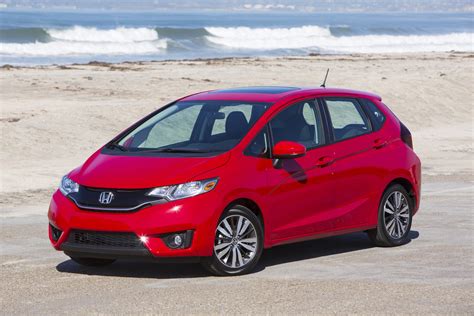
What is the Honda Fit known for? The Honda Fit is best known for combining a very small exterior with exceptional passenger and cargo flexibility. Its 60/40 Magic Seat, strong fuel economy, easy city maneuverability and above-average long-term reliability make it unusually practical. Its main drawbacks are highway noise, limited rear width, low ground clearance and the lack of a new U.S. model after 2020.
Honda Fit Strengths at a Glance
| Known for | Why it matters |
|---|---|
| Magic Seat | Rear seatbacks fold and cushions lift for tall or irregular cargo |
| Space efficiency | 95.7 cu ft of 2020 passenger volume in a 161.4-inch-long car |
| Fuel economy | 2020 EPA ratings of 31–36 mpg combined |
| Reliability | iSeeCars currently scores the model 8.1/10 |
| Long life | Estimated average lifespan near 179,034 miles |
| Urban usability | Easy parking, good visibility and compact dimensions |
| Cargo volume | 16.6 cu ft seats up and 52.7 cu ft seats folded |
1. Exceptional Interior Packaging
The Fit’s defining feature is not horsepower or luxury; it is how much usable room Honda created from a subcompact body. The 2020 U.S. model is 161.4 inches long, yet provides 41.4 inches of front legroom, 39.3 inches in the rear and 95.7 cubic feet of passenger volume.
Honda positioned the fuel tank beneath the front seats, helping create a low rear floor and flexible second row. That packaging allows the Fit to carry adults, bicycles, plants, luggage and long objects more effectively than many vehicles with a larger exterior.
2. The Honda Magic Seat
The 60/40 rear Magic Seat is the feature most closely associated with the Fit. It supports several configurations:
- Utility Mode: fold the rear seatbacks for up to 52.7 cubic feet of cargo volume.
- Tall Mode: raise the rear cushions to carry tall objects behind the front seats.
- Long Mode: configure one side and the front-passenger area for long cargo.
- Refresh Mode: recline the front seats while parked.
No current U.S. Honda directly reproduces the Fit’s combination of a short body and fold-up rear cushions.
3. Strong Fuel Economy Without a Hybrid
The final U.S. Fit used a naturally aspirated 1.5-liter gasoline engine. For 2020, Honda lists:
- 33 city/40 highway/36 combined mpg for the LX CVT;
- 31/36/33 for Sport, EX and EX-L CVT trims;
- 29/36/31 for LX and Sport manuals.
Those ratings are strong for a non-hybrid hatchback. Overseas Fit/Jazz e:HEV models exist, but the final U.S. Fit was gasoline-only.
4. Reliability and Longevity
The Fit has a strong used-car reputation supported by current survival data. iSeeCars gives the model an 8.1/10 reliability score and estimates an average lifespan of about 179,034 miles, or 17.4 years, with a 34.6% chance of reaching at least 200,000 miles.
Those figures do not guarantee an individual car. Rust, maintenance, crash history, transmission service and current symptoms remain more important than the model name.
5. Easy City Driving
The short body, upright glass and tight urban footprint make the Fit easy to place in traffic and park. Its hatch provides access to the full cargo area, and the rear doors open into a tall cabin. The combination suits commuters, students, small households and drivers who regularly use crowded streets.
6. Useful Passenger Space
The Fit seats up to five people in two rows. Its 39.3 inches of 2020 rear legroom is generous for the class, although the rear bench is narrow for three adults. Four occupants normally make better use of the cabin on a long trip.
7. Simple U.S. Powertrain Choices
The final U.S. generation uses a 1.5-liter four-cylinder engine with either a six-speed manual or CVT. It does not use a turbocharger, all-wheel-drive system or U.S.-market hybrid battery. That relative simplicity can help ownership, but correct oil, cooling, ignition and transmission maintenance still matters.
8. Affordable Routine Ownership
RepairPal estimates average annual repair and maintenance spending at about $390 across Honda Fit model years, below its subcompact-car average. Common tire, brake and service parts are widely available, and many independent shops understand Honda maintenance.
An old or neglected Fit can still generate major bills for air conditioning, corrosion, engine misfires or transmission work. The annual figure is an average—not a spending limit.
9. Practical Used-Car Value
Because American Honda stopped selling the Fit after 2020, the model occupies a distinctive place in the used market. Buyers who still want its size and Magic Seat have no direct new-Honda replacement. Strong demand can keep clean late-model examples from becoming as cheap as their age might suggest.
10. A Distinctive “Small Outside, Big Inside” Identity
The Fit looks tall and almost one-box in profile. That visual identity explains why some people incorrectly call it a mini-SUV or tiny minivan. It is technically a five-door subcompact hatchback, but its interior flexibility is closer to what buyers expect from a larger utility vehicle.
What Are the Honda Fit’s Main Drawbacks?
| Drawback | Who will notice it most |
|---|---|
| Road and wind noise | Frequent highway travelers |
| Narrow rear bench | Five-adult households or three-across child-seat users |
| Modest acceleration when loaded | Mountain and passing-heavy drivers |
| Low ground clearance | Snow, rough-road and steep-driveway users |
| Limited seat adjustment | Drivers needing extensive lumbar or power-seat support |
| No new U.S. Fit | Buyers requiring a current factory warranty |
| Small-car crash-size disadvantage | Buyers comparing it with larger vehicles |
Is the Honda Fit Fast?
No. The 130-horsepower final U.S. Fit is adequate for normal commuting and highway use, but performance is not its core strength. Passengers, cargo, altitude and steep grades reduce acceleration. The Fit is valued for efficiency and packaging rather than sports-car speed.
Is the Honda Fit an SUV?
No. It is a front-wheel-drive subcompact hatchback with low ground clearance. The tall roof and cargo flexibility can look crossover-like, but it lacks the ride height, AWD option and intended rough-road capability of an HR-V.
Why Was the Honda Fit So Popular?
- It solved multiple needs with one small vehicle.
- It was inexpensive to fuel.
- The rear-seat design was genuinely different from competitors.
- It could serve students, commuters, small families and hobby owners.
- It was easy to park without feeling cramped inside.
- Its durability helped build used-car confidence.
Why Did Honda Discontinue It in the U.S.?
Honda ended U.S. Fit sales after the 2020 model year as American demand shifted toward crossovers and the company emphasized models such as the HR-V. The Fit/Jazz continued overseas, so U.S. discontinuation did not mean the model vanished globally.
See the complete Honda Fit discontinuation guide.
Who Should Buy a Used Honda Fit?
- city drivers who need easy parking;
- commuters prioritizing fuel economy;
- small families whose child seats fit the rear bench;
- cyclists, musicians, gardeners and owners carrying irregular cargo;
- buyers who value function more than luxury or speed;
- drivers who can verify maintenance and corrosion condition.
Who Should Choose Something Else?
- five adults who regularly travel with luggage;
- drivers facing deep snow or rough roads;
- people needing AWD, towing or high ground clearance;
- buyers wanting a quiet, powerful highway car;
- shoppers who require a new vehicle with a current factory warranty.
Used Honda Fit Buying Checklist
- Check the VIN for recalls.
- Review oil and transmission-fluid records.
- Start the engine cold and scan all modules.
- Test manual or CVT operation cold and warm.
- Inspect structural rust, water leaks and crash repairs.
- Test air conditioning, locks, windows and seat mechanisms.
- Confirm tires, brakes and suspension are safe.
- Pay for an independent pre-purchase inspection.
Related Honda Fit Guides
- Honda Fit reliability
- Honda Fit lifespan
- Honda Fit seating and space
- Honda Fit cargo volume
- Honda Fit replacements
How We Evaluated the Fit
AutoZonic reviewed Honda’s official 2020 specifications and Magic Seat information, current iSeeCars longevity data and RepairPal ownership-cost data. We balance strengths with limitations and avoid treating every used Fit as equally reliable or suitable. Reviewed by the AutoZonic Editorial Team on August 2, 2026.
- Honda: 2020 Fit Specifications
- Honda: Magic Seat
- iSeeCars: Honda Fit Reliability
- RepairPal: Honda Fit Costs
Frequently Asked Questions
What is the best thing about a Honda Fit?
Its greatest strength is the Magic Seat and unusually efficient interior packaging.
Why do people like the Honda Fit?
It is easy to park, fuel-efficient, flexible, durable and much roomier inside than its exterior suggests.
What is the biggest disadvantage?
For many owners, the main compromises are highway noise, narrow rear-seat width and low ground clearance.
Is a Honda Fit worth buying used?
It can be, especially when the vehicle has complete maintenance records, no structural rust and a clean independent inspection.
Related Guides
Is a Honda Pilot Considered a Standard SUV? Why Classifications Differ
How to Improve Honda Fit Fuel Economy: 15 Safe Steps
Why Was the Honda Fit Discontinued in the U.S.?
How Long Does a Honda Fit Last? Mileage and Lifespan Guide