
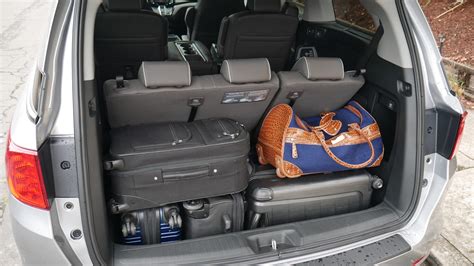
There is no reliable fixed suitcase count for a Honda Fit because luggage sizes and passenger needs vary. The 2020 U.S. Fit provides 16.6 cubic feet behind the rear seats and up to 52.7 cubic feet with the 60/40 seatbacks folded. Measure your actual bags and test the layout rather than relying on claims such as “two large suitcases.”
Honda Fit Luggage Space at a Glance
| 2020 U.S. Fit configuration | Official cargo volume |
|---|---|
| Rear seats in use | 16.6 cu ft |
| Rear seatbacks folded | 52.7 cu ft |
All 2020 U.S. trims use the same published cargo-volume figures. The old claims that EX and Sport have 20.6 or 22.3 cubic feet behind the seats were incorrect. Cargo volume also does not establish a 66-pound luggage limit; follow the combined occupant-and-cargo label on the driver-side door jamb.
How to Check Whether Your Bags Fit
- Measure each bag’s length, width and height, including wheels and handles.
- Decide how many rear seats must remain available for passengers.
- Load the largest rigid bag first and use soft bags around it.
- Keep the rear window and mirrors usable.
- Secure heavy items so they cannot move during braking.
Roof carriers, rails and towing equipment vary by model year and market and should not be assumed. Verify the owner’s manual, roof-load instructions and the exact vehicle before adding external cargo equipment.
For full dimensions, Magic Seat configurations and loading guidance, see the complete Honda Fit cargo-space guide.
This legacy luggage page was corrected and consolidated by the AutoZonic Editorial Team on August 3, 2026.
Related Guides
Is a Honda Pilot Considered a Standard SUV? Why Classifications Differ
How to Improve Honda Fit Fuel Economy: 15 Safe Steps
Why Was the Honda Fit Discontinued in the U.S.?
How Long Does a Honda Fit Last? Mileage and Lifespan Guide