
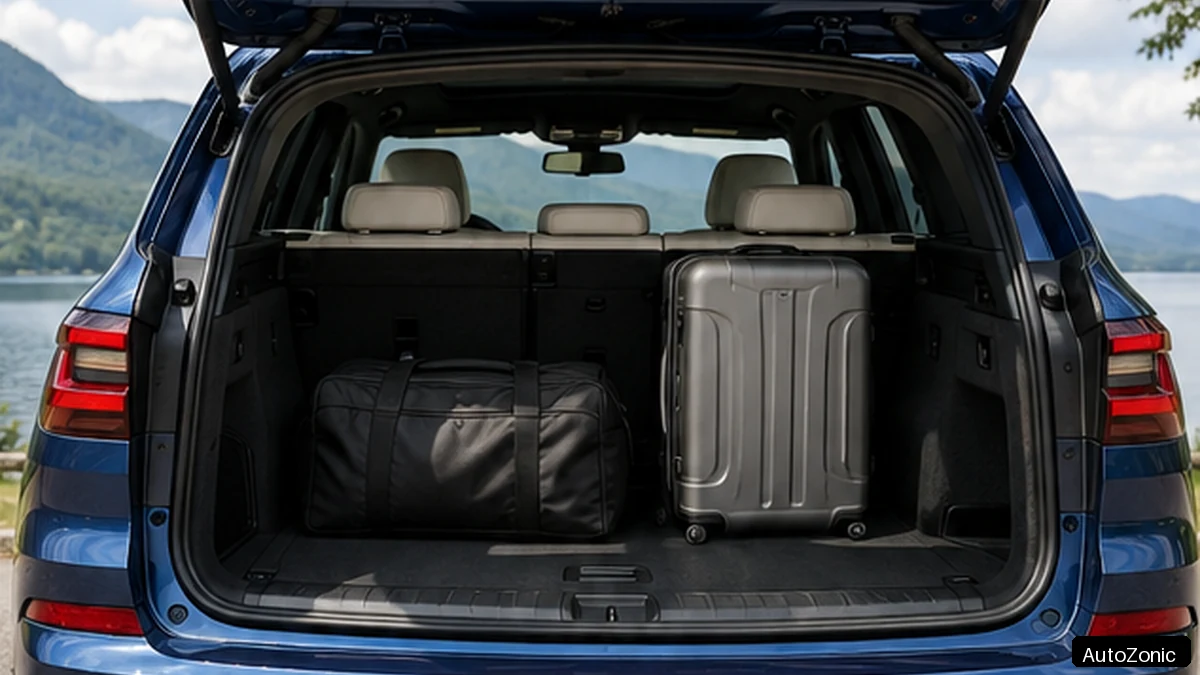
If you are trying to work out whether a BMW X5 will handle a family trip, airport run or a week’s worth of luggage, the number that matters most is the space behind the rear seats—not the biggest cargo figure in the brochure.
For the U.S.-market 2026 BMW X5, BMW lists 33.9 cubic feet behind the second row in the sDrive40i and xDrive40i. Fold that row down and the figure rises to 72.3 cubic feet. The plug-in-hybrid xDrive50e gives up a little room, with 33.0 cubic feet behind the rear seats and 71.2 cubic feet with them folded.
That makes the X5 a useful two-row SUV for everyday cargo, but it also explains why you may see several different numbers online. Some pages quote the seats-up figure, others quote the maximum, and some mix specifications from different model years.
BMW X5 cargo space at a glance
| Model | Behind rear seats | Rear seats folded |
|---|---|---|
| 2026 X5 sDrive40i / xDrive40i | 33.9 cu. ft. | 72.3 cu. ft. |
| 2026 X5 xDrive50e | 33.0 cu. ft. | 71.2 cu. ft. |
BMW’s newer X5 generation uses different cargo figures again, so if you are shopping for a specific used or new X5, always match the number to the exact model year.
What 33.9 cubic feet feels like in real use
A cubic-foot figure is useful for comparison, but it does not tell you exactly how many suitcases, grocery boxes or pieces of baby gear will fit. The shape of the hatch opening, the wheel-well intrusions and the dimensions of your luggage matter just as much.
For most owners, 33.9 cubic feet is enough for several normal travel bags without folding the rear seats. A pair of large checked suitcases plus smaller carry-ons is a realistic use case, but there is no BMW-issued suitcase count and there should not be one presented as a guarantee.
If you regularly carry a stroller, dog crate, golf bags or bulky camera equipment, measure the largest item before relying on cargo-volume math alone.
Why the xDrive50e has slightly less room
The xDrive50e is the plug-in-hybrid version of the X5, and its battery and hybrid hardware affect how the vehicle is packaged. BMW’s own specifications show the result clearly: the xDrive50e has 33.0 cubic feet behind the rear seats instead of 33.9, and 71.2 cubic feet at maximum instead of 72.3.
In day-to-day use, that difference is small. It becomes more noticeable when you are trying to load rigid boxes or make every inch count on a long trip.
Is 72.3 cubic feet the normal X5 trunk size?
No. 72.3 cubic feet is the expanded cargo capacity with the second row folded on the 2026 40i models. With the rear seats in their normal passenger position, the figure is 33.9 cubic feet.
This distinction matters because many cargo-space pages quote only the largest number, which can make an SUV sound much roomier than it is when four or five people are actually sitting in it.
Does the BMW X5 have a third row?
Current U.S.-market X5 models are two-row SUVs. If you need three rows of seating, BMW positions the X7 as the larger alternative.
For cargo planning, that is useful because the X5’s published rear cargo volume is not competing with a folded third row. The space is directly behind the second row.
How the 2027 X5 changes the picture
BMW has already published different cargo figures for the newer X5. The 2027 X5 40 xDrive is listed at 27.3 cubic feet with the rear seats up and 67.7 cubic feet with them folded.
That is why we do not treat “BMW X5 cargo space” as one permanent specification. The correct answer depends on the generation, model year and powertrain you are looking at.
Will a BMW X5 fit your luggage?
For a normal family trip, the X5 is generally easy to live with. The best packing strategy is simple: load the largest rigid cases first, rotate them to use the width of the cargo area, then use soft bags and backpacks to fill the gaps.
If you are traveling with five people and everyone has a large hard-shell suitcase, check the actual vehicle before the trip. Five identical-looking suitcases can vary enough in depth and wheel design to change whether the hatch closes comfortably.
Useful cargo checks before you buy an X5
- Confirm the exact model year and powertrain before comparing published cargo figures.
- Use the seats-up figure if passengers will be sitting in the second row.
- Measure unusually bulky items instead of relying only on cubic feet.
- Check the cargo opening and floor height in person if you carry a dog crate, stroller or mobility equipment.
- For overall vehicle load limits, do not confuse cargo volume with payload capacity. Our 2026 BMW X5 weight and payload guide covers that separately.
BMW X5 cargo space FAQ
How much cargo space does a 2026 BMW X5 have?
The 2026 X5 sDrive40i and xDrive40i have 33.9 cubic feet behind the rear seats and 72.3 cubic feet with the second row folded.
Is the plug-in-hybrid X5 smaller inside?
Slightly. BMW lists the 2026 xDrive50e at 33.0 cubic feet behind the rear seats and 71.2 cubic feet with them folded.
Can a BMW X5 carry luggage for five people?
Often yes, especially with a mix of medium cases and soft bags, but BMW does not publish a guaranteed suitcase count. If all five passengers have large hard-shell luggage, verify the fit with the actual bags.
Why do different websites list different X5 cargo numbers?
They may be quoting different model years, different powertrains, or the maximum seats-folded figure instead of the normal seats-up figure.
Sources
Reviewed by the AutoZonic Editorial Team. Specifications were checked against current BMW USA information on August 9, 2026.
Related Guides
2026 BMW X5 Weight by Trim: Curb Weight, GVWR and Payload
Is the Honda Pilot a Midsize SUV? Yes—But Honda Uses a Different Label
How to Tell If a Hyundai Was Built in the U.S. or Korea
What Does Tiguan Mean? The Volkswagen Name Story
1 thought on “BMW X5 Cargo Space: Trunk Size, Seats Folded and Luggage Fit”