
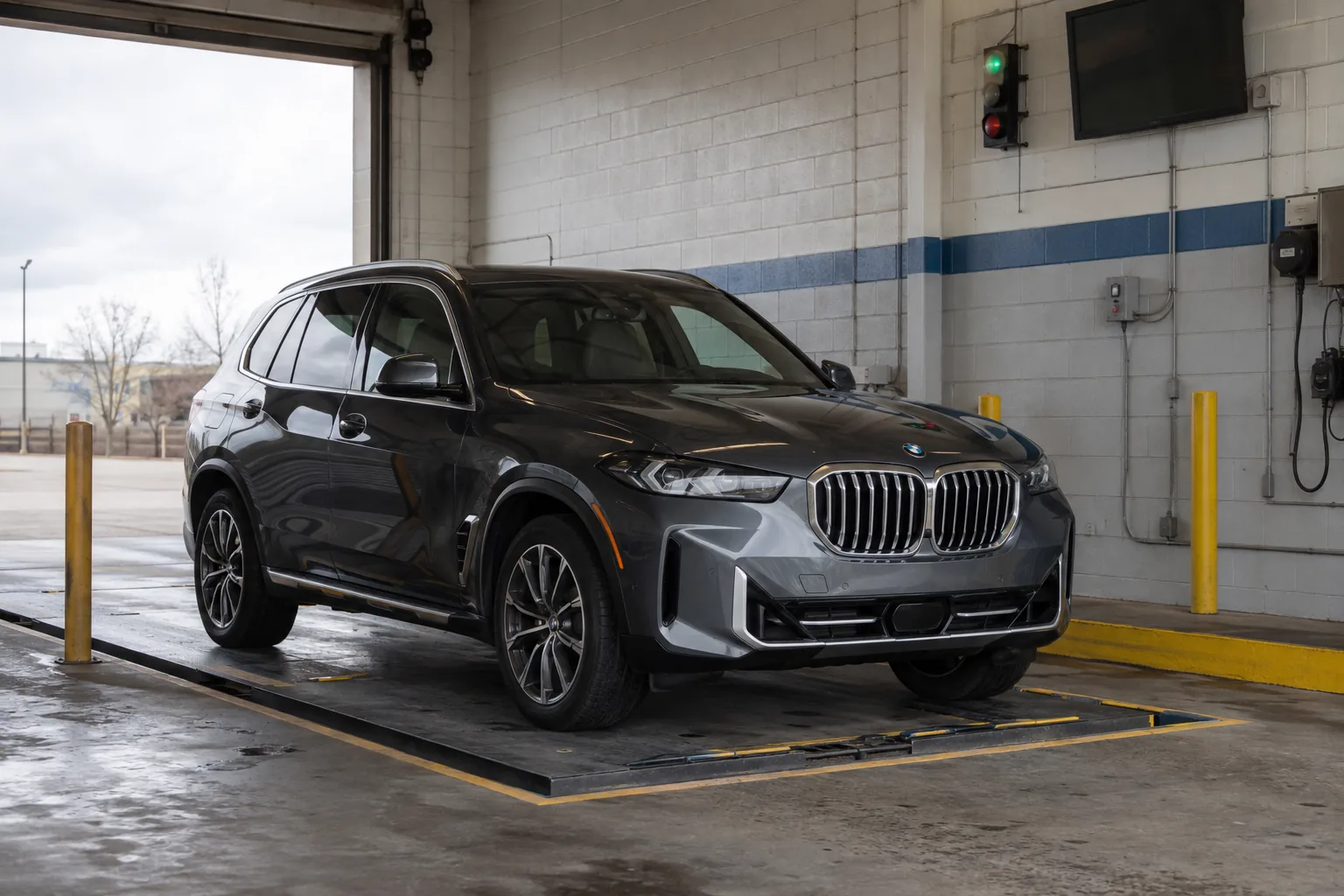
The 2026 BMW X5 is not one fixed weight. BMW lists curb weights from 4,919 pounds for the rear-wheel-drive sDrive40i to 5,573 pounds for the xDrive50e plug-in hybrid. The xDrive40i, M60i and X5 M Competition sit between those two.
Those numbers are useful for comparing trims, but they are not the number to use when deciding how many people, bags or accessories a particular X5 can carry. For that, check the certification and tire-loading labels on the driver-side door jamb. Factory options can change the limits of an individual vehicle.
2026 BMW X5 curb weight by trim
BMW USA’s current technical data gives the following curb weights. Curb weight normally includes the vehicle’s standard equipment and operating fluids, but not occupants or luggage.
| 2026 X5 model | Drive/powertrain | Curb weight | Approx. kilograms |
|---|---|---|---|
| sDrive40i | Rear-wheel drive, 3.0L mild hybrid | 4,919 lb | 2,231 kg |
| xDrive40i | All-wheel drive, 3.0L mild hybrid | 4,998 lb | 2,267 kg |
| M60i | All-wheel drive, 4.4L V8 mild hybrid | 5,355 lb | 2,429 kg |
| X5 M Competition | All-wheel drive, high-output 4.4L V8 | 5,498 lb | 2,494 kg |
| xDrive50e | All-wheel drive, plug-in hybrid | 5,573 lb | 2,528 kg |
The lightest and heaviest versions are separated by 654 pounds. The xDrive40i adds only 79 pounds over the sDrive40i, while the battery, electric motor and related hardware make the xDrive50e the heaviest regular X5.
Source note: The curb weights above come from BMW USA’s X5 technical data, accessed September 2026. BMW can revise specifications, so verify the window sticker and door labels when the exact configuration matters.
What are GVWR and payload?
GVWR is the maximum permitted total weight of the vehicle when loaded. It includes the X5 itself, the driver, passengers, luggage, installed accessories and any trailer tongue weight pressing on the hitch.
Payload is the amount of weight available for occupants and cargo. It is not the same as towing capacity, and it should not be estimated from a generic internet chart when you are loading a specific vehicle.
A simple way to think about the relationship is:
Available payload = vehicle’s allowed loaded weight minus its actual current weight.
The practical number is usually printed on the tire-and-loading label: “The combined weight of occupants and cargo should never exceed…” That vehicle-specific statement is more useful than subtracting two rounded specifications.
Why online X5 GVWR and payload figures do not always agree
Search results often mix different model years, trims and equipment packages. They may also confuse curb weight with gross vehicle weight. An xDrive50e carries a heavy battery before anyone gets in, while an M60i has a different engine, suspension and wheel package. Even two examples of the same trim can have different installed equipment.
Use this order when an exact limit matters:
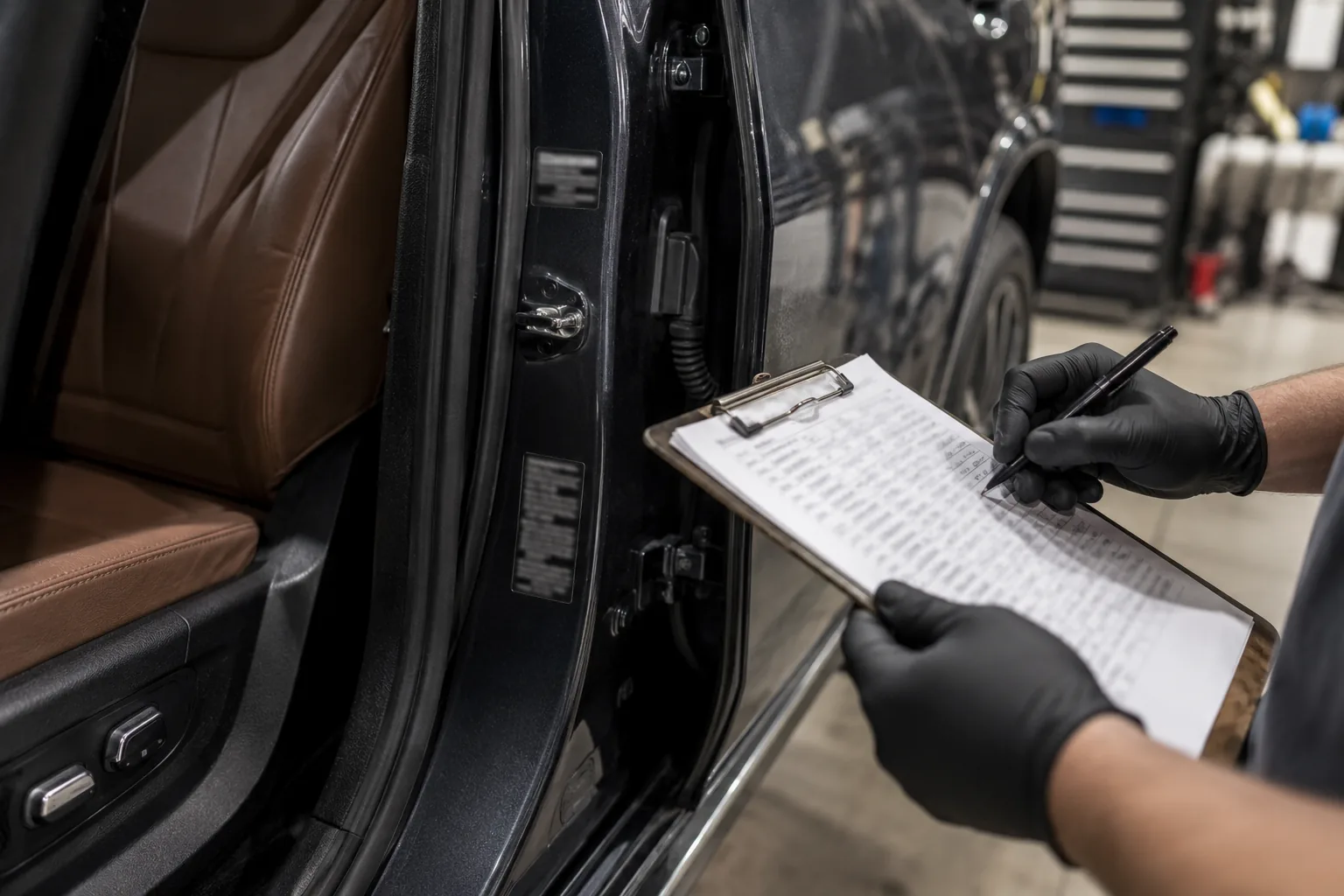
- Read the driver-door certification label for the GVWR and axle ratings.
- Read the tire-and-loading label for the maximum combined occupant-and-cargo figure.
- Account for accessories such as roof racks, cargo boxes, running boards and hitch equipment.
- Use a public vehicle scale if the X5 will carry a heavy family load or tow near its limits.
How passengers and luggage use the payload
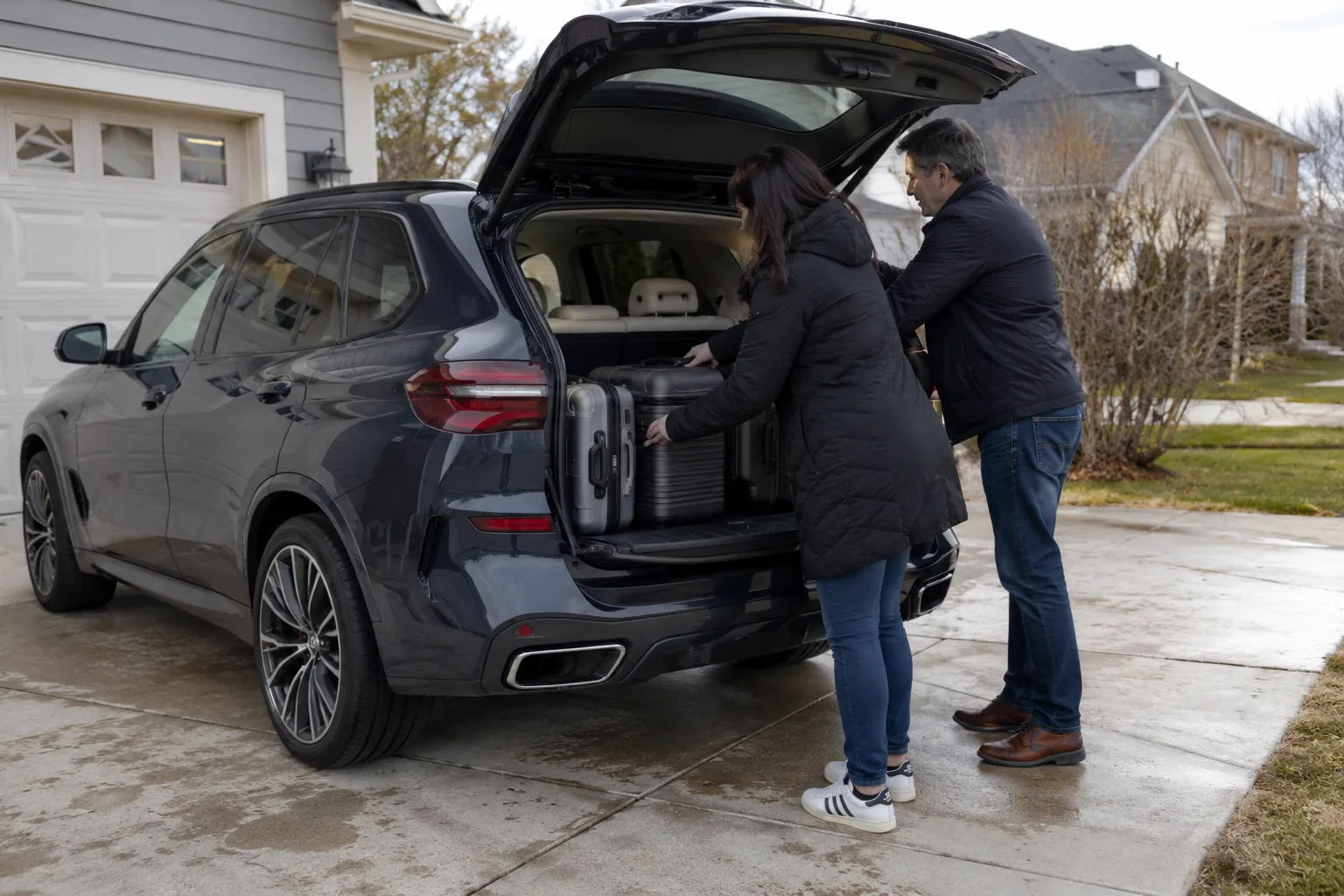
Payload disappears faster than many owners expect. Four adults can account for 650 to 800 pounds before a suitcase is added. A loaded cooler, stroller, roof box and hitch-mounted carrier all count. If a trailer places 600 pounds of tongue weight on the hitch, that load also uses the X5’s available payload.
For luggage volume rather than weight, see our measured-spec guide to BMW X5 cargo space with the seats up or folded.
Does the heavier X5 tow more?
Not automatically. Vehicle weight and trailer rating are different limits. BMW states that the 2026 X5 can tow up to 7,200 pounds when properly equipped with the available factory-installed trailer hitch. “Up to” is important: the approved trailer weight, tongue-weight limit and required equipment can vary by configuration.
Before towing, check the owner’s manual, hitch label, vehicle payload label and trailer ratings together. The trailer may be below 7,200 pounds while the vehicle is still overloaded because passengers, cargo and tongue weight exceed its payload or rear-axle limit.
Which 2026 BMW X5 is the lightest?
The sDrive40i is the lightest 2026 X5 at 4,919 pounds. It is the only rear-wheel-drive X5 in the U.S. lineup. The xDrive40i is the closest equivalent with all-wheel drive and weighs 4,998 pounds.
Which 2026 BMW X5 is the heaviest?
The xDrive50e is the heaviest at 5,573 pounds, 75 pounds more than the X5 M Competition. Its plug-in-hybrid battery and electric-drive hardware are the main reason. That does not by itself tell you which model has the most usable payload; verify the label on the exact vehicle.
What should you check before loading or towing?
- Do not use curb weight as the maximum allowed vehicle weight.
- Do not treat towing capacity as extra payload.
- Include the driver and every passenger in the load calculation.
- Include trailer tongue weight and aftermarket accessories.
- Keep the vehicle below both GVWR and the front/rear gross axle weight ratings.
- When close to a limit, weigh the loaded vehicle rather than relying on estimates.
For most buyers, the important comparison is simple: the six-cylinder X5 models stay just under 5,000 pounds, while the V8 and plug-in-hybrid versions are roughly 5,350 to 5,575 pounds. For real loading decisions, however, the label on the exact X5 wins over any general specification table.
Related Guides
BMW X5 Cargo Space: Trunk Size, Seats Folded and Luggage Fit
Is the Honda Pilot a Midsize SUV? Yes—But Honda Uses a Different Label
How to Tell If a Hyundai Was Built in the U.S. or Korea
What Does Tiguan Mean? The Volkswagen Name Story