
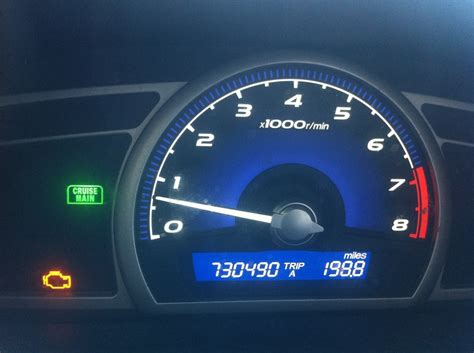
Honda Civics are known for their great gas mileage, making them a popular choice for commuters and car enthusiasts alike. But why is it that some Honda Civics are doing worse on mileage than others? The answer is usually a combination of factors, from routine maintenance to driving habits.
The most common cause of low gas mileage in a Honda Civic is a lack of routine maintenance. It’s important to regularly inspect and replace parts such as air filters, spark plugs, and fuel filters. Not taking proper care of your vehicle can reduce fuel efficiency, which can lead to poor gas mileage. Additionally, it’s essential to use the correct grade of motor oil for your Honda Civic, as using a lower grade can also reduce gas mileage.
Aside from maintenance, your driving habits can also have a major impact on the fuel efficiency of your Honda Civic. Aggressive driving, such as speeding and rapid acceleration, can lead to increased fuel consumption, while slower, steadier driving can actually help boost your gas mileage.
If your Honda Civic’s gas mileage is lagging, it’s generally a good idea to get a tune-up. A tune up will help ensure that your engine is running optimally, which can improve fuel efficiency. Additionally, you may want to consider getting a more fuel-efficient model of Honda Civic. The latest models of Honda Civic are equipped with cutting-edge fuel-saving technology, such as cylinder deactivation and auto stop/start, that can help boost your car’s fuel-efficiency ratings.
Overall, a Honda Civic can provide you with great gas mileage, but you’ll need to make sure that your car is properly maintained and you’re driving it efficiently. With the right care and maintenance, you should have no trouble getting the most out of your Honda Civic’s fuel economy.
Troubleshooting Poor MPG In Your Honda Civic
Honda Civics are known for their fuel efficiency, but sometimes they can start to show signs of reduced MPG. This can be due to a variety of issues, and it is important to identify the root cause in order to solve the problem.
The first place to start is to check the engine oil. If the oil level is low, it can put additional strain on the engine and affect fuel economy. Additionally, make sure that the oil is changed regularly as oil that is too thick or too thin can cause a decrease in MPG.
The next area to check is the air filter. A clogged air filter can affect the air-fuel mixture, resulting in decreased fuel efficiency. It is important to change the air filter on a regular basis and to check it for dirt and debris. If it needs to be changed, make sure to use an OEM filter.
It is also important to check the tire pressure. When tires are underinflated, they put more strain on the engine, resulting in lower MPG. Make sure to keep the tires at the recommended pressure for the vehicle.
Finally, check the spark plugs. Worn spark plugs can cause misfires, which can reduce fuel efficiency. It is important to replace the spark plugs regularly to make sure they are in good condition.
If you are still having trouble with the MPG of your Honda Civic, it is a good idea to take it to a mechanic for a more thorough diagnosis. The mechanic can check for any other potential issues that could be affecting the vehicle’s fuel efficiency.
By following these steps, you will be able to identify the root cause of any MPG issues you may be having with your Honda Civic. With proper maintenance and care, you should be able to keep your Honda Civic running at optimal fuel efficiency.
Tips And Tricks For Improving Honda Civic Mileage
Honda Civics are reliable cars, but sometimes they can have trouble getting good gas mileage. If your Honda Civic is getting bad mileage, there are several things you can do to improve it. Here are some tips and tricks for improving Honda Civic mileage.
The first and most important thing you can do to improve your Honda Civic’s gas mileage is to make sure that your car is properly tuned and serviced. Make sure your car has a clean air filter, a new spark plug, and an oil change. A well-tuned car will run more efficiently, which can lead to improved gas mileage.
Another important tip for improving Honda Civic mileage is to drive more slowly. The faster you drive, the more fuel your car will use. Try to keep your speed under the speed limit whenever possible.
You may also want to consider investing in a fuel-efficient car. Honda Civics can be quite fuel efficient, but some models are more fuel efficient than others. Consider looking into a hybrid or electric vehicle if you want to get the most out of your fuel.
Finally, make sure that you are using the proper grade of fuel in your Honda Civic. If your car is designed for premium fuel, then you should be using the premium grade. If your car is designed for regular fuel, then you should be using the regular grade.
| Tips and Tricks | Description |
|---|---|
| Make sure your car is tuned and serviced | Tuning and servicing your car will help it run more efficiently, which can lead to improved gas mileage. |
| Drive more slowly | The faster you drive, the more fuel your car will use. Try to keep your speed under the speed limit whenever possible. |
| Invest in a fuel-efficient car | Honda Civics can be quite fuel efficient, but some models are more fuel efficient than others. |
| Use the proper fuel grade | Make sure that you are using the proper grade of fuel in your Honda Civic. If your car is designed for premium fuel, then you should be using the premium grade. If your car is designed for regular fuel, then you should be using the regular grade. |
By following these tips and tricks, you can help improve your Honda Civic’s gas mileage and save money at the pump. Remember to keep your car tuned and serviced, drive slowly, invest in a fuel-efficient car, and use the proper grade of fuel for your car.
Related Guides
Is a Honda Pilot Considered a Standard SUV? Why Classifications Differ
Is 91 Octane Worth It Instead of 87? Check the Fuel Label First
Does the Ford 2.3 EcoBoost Require Premium Fuel?
How to Improve Honda Fit Fuel Economy: 15 Safe Steps