
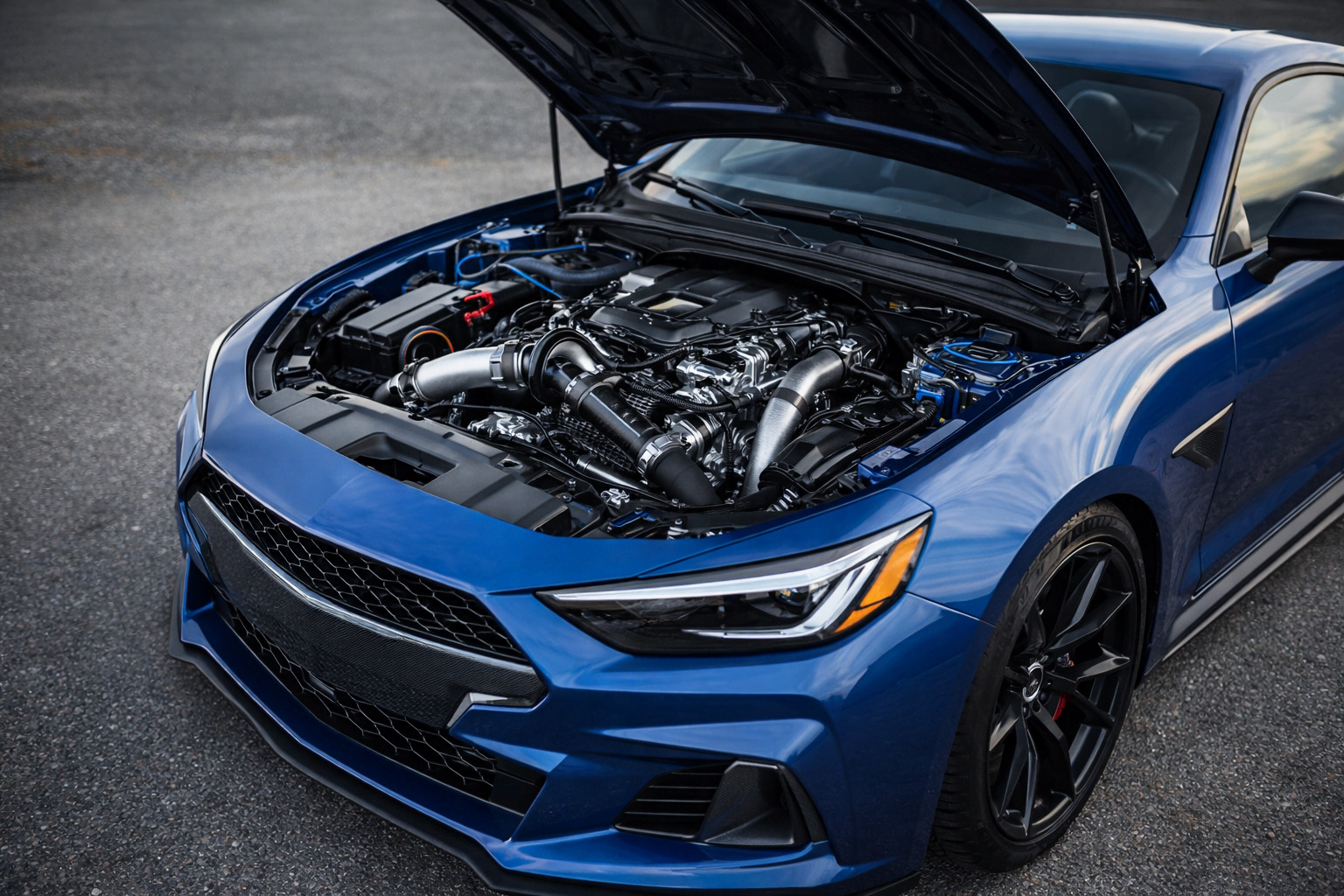
When people talk about car performance, the discussion usually revolves around horsepower figures, top speed claims, or aggressive marketing slogans. While these numbers may sound impressive, they rarely explain how a car actually behaves in real-world driving conditions.
Vehicle performance is not a single metric. It is the result of multiple mechanical and physical systems working together: how power is produced, how it is delivered to the wheels, how much weight the vehicle carries, and how efficiently it interacts with the road. Two cars with similar specifications can feel completely different behind the wheel, and understanding why requires looking beyond surface-level numbers.
This guide explains vehicle performance in a practical and experience-based way. Instead of focusing on brochure statistics, it breaks down what truly makes a car fast, responsive, and usable in everyday driving.
What Is Vehicle Performance?
Vehicle performance refers to how effectively a car accelerates, maintains speed, responds to driver input, and remains stable under different driving conditions. It is not limited to maximum speed, but to how confidently and predictably a vehicle delivers power when it is actually needed.
True performance is a balance between:
- Acceleration capability
- Power delivery across different speeds
- Vehicle control and traction
- Stability under load
- Braking and responsiveness
A high-performance vehicle should feel controlled and predictable, not just fast in ideal conditions.
Why Performance Is More Than Just Speed
Speed alone does not define performance. A car that can reach a high top speed but struggles to accelerate or respond quickly in traffic will often feel slower than a car with lower peak numbers but better power delivery.
In daily driving, performance is experienced in moments such as:
- Pulling away from a stoplight
- Merging onto a highway
- Overtaking another vehicle
- Climbing inclines with passengers or cargo
These scenarios depend far more on acceleration, torque delivery, and gearing than on top speed.
Performance in Real-World Driving Conditions
Real-world performance is shaped by factors that are often ignored in specifications:
- Traffic conditions
- Road surface quality
- Weather and temperature
- Tire grip
- Vehicle load
A truly well-performing car maintains consistent behavior across these variables rather than excelling only in controlled test environments.
Why Performance Numbers Can Be Misleading
Manufacturers often highlight peak performance figures measured under ideal laboratory or track conditions. While these numbers are technically accurate, they do not always represent how a vehicle performs during everyday use.
Several factors contribute to this disconnect.
Manufacturer Testing vs Real Life
Performance figures are typically recorded:
- With minimal vehicle load
- On optimized surfaces
- With professional drivers
- Under ideal weather conditions
In real life, vehicles operate under far less predictable circumstances, which can significantly affect acceleration, traction, and responsiveness.
Marketing Metrics vs Driver Experience
Many advertised metrics focus on maximum output rather than usability. For example:
- Peak horsepower may occur at very high engine speeds
- Top speed may be electronically limited or irrelevant
- Acceleration figures may rely on launch control systems rarely used by average drivers
As a result, a car may appear fast on paper but feel unremarkable during normal driving.
Horsepower and Torque Explained
Horsepower and torque form the foundation of vehicle performance, yet they serve different roles and are often misunderstood.
Torque represents the rotational force generated by the engine. It determines how strongly a vehicle can move from a standstill and how responsive it feels at low speeds.
Horsepower represents how long that force can be sustained as speed increases.
In practical terms:
- Torque influences how quickly a car reacts
- Horsepower influences how long acceleration continues
A balanced performance vehicle requires an effective combination of both.
What Torque Does at Low Speeds
High torque at low engine speeds allows a vehicle to accelerate smoothly without needing aggressive throttle input. This is especially noticeable in:
- City driving
- Stop-and-go traffic
- Towing or carrying heavy loads
Vehicles with strong low-end torque often feel quicker than their horsepower numbers suggest.
How Horsepower Sustains Acceleration
Horsepower becomes more relevant as speed increases. It determines how effectively a vehicle can continue accelerating at higher speeds and maintain momentum on highways or during extended overtaking maneuvers.
This is why sports cars prioritize horsepower alongside torque, while utility-focused vehicles often emphasize torque.
Acceleration vs Top Speed
Acceleration and top speed measure different aspects of performance and serve different purposes.
Acceleration describes how quickly a vehicle gains speed, commonly measured from 0 to 60 mph. This metric reflects real-world usability and responsiveness.
Top speed represents the maximum speed a vehicle can achieve under ideal conditions. For most drivers, it is rarely relevant outside controlled environments.
Why Acceleration Matters More in Daily Driving
In everyday use, acceleration determines how confident a vehicle feels when:
- Entering fast-moving traffic
- Passing slower vehicles
- Responding to sudden driving demands
A vehicle with strong acceleration often feels more capable than one with a higher top speed but slower response.
When Top Speed Actually Matters
Top speed becomes relevant primarily in:
- Track driving
- High-performance testing
- Engineering benchmarks
For daily driving, it has little impact on usability or safety.
What Does 0–60 Really Mean?
The 0–60 mph time measures how long it takes a vehicle to accelerate from a complete stop to highway speed. It is one of the most practical performance indicators because it reflects the combined effect of engine output, traction, gearing, and weight.
General reference points:
- Above 7 seconds: slow
- 6–7 seconds: average
- Around 5 seconds: quick
- Under 4 seconds: high performance
- Under 3 seconds: extreme performance
Electric vehicles often excel in this metric due to instant torque delivery.
Why Two Cars With Similar Power Feel Different
Two vehicles with similar horsepower figures can deliver very different driving experiences. This difference is influenced by how power is delivered and managed rather than how much power exists.
Weight and Power Delivery
Vehicle weight plays a crucial role in performance. A lighter car requires less force to accelerate, making it feel quicker even with lower power output.
Gearing and Drivetrain Differences
Gear ratios and drivetrain layouts determine how efficiently power reaches the road. Differences in these systems can dramatically change how a vehicle responds to throttle input, even when engine output is similar.
Performance Metrics Explained: How Car Performance Is Actually Measured
Understanding vehicle performance requires more than looking at a single headline number. Real performance is evaluated through a combination of metrics that describe how power is produced, delivered, and translated into motion. These metrics work together, and focusing on only one often leads to misleading conclusions.
In this section, we break down the most important performance metrics and explain what they actually mean in real-world driving.
Horsepower vs Wheel Horsepower
Most manufacturers advertise engine horsepower, also known as crank horsepower. This number represents the power produced by the engine before it passes through the drivetrain.
However, what actually moves the car is wheel horsepower, which is the power delivered to the wheels after losses from:
- Transmission
- Differential
- Driveshaft
- Axles
These drivetrain losses can range from 10% to over 25%, depending on the vehicle layout.
This is why two cars with identical advertised horsepower figures may perform very differently on the road. Wheel horsepower provides a more realistic representation of usable performance, especially when comparing vehicles across different drivetrains.
Why Advertised Horsepower Can Be Misleading
Advertised horsepower figures are measured under controlled conditions that maximize output. In real driving:
- Power delivery fluctuates
- Gearing affects usable power
- Electronic systems may limit output
As a result, real-world acceleration and responsiveness often differ from brochure claims.
Torque Curve Explained
Torque is not just about how much force an engine produces, but when it produces that force.
The torque curve shows how torque is distributed across the engine’s RPM range. A flat, wide torque curve delivers consistent pulling power across different speeds, while a narrow curve may feel strong only within a limited RPM window.
Flat vs Peaky Torque Delivery
- Flat torque curves provide smooth and predictable acceleration
- Peaky torque curves deliver sudden bursts of power but may feel inconsistent
Vehicles designed for daily driving benefit from broad torque delivery, while performance-oriented cars may prioritize high-RPM output.
Power-to-Weight Ratio
One of the most important yet often overlooked performance metrics is the power-to-weight ratio.
This metric measures how much power is available relative to the vehicle’s mass. Even modest power output can result in strong performance if the vehicle is lightweight.
Why Weight Matters More Than You Think
Reducing weight improves:
- Acceleration
- Braking
- Handling
- Fuel efficiency
This is why lightweight sports cars often outperform heavier vehicles with higher horsepower figures.
Real Performance vs Manufacturer Specifications
Performance numbers provided by manufacturers represent best-case scenarios. Real-world performance varies due to multiple factors that are not reflected in official specifications.
Environmental and Mechanical Factors
Real-world performance is influenced by:
- Temperature and altitude
- Road surface quality
- Tire condition
- Vehicle load
- Fuel quality
These variables can significantly alter how a car accelerates and responds.
Driver Input and Electronic Systems
Modern vehicles rely heavily on electronic systems to manage performance. Traction control, stability systems, and throttle mapping all affect how power is delivered.
While these systems improve safety and consistency, they can also limit raw performance under certain conditions.
Understanding Performance Data Correctly
To evaluate performance accurately, it is important to view metrics collectively rather than in isolation.
A realistic performance assessment considers:
- Acceleration metrics
- Torque availability
- Weight and balance
- Drivetrain efficiency
- Intended driving environment
This holistic approach provides a much clearer picture of how a vehicle will perform in everyday use.
Engine Types and Drivetrain Systems: How They Shape Real Performance
Engine design and drivetrain configuration play a decisive role in how a vehicle performs in real-world driving. Two cars with identical power figures can feel entirely different depending on how the engine produces power and how that power reaches the road.
In this section, we examine how different engine types and drivetrain layouts influence acceleration, responsiveness, traction, and overall driving behavior.
Naturally Aspirated Engines
Naturally aspirated engines rely on atmospheric pressure to draw air into the combustion chamber. They do not use turbochargers or superchargers to increase airflow.
Performance Characteristics of Naturally Aspirated Engines
Naturally aspirated engines are known for:
- Linear power delivery
- Immediate throttle response
- Predictable acceleration
Because power builds gradually with engine speed, these engines often feel smooth and controllable. Drivers can precisely modulate throttle input, which enhances driving confidence.
Advantages and Limitations
Advantages
- Consistent throttle response
- Lower mechanical complexity
- Strong reliability history
Limitations
- Lower torque at low RPM compared to forced induction
- Less efficient power scaling
Naturally aspirated engines are often preferred by drivers who value responsiveness and driving feel over raw numbers.
Turbocharged Engines
Turbocharged engines use exhaust gases to force additional air into the engine, increasing power output without increasing engine size.
How Turbocharging Affects Performance
Turbocharged engines can deliver:
- High torque at low RPM
- Strong mid-range acceleration
- Improved efficiency relative to engine size
This makes them well-suited for daily driving, especially in traffic and highway scenarios.
Turbo Lag and Power Delivery
One drawback of turbocharged engines is turbo lag, the delay between throttle input and power delivery. Modern turbo systems have reduced this effect significantly, but it can still influence driving feel.
Vehicles with well-tuned turbo systems balance efficiency with responsiveness, while poorly optimized setups may feel inconsistent.
Supercharged Engines
Supercharged engines use a belt-driven compressor powered directly by the engine. Unlike turbochargers, superchargers provide immediate boost.
Performance Impact of Supercharging
Supercharged engines offer:
- Instant throttle response
- Linear power delivery
- Strong acceleration across the RPM range
This makes them ideal for performance-focused applications where consistency and responsiveness are priorities.
Efficiency Trade-Offs
While superchargers improve responsiveness, they consume engine power to operate. This can reduce overall efficiency compared to turbocharged systems.
Electric Motors and Instant Torque
Electric vehicles redefine traditional performance metrics. Electric motors deliver maximum torque instantly, eliminating delays associated with combustion engines.
Why Electric Vehicles Accelerate So Quickly
Electric motors provide:
- Immediate torque delivery
- Single-speed transmissions
- Precise electronic control
This combination allows electric vehicles to achieve exceptional 0–60 times, often outperforming high-horsepower gasoline cars in acceleration.
Performance Beyond Straight-Line Speed
While electric vehicles excel in acceleration, sustained high-speed performance and thermal management remain important considerations for overall driving behavior.
Drivetrain Systems and Their Performance Impact
The drivetrain determines how engine power is distributed to the wheels. This directly affects traction, stability, and acceleration.
Front-Wheel Drive (FWD)
Front-wheel drive vehicles send power to the front wheels.
Performance Traits of FWD
- Efficient packaging
- Lower weight
- Predictable handling
However, high power levels can lead to traction limitations and torque steer.
Rear-Wheel Drive (RWD)
Rear-wheel drive vehicles send power to the rear wheels.
Why RWD Is Preferred for Performance
- Balanced weight distribution
- Improved acceleration under load
- Better steering feel
RWD layouts are commonly used in sports cars and performance sedans.
All-Wheel Drive (AWD)
All-wheel drive systems distribute power to all four wheels.
AWD and Performance Advantages
- Superior traction
- Consistent acceleration
- Improved performance in poor conditions
AWD systems are particularly effective for high-power vehicles and electric cars.
Trade-Offs of AWD Systems
- Increased weight
- Mechanical complexity
- Potential efficiency loss
Despite these trade-offs, AWD provides unmatched traction and consistency.
How Engine and Drivetrain Choices Affect Real-World Driving
The combination of engine type and drivetrain layout determines how a vehicle behaves in everyday situations such as:
- City traffic
- Highway overtaking
- Poor weather conditions
- Aggressive acceleration
Choosing the right configuration depends on intended usage rather than peak performance numbers.
Transmission, Tires, and Suspension: The Hidden Performance Factors
Engine power alone does not determine how fast or capable a car feels. Transmission behavior, tire grip, and suspension setup play a critical role in how effectively power is translated into motion.
In many cases, these components have a greater impact on real-world performance than headline horsepower figures.
Transmission Types and Acceleration
The transmission controls how engine power is delivered to the wheels. Gear ratios, shift speed, and transmission logic all influence acceleration and responsiveness.
Manual Transmissions
Manual transmissions give the driver full control over gear selection.
Performance Characteristics of Manual Gearboxes
- Direct mechanical connection
- Predictable power delivery
- Strong driver engagement
In skilled hands, a manual transmission can deliver excellent performance. However, results vary significantly depending on driver ability.
Limitations in Modern Performance Driving
In modern vehicles, manual transmissions often struggle to match the consistency and speed of advanced automatic systems. Missed shifts and slower gear changes can reduce acceleration efficiency.
Automatic Transmissions
Automatic transmissions manage gear changes electronically and hydraulically.
Why Modern Automatics Are Faster
- Faster shift times
- Optimized shift logic
- Consistent acceleration
High-performance automatics and dual-clutch systems often outperform manuals in straight-line acceleration.
Dual-Clutch Transmissions (DCT)
Dual-clutch transmissions combine the engagement of a manual with the speed of an automatic.
Performance Advantages of DCT Systems
- Near-instant gear changes
- Minimal power interruption
- Strong acceleration consistency
- These systems are commonly used in sports cars and high-performance vehicles.
CVT Performance Myths
Continuously Variable Transmissions (CVTs) are often misunderstood in performance discussions.
How CVTs Affect Performance
CVTs prioritize efficiency and smoothness over aggressive acceleration. While they may lack traditional shift feel, well-tuned CVTs can deliver consistent power delivery in daily driving scenarios.
Gear Ratios Explained
Gear ratios determine how engine speed translates into vehicle speed.
- Shorter gears improve acceleration
- Longer gears improve fuel efficiency and top speed
Performance-oriented vehicles often use shorter gearing to maximize responsiveness.
Tires: The Only Contact With the Road
No matter how powerful a car is, tire grip ultimately determines how much performance reaches the road.
Tire Grip and Acceleration
High-grip tires improve:
- Launch performance
- Cornering stability
- Braking distance
Low-grip tires can severely limit acceleration, especially in high-torque vehicles.
Tire Compounds and Real-World Performance
Performance tires are designed for grip, not longevity. Softer compounds provide better traction but wear faster, while harder compounds last longer but reduce performance.
Suspension and Vehicle Control
Suspension systems manage how a vehicle’s weight shifts during acceleration, braking, and cornering.
How Suspension Affects Acceleration
During hard acceleration, weight transfers to the rear of the vehicle. A well-tuned suspension maintains tire contact with the road, improving traction and stability.
Comfort vs Performance Trade-Offs
Soft suspension setups improve comfort but reduce responsiveness. Stiffer setups improve control but may compromise ride quality.
The best-performing vehicles balance comfort and control based on intended usage.
Launch Control Explained
Launch control systems optimize acceleration from a standstill by managing engine power, traction, and drivetrain behavior.
Why Launch Control Improves Performance
- Reduces wheel spin
- Ensures consistent acceleration
- Maximizes traction
While rarely used in daily driving, launch control highlights how electronics influence performance.
Vehicle Performance in Real-World Driving Scenarios
Performance specifications only tell part of the story. The true measure of a vehicle’s performance is how it behaves in real-world situations where traffic, road conditions, and driver expectations constantly change.
Understanding performance through practical scenarios provides a clearer picture of how a car will feel during everyday use.
Performance in City Driving
City driving places unique demands on a vehicle’s performance.
What Matters Most in Urban Conditions
- Strong low-end torque
- Smooth throttle response
- Predictable acceleration
- Easy power modulation
Vehicles that deliver power smoothly at low speeds feel more responsive and less stressful to drive in traffic. This is why many turbocharged and electric vehicles perform exceptionally well in urban environments.
Performance on Highways and During Overtaking
Highway driving emphasizes mid-range performance rather than raw acceleration from a standstill.
Key Performance Factors at Highway Speeds
- Mid-range torque
- Stable power delivery
- Transmission responsiveness
- Aerodynamic efficiency
Vehicles with strong mid-range acceleration inspire confidence when overtaking slower traffic or merging at high speeds.
Performance in Adverse Conditions
Performance is not limited to dry roads and ideal weather.
Driving in Rain, Snow, and Low-Traction Conditions
In poor conditions, performance depends heavily on:
- Drivetrain configuration
- Tire quality
- Electronic stability systems
All-wheel drive vehicles often provide superior traction, but proper tires and driver awareness remain critical for safety and control.
Daily Usability vs Maximum Performance
A car optimized purely for performance may not be enjoyable for daily use.
Finding the Right Balance
Extreme suspension setups, aggressive throttle tuning, and stiff drivetrains can improve lap times but reduce comfort. The best-performing daily drivers strike a balance between excitement and usability.
How to Evaluate Performance During a Test Drive
Understanding performance metrics is only valuable if it can be applied in real-world decision-making.
What to Pay Attention to When Driving
During a test drive, focus on:
- How quickly the car responds to throttle input
- How smoothly power is delivered
- Transmission shift behavior
- Steering feedback and stability
Numbers matter, but how the car feels is equally important.
Avoiding Common Performance Traps
Buyers should be cautious of:
- Overemphasis on peak horsepower
- Ignoring weight and drivetrain factors
- Confusing marketing claims with real performance
Evaluating performance holistically leads to better purchasing decisions.
Who This Performance Guide Is For
This guide is designed for:
- Buyers comparing different vehicles
- Enthusiasts seeking deeper understanding
- Drivers confused by performance specifications
- Anyone wanting to make informed automotive decisions
By understanding how performance truly works, readers can cut through marketing noise and focus on what actually matters.
Final Thoughts: What Really Makes a Car Fast
A fast car is not defined by a single number. True performance is a balance of power, weight, traction, engineering, and real-world usability.
Vehicles that feel fast do so because their components work together efficiently, not because of headline specifications alone. Understanding this balance allows drivers to appreciate performance beyond marketing claims and choose vehicles that align with their needs.
This performance guide serves as a foundation for deeper exploration into vehicle speed, acceleration, and driving dynamics across different vehicle types.
What’s Next?
This guide is the starting point for more detailed performance-focused articles, including:
- Real-world speed analysis of specific models
- Performance comparisons across vehicle categories
- Deep dives into acceleration, traction, and drivetrain behavior
These articles will build upon the concepts explained here and expand performance understanding even further.
Related Guides
Horsepower vs. Torque: What Actually Makes a Car Faster?
Fastest Quarter-Mile Time Ever Recorded? It Depends on the Class
Is the Honda Pilot a Midsize SUV? Yes—But Honda Uses a Different Label
How to Tell If a Hyundai Was Built in the U.S. or Korea