
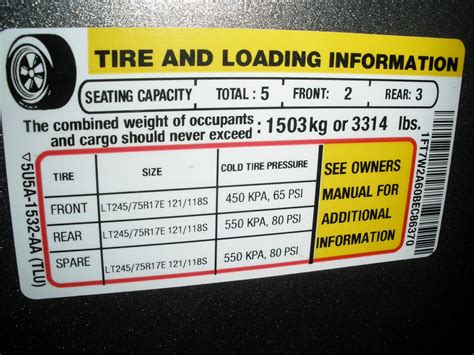
When it comes to increasing the payload of your Ford F-250, the most important factor to consider is your vehicle’s suspension system. Ford’s F-250 offers a wide range of suspension options, including a few different leaf spring setups as well as air springs and coilovers. Each of these suspension systems has its own benefits and drawbacks, so it’s important to select the right one for your needs.
For instance, leaf springs are the most common suspension system for the Ford F-250 and offer the highest overall payload capacity. However, leaf springs can be more prone to bouncing and harsh road conditions than other suspension systems. If you’re looking for a smoother ride and less stress on your vehicle, air springs or coilovers may be the better choice.
In addition to choosing the right suspension system, you can further improve the payload capacity of your Ford F-250 by upgrading your tires. Heavier-duty tires offer more support and can help you carry heavier loads without putting extra stress on your vehicle’s suspension. They can also provide better traction, which can help when driving on icy or muddy surfaces.
Finally, you can also increase the payload capacity of your Ford F-250 by making sure your vehicle is properly maintained. Properly maintained vehicles are less likely to experience breakdowns or damage caused by heavy loads, and they are also more efficient in fuel economy. Make sure your vehicle has routine oil changes and inspections, and keep an eye on its fluids and any signs of wear and tear.
These are just a few of the ways you can increase the payload of your Ford F-250. With a few simple upgrades, you can make sure your vehicle is capable of carrying heavier loads with ease and efficiency. Keep in mind that there are a variety of factors to consider when selecting the right suspension and tires for your vehicle, so it’s best to consult a qualified technician for advice.
Maximizing Payload On The F-250 Truck For Commercial Use
If you’re looking to maximize payload on your Ford F-250 Truck for commercial use, there are several ways to do it. The first is to make sure that the vehicle is equipped with the right components, such as a heavy-duty suspension, a high-capacity transmission, and an upgraded engine. Additionally, you can also add aftermarket parts and accessories, such as a bull bar, side steps, and extra-tough tires, to increase the truck’s towing and payload capacity.
Another way to increase payload on the F-250 is to make sure that the vehicle is properly loaded. The truck should be evenly loaded with weight distributed across the bed and cab. This ensures that the truck is able to efficiently carry heavier items and keeps the suspension and drivetrain from experiencing undue stress.
Finally, you can make sure that you are utilizing all the available cargo space. This involves using cargo carriers and other storage containers. This allows you to maximize the available cargo space and ensure that you are making the most of your truck’s payload capacity.
Overall, maximizing payload on the F-250 Truck for commercial use is essential for maximizing the vehicle’s efficiency and performance. By making sure that the vehicle is correctly equipped and loaded, you can ensure that it is able to handle heavier loads and provide maximum efficiency. Additionally, using cargo carriers and other storage containers can help you maximize your truck’s payload capacity and ensure that you are making the most of your investment.
Fundamentals Of Increasing Payload Capacity On The F-250 Pickup
Increasing payload capacity on the F-250 pickup can be a daunting task. It requires the right combination of components and modifications to make it happen. Fortunately, increasing payload capacity on the F-250 is possible with the right knowledge and tools. So if you’re looking to increase the payload capacity on your F-250 pickup, this guide is for you.
First, it’s important to understand the factors that determine payload capacity. These include the vehicle’s curb weight, the payload rating for the vehicle, and the maximum tow rating. Once you understand these factors, you can better determine which modifications to make to increase payload capacity. Here are some of the most effective ways to increase payload capacity on the F-250 pickup.
- Inspect and upgrade suspension components: The suspension plays a major role in the payload capacity of a vehicle. Installing higher-quality shocks, springs, and other suspension components can help to increase the payload capacity.
- Install airbags or lift kits: Airbags and lift kits are effective tools for increasing payload capacity. Airbags are effective for both improving ride quality and increasing payload capacity. Lift kits are also effective for increasing the payload capacity.
- Upgrade engine components: Upgrading the engine can also be beneficial for increasing payload capacity. For example, upgrading the transmission, air intake, and exhaust system can help to increase payload capacity.
In addition to upgrading engine components, there are a few other modifications that can be made to increase payload capacity. These include installing aftermarket bumpers, heavy-duty brakes, and larger tires. All of these modifications can help to increase the payload capacity of the F-250 pickup.
Finally, it’s important to consider the legal requirements for payload capacity. In many states, the legal limit for payload capacity is determined by the Gross Vehicle Weight Rating (GVWR). If you plan on increasing the payload capacity of your F-250 pickup, make sure you understand the legal requirements that apply in your state.
Increasing payload capacity on the F-250 pickup can be a great way to get more out of your vehicle. With the right modifications and an understanding of the legal requirements, you can increase the payload capacity of your F-250 pickup to accommodate heavier loads.
Related Guides
Is a Honda Pilot Considered a Standard SUV? Why Classifications Differ
Is 91 Octane Worth It Instead of 87? Check the Fuel Label First
Does the Ford 2.3 EcoBoost Require Premium Fuel?
How to Improve Honda Fit Fuel Economy: 15 Safe Steps