
Ford 10R80 10-Speed Transmission CDF Clutch Drum Failure: Harsh Shifts, Neutral Drop & TSB 23-2250 DIY Diagnostic Guide
Automotive Research, ASE Master Technicians & Fact-Checking
Direct Technical Summary
Diagnose the chronic Ford 10R80 10-speed transmission failure affecting F-150, Explorer, Mustang, and Expedition. We dissect internal CDF clutch drum bushing migration, harsh 3-4 and 7-8 shifts, gear ratio fault codes (P0734, P076F, P07D9), and the updated TSB 23-2250 retaining-lip drum replacement.
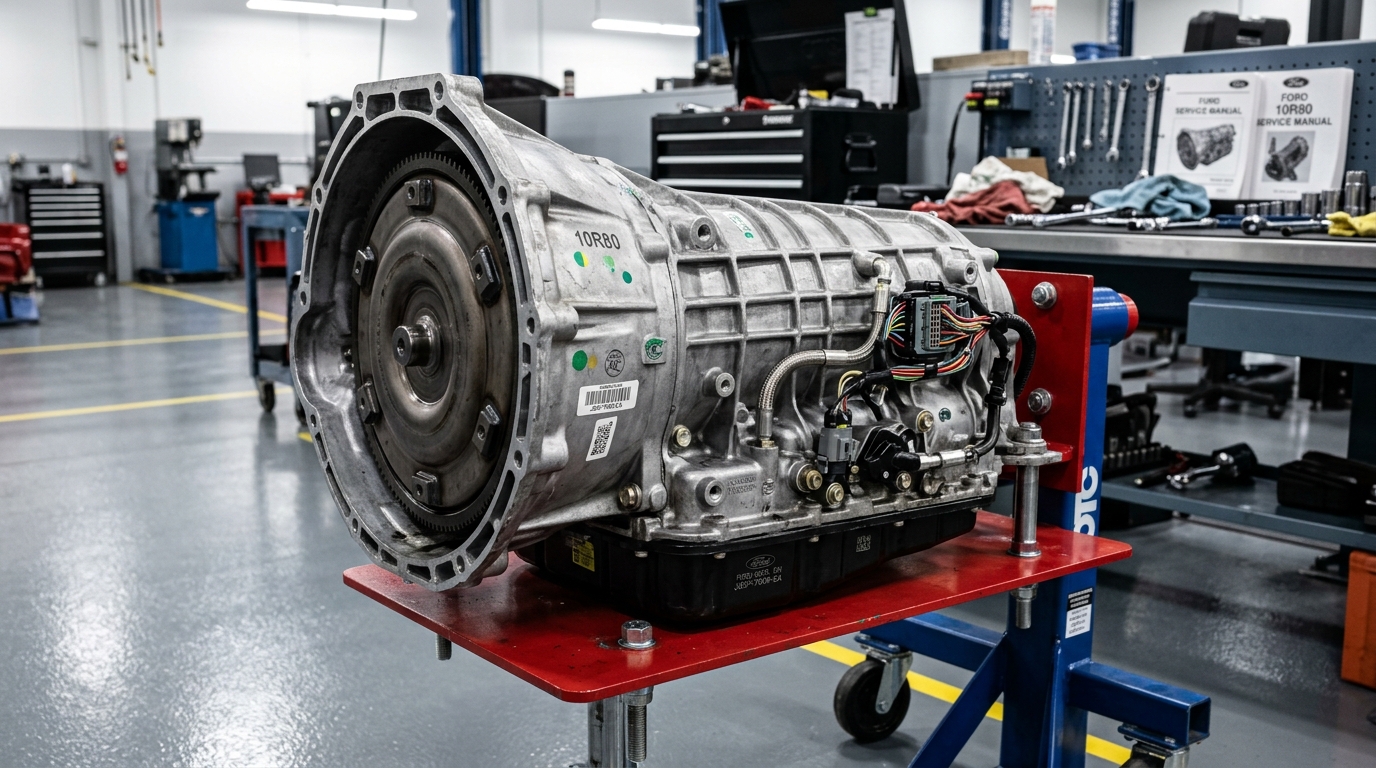
Co-developed by Ford Motor Company and General Motors, the Ford 10R80 10-speed automatic transmission was hailed upon its 2017 debut as an engineering triumph. Featuring triple planetary gearsets, six multi-plate shift clutches, and an ultra-wide 7.38:1 gear ratio spread, the 10R80 became the primary gearbox for millions of flagship vehicles—including the Ford F-150 (3.5L EcoBoost, 5.0L Coyote, 2.7L EcoBoost), Ford Expedition, Ford Explorer, Ford Mustang, Lincoln Navigator, and Ford Ranger. Yet behind its lightning-fast shift capabilities lies one of the most widespread mechanical design oversights in modern transmission engineering: CDF Clutch Drum Bushing Migration.
Across hundreds of thousands of trucks and SUVs, drivers report erratic drivability symptoms that begin as subtle shift hesitations and rapidly deteriorate into violent shuddering, sudden loss of motive power ("neutraling out" between 3rd and 4th gear), brutal clunks when shifting into reverse, and neck-snapping 7-to-8 upshifts under light load. When the internal press-fit brass sleeve inside the CDF clutch cylinder drum moves forward out of its bore, it physically occludes the high-pressure hydraulic feed passages that apply the C, D, and F clutch packs. Dealerships routinely quote $6,500 to $8,500 for complete remanufactured transmission replacements.
Following multiple revisions and widespread federal class-action lawsuits, Ford published the definitive factory remediation protocol: Technical Service Bulletin TSB 23-2250 (superseding TSB 22-2428). Based on official Ford service engineering documentation, teardown data from certified transmission rebuilders, and real-time live telemetry protocols, AutoZonic provides the authoritative forensic diagnostic manual for the Ford 10R80 transmission.
Quick Workshop Diagnostic: Ford 10R80 CDF Drum Failure at a Glance
- Affected Transmissions: Ford 10-Speed Hydra-Matic Architecture —
10R80,10R60(Explorer / Aviator), and heavy-duty10R140(Super Duty). - Affected Vehicles: 2017–2022 Ford F-150; 2018–2022 Expedition & Navigator; 2018–2023 Mustang; 2019–2023 Ranger; 2020–2023 Explorer. Vehicles built on or after August 16, 2022, received the updated drum design from the factory.
- Mechanical Root Failure: The factory CDF clutch cylinder drum (Part
HL3Z-7H351-B) lacks a mechanical retaining shoulder. Thermal expansion and internal hydraulic thrust cause the internal bronze/teflon bushing to walk forward, misaligning oil supply holes and starving the C, D, and F clutches of clamping pressure. - Associated OBD-II DTCs:
P0734(Gear 4 Incorrect Ratio),P076F(Gear 7 Incorrect Ratio),P07D9(Gear 8 Incorrect Ratio),P2703(Transmission Friction Element D Apply Time Range/Performance),P0751(Shift Solenoid A Performance). - Official Ford Permanent Fix: TSB 23-2250 — Teardown and replacement with the revised CDF cylinder drum featuring an integrated retaining lip (Ford Part
L1MZ-7H351-AorHL3Z-7H351-C) plus Main Control valve body overhaul.
1. The Forensic Failure Mechanism: Why Does the CDF Bushing Walk?
To understand the failure, one must inspect the internal architecture of the 10R80. The CDF cylinder drum is an aluminum rotating housing located in the front-middle section of the transmission case. It houses three independent clutch packs: the C-clutch (engaged in gears 1, 3, 5, 7, 8, 9), the D-clutch (engaged in gears 4, 5, 6, 7, 8, 9, 10), and the F-clutch (engaged in gears 1, 2, 8, 9, 10 and Reverse).
Because the drum rotates at high speeds around the center support, Ford utilized an internal pressed-in bronze/Teflon sleeve (bushing) through which pressurized Mercon ULV (Ultra-Low Viscosity) fluid is routed via cross-drilled feed holes. In the original factory design (2017 through mid-2022 builds), this sleeve was held in place solely by a microscopic interference press-fit. There was no retaining snap ring, shoulder, or mechanical ridge behind the bushing.
Under repeated thermal cycling (sump temperatures reaching 205°F to 220°F in heavy towing or stop-and-go driving) and continuous hydraulic pulsing, the aluminum drum expands at a higher thermal rate than the bronze sleeve. The interference fit loosens, and hydraulic thrust forces push the sleeve forward inside the cylinder bore—often by 1/8 to 1/4 of an inch (3mm to 6mm).
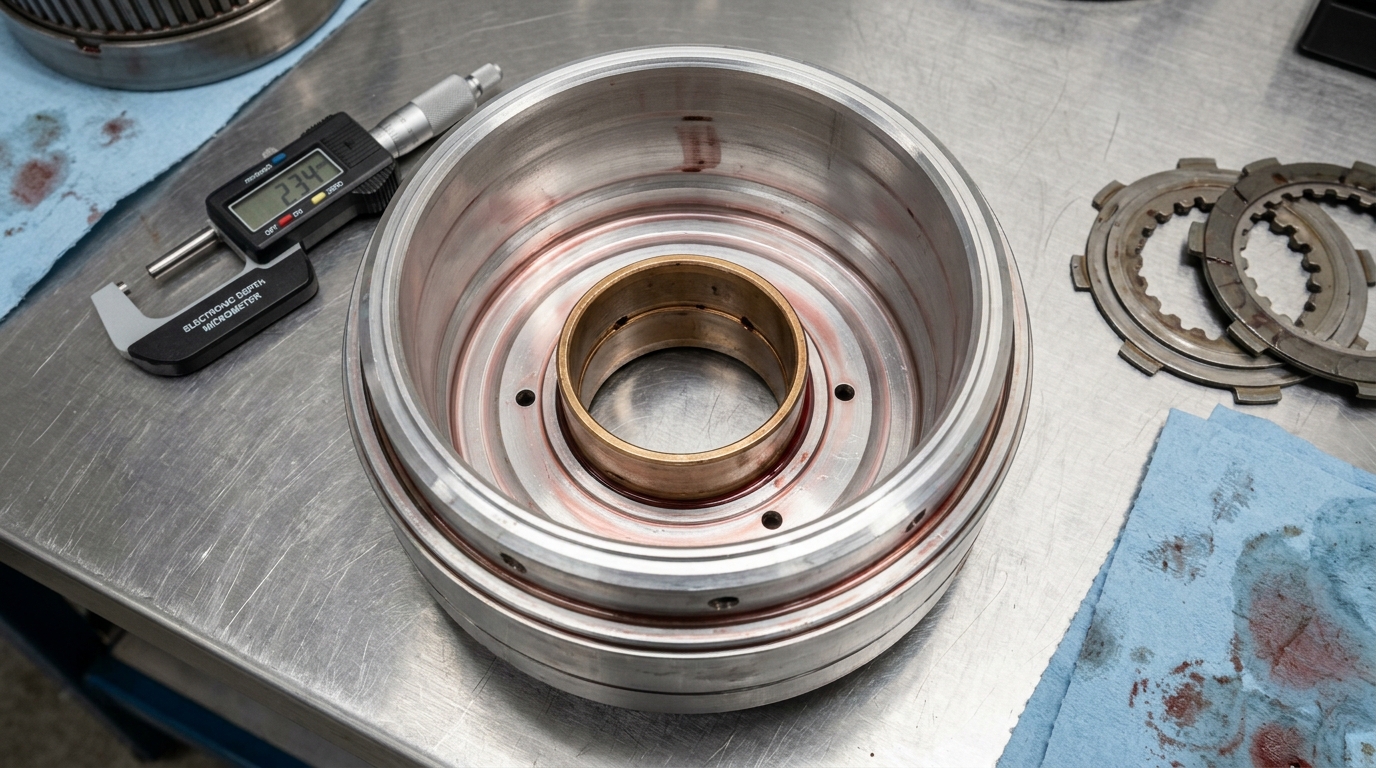
Once the bushing migrates forward:
- The sleeve physically blocks the cross-drilled fluid feed holes, throttling hydraulic line pressure to the applying clutches.
- Pressurized fluid leaks past the displaced bushing seals directly into the transmission sump instead of holding the clutch pack clamped tight.
- When the TCM commands a 3-to-4 upshift (which requires applying the D-clutch), pressure takes 2 to 3 seconds to build. The engine revs freely as if dropped into neutral. When pressure finally spikes high enough to overcome the leak, the clutch clamps instantaneously, slamming the driveline with a violent metallic bang.
- The severe slipping quickly burns the paper-composite friction material down to bare steel plates, contaminating the entire fluid circuit with microscopic metallic clutch debris.
2. Telemetry & Field Diagnostic Protocols: Isolating CDF Drum Failure
Because the Transmission Control Module (TCM) in the 10R80 continuously recalculates adaptive shift tables, subtle bushing migration is initially masked by the vehicle adjusting clutch fill times. However, once the adaptation limit is exceeded, distinctive symptoms and live PID telemetry emerge:
| Diagnostic Parameter & Shift Event | Normal 10R80 Operating Baseline | CDF Drum Bushing Migration (TSB 23-2250) |
|---|---|---|
| 3-to-4 & 3-to-5 Shift Transition | Seamless, progressive handoff taking 250–350 ms with smooth engine torque truncation. | Prolonged flare / neutral drop lasting 1.5–3.0 seconds, followed by violent mechanical engagement that jerks the vehicle. |
| Park-to-Reverse Engagement Time | Immediate reverse engagement within 0.5 to 0.8 seconds without harsh driveline clunk. | Delayed reverse engagement taking 2.0 to 4.0+ seconds, often followed by an audible slam into gear. |
| Clutch Adaptive Fill Time (TCM PIDs) | Clutch D and F fill times within OEM calibration window (±15 ms from baseline). | Clutch D apply time maxed out at upper adaptation ceiling (+60 ms to +100 ms limit), tripping DTC P2703. |
| Transmission Pan Fluid Inspection | Clear amber/pinkish Mercon ULV fluid with light grey dusting on pan magnets. | Dark brownish/black fluid smelling burnt, with heavy bronze glitter and steel clutch plate shavings on magnets. |
⚠️ Workshop Field Note: Do Not Assume a TCM Re-Flash Will Fix It
Many dealerships initially attempt to clear customer complaints by resetting the Transmission Adaptive Tables (KAM - Keep Alive Memory) and performing a solenoid strategy update. While clearing KAM temporarily hides the shift flares for 50 to 150 miles as the computer re-learns, adaptive software cannot repair a physically displaced brass sleeve. Once the TCM reaches its maximum fill-time compensation limit, the violent neutral flares return with increased severity.
3. The Permanent Engineering Fix: TSB 23-2250 & The Updated CDF Drum
Recognizing the root cause of the bushing movement, Ford engineering redesigned the CDF cylinder drum assembly in late 2022. The superseded drum (Ford Part L1MZ-7H351-A for 10R80 applications, superseding HL3Z-7H351-B and HL3Z-7H351-C) incorporates a precision-machined internal retaining shoulder (lip). This solid mechanical lip physically locks the bronze sleeve into place, making it impossible for the bushing to walk forward under hydraulic pressure or heat expansion.
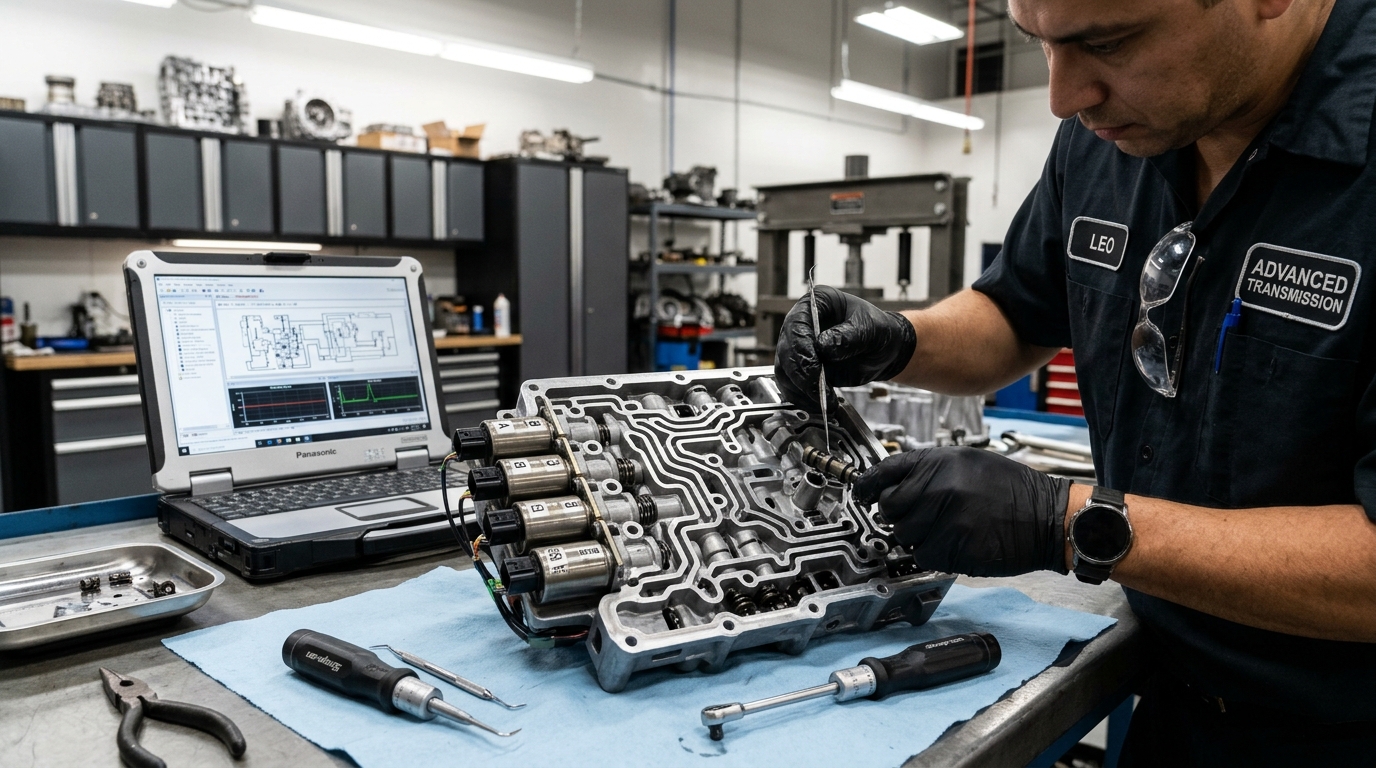
Complete TSB 23-2250 Service Workflow
- Transmission Removal & Teardown: Hoist vehicle, disconnect driveshafts, exhaust cross-pipe, and cooler lines. Remove 10R80 from vehicle and place on a dedicated fixture bench. Remove the torque converter, front pump assembly, and planetary gear carrier to access the center support.
- Extract & Discard Defective Drum: Slide out the original CDF clutch cylinder drum (
HL3Z-7H351-B). Inspect the bronze sleeve inside the bore. In 95% of shuddering/slipping units, the sleeve will be visibly dislodged forward. Discard the drum assembly. - Friction Pack & Steel Inspection: Disassemble the C, D, and F clutch packs. In units driven with prolonged slip, the D-clutch frictions will be burnt down to bare metal. Replace all friction discs and steels with OEM updated high-energy friction kits.
- Install Updated Lip-Retained CDF Drum: Install the redesigned CDF cylinder drum (Part
L1MZ-7H351-A). Verify the machined retaining lip is present and that the three Teflon sealing rings on the center support are replaced with new scarf-cut seals lubricated with transmission assembly gel. - Main Control Overhaul & Separator Plate: Teardown the lower valve body assembly. Wash all spool valves in mineral spirits to remove clutch debris. Install an updated valve body bonded separator plate (Part
HL3Z-7Z490-E) to prevent internal cross-leakage. - Reassembly, Mercon ULV Fill & Level Check: Reassemble transmission with new front pump seal and pan filter. Reinstall into truck. Fill with approximately 12 to 13 quarts of genuine Ford Motorcraft Mercon ULV (Part XT-12-QULV). Warm transmission fluid to 206°F to 215°F (97°C to 102°C) to open the internal thermostat, then verify fluid level using the side standpipe dipstick (Position 5 to 6 on indicator).
- Adaptive Learn Reset & Strategy Download: Using a professional bi-directional diagnostic scan tool, clear TCM KAM and enter the 13-digit solenoid strategy code printed on the valve body tag into the TCM. Execute the Ford 10-speed drive cycle relearn procedure.
Accurately diagnosing internal 10R80 hydraulic cross-leaks and capturing metallic clutch friction debris before complete planetary failure requires precision diagnostic hardware:

BlueDriver Bluetooth Pro OBD-II Diagnostic Scan Tool
Technician Recommended for Enhanced OEM PIDs
- ✓Enhanced Diagnostics: Reads proprietary manufacturer ABS, Airbag, transmission, and body codes.
- ✓Real-Time Telemetry: Graph live oil pressure, coolant temp (ECT), and cam phaser angular deviation.
- ✓Wireless Bluetooth: Full iOS & Android integration with zero monthly subscription fees.
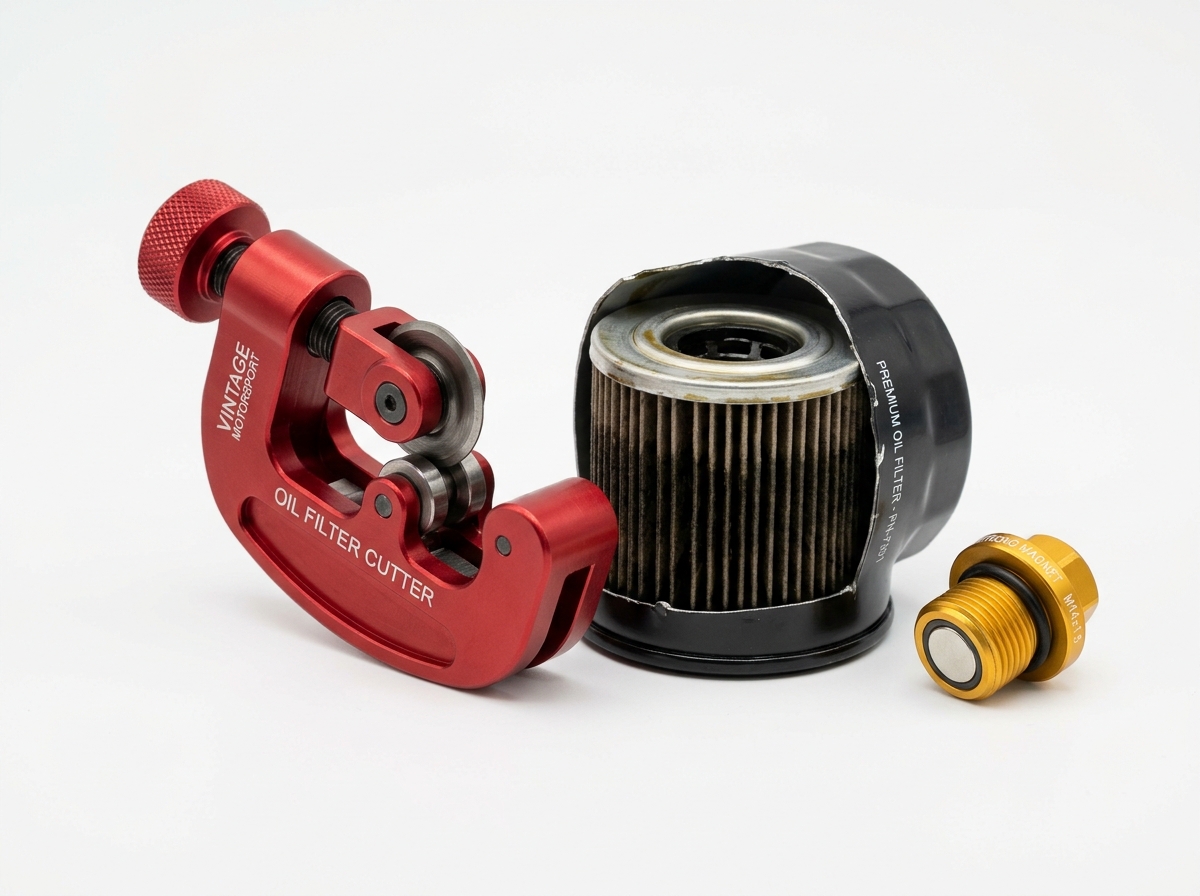
Billet Aluminum Oil Filter Inspection Cutter Tool
Early Metal Swarf & Bearing Flake Detection
- ✓Clean Billet Cutting: Hardened roller bearings slice filter canister without creating metal filings.
- ✓Irrefutable Dealer Proof: Microscopic inspection of paper pleats for copper/bronze bearing flakes.
- ✓Universal Fitment: Accommodates spin-on and cartridge filters from 2-3/8" to 5" diameter.
⚠️ Mandatory Fluid Warning: Use Only Mercon ULV (Yellow Bottle)
Never use legacy Mercon V, Mercon LV, Dexron VI, or multi-vehicle ATF in a 10R80 transmission. The 10R80 operates with ultra-narrow solenoid orifices and clutch clearances designed strictly for Mercon ULV (Ultra-Low Viscosity). Installing thicker fluid will cause hydraulic spool valve sticking, excessive line pressure drops, and catastrophic planetary gearset failure within 500 miles.
4. Warranty Coverage, Class-Action Blueprints & Service Strategy
Because the 10R80 CDF drum issue is an acknowledged manufacturing defect, multiple federal class-action lawsuits (e.g., Orndorff et al. v. Ford Motor Company) have been consolidated across the United States. Owners navigating repairs should follow these strategic warranty steps:
- Factory Powertrain Warranty (5 Years / 60,000 Miles): If your vehicle is under 60,000 miles, Ford dealerships are obligated under TSB 23-2250 to perform the complete CDF drum teardown and valve body overhaul at zero cost. Present the exact TSB number to your service advisor to bypass routine software re-flashes.
- Certified Pre-Owned (CPO) & Extended Service Plans (ESP): Ford PremiumCARE ESP fully covers the tear-down labor (typically 14 to 18 billable hours) and all internal replacement components, leaving you responsible only for your deductible ($50 to $100).
- Out-of-Warranty Goodwill Assistance: If your vehicle is just beyond the 60,000-mile threshold (e.g., 65,000 to 80,000 miles) with a verified service history at a Ford franchise dealer, request an escalation to the Ford Customer Relationship Center (CRC) for a "Prior Approval Goodwill Adjustment." Ford routinely contributes 60% to 75% of the repair bill citing TSB 23-2250 documentation.
- Independent Transmission Rebuild Option: If forced to pay out-of-pocket, independent ATRA-certified transmission rebuild shops typically charge $3,500 to $4,500 for a complete bench overhaul utilizing the updated
L1MZ-7H351-Adrum and a rebuilt valve body—saving owners over $3,500 compared to dealership remanufactured swap quotes.
Summary: The Definitive Owner Action Checklist
If your 10R80-equipped Ford F-150, Explorer, Mustang, or Expedition exhibits harsh 3-4 shifts, neutral drop hesitations, or clunking reverse engagements:
- Connect an enhanced OBD-II diagnostic scanner and check for pending transmission ratio codes (
P0734,P076F,P07D9) and clutch apply performance codes (P2703). - Inspect transmission pan fluid. Burnt odor and bronze glitter confirm the CDF clutch drum sleeve has walked and scorched the internal friction discs.
- Do not accept a simple PCM software flash or adaptive KAM clear as a permanent resolution for physical mechanical sleeve slip.
- Demand or execute the factory repair specified in Ford TSB 23-2250, ensuring the updated L1MZ-7H351-A CDF cylinder drum with the integrated mechanical retaining lip is installed alongside genuine Motorcraft Mercon ULV fluid.
Researching this vehicle or comparing used inventory?
Always cross-reference factory service bulletins, verify warranty coverage, and compare dealer financing rates or insurance quotes before purchasing.
Reader Feedback
Was this technical guide helpful?
Your verification vote informs our ongoing automotive research schedule.