
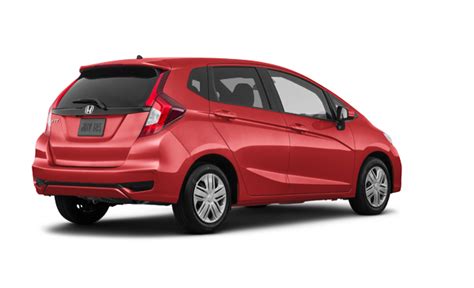
Does the Honda Fit have Honda Sensing? Some U.S. models do. For 2020, Honda Sensing is standard on EX and EX-L trims but not offered on LX or Sport. Earlier 2018–2019 availability differs by trim and transmission, so a used buyer should verify the exact year, trim, dashboard controls and VIN rather than assuming every Fit includes the suite.
2020 Honda Fit Honda Sensing Availability
| 2020 trim | Honda Sensing |
|---|---|
| LX | Not available for 2020 |
| Sport | Not available for 2020 |
| EX | Standard |
| EX-L | Standard |
Honda streamlined the 2020 lineup and removed the earlier LX and Sport Honda Sensing configurations. Listings that say “all 2020 Fits have Honda Sensing” are incorrect.
What Does Honda Sensing Include on a 2020 Fit?
- Collision Mitigation Braking System (CMBS): can warn and apply braking when it detects a potential frontal collision.
- Road Departure Mitigation (RDM): can provide steering and braking assistance when the car appears to leave a detected roadway.
- Lane Keeping Assist System (LKAS): can provide steering assistance to help keep the vehicle centered in a detected lane.
- Adaptive Cruise Control (ACC): adjusts speed to maintain a set following interval.
- Lane Departure Warning and Forward Collision Warning: provide alerts under qualifying conditions.
- Auto High-Beam Headlights: included on Honda Sensing-equipped versions.
These systems assist the driver; they do not make the Fit self-driving and do not replace braking, steering, mirror checks or attention.
Is Honda LaneWatch Part of Honda Sensing?
No. Honda LaneWatch is a separate passenger-side camera system on 2020 EX and EX-L trims. Activating the right turn signal displays a camera view of the passenger-side roadway. It is not a conventional radar blind-spot monitoring system and does not monitor both sides.
Does the Fit Have Blind-Spot Monitoring?
The final U.S. Fit does not use the modern two-sided blind-spot information system found on many newer Hondas. LaneWatch can help show the passenger side, but the driver must still use mirrors and shoulder checks. Do not describe LaneWatch as rear cross-traffic alert or full blind-spot monitoring.
How to Identify a Honda Sensing Fit
- Confirm the model year and trim from the VIN and original documentation.
- Look for Honda Sensing controls on the steering wheel and dashboard.
- Start the car and check that system indicators illuminate and complete their self-check.
- Inspect the windshield camera area for damage, obstruction or incorrect replacement glass.
- Review service records for windshield replacement, collision repairs and calibration.
- Test systems only in safe conditions and follow the owner’s manual.
Can Honda Sensing Be Added Later?
A complete factory-equivalent retrofit is usually impractical. The suite depends on cameras, control modules, switches, wiring, braking and steering integration, software and calibration. Portable aftermarket warning devices are not the same as factory Honda Sensing and should not be marketed as equivalent.
Calibration After Windshield or Collision Repair
The forward camera must have a clear, correctly positioned view. Windshield replacement, suspension alignment changes or front-end repairs can require inspection and calibration according to Honda procedures. A missing warning light does not guarantee the system is correctly aimed.
Common Limitations
- faded, missing or temporary lane markings;
- rain, fog, snow, glare or darkness;
- a dirty or obstructed windshield camera area;
- sharp curves and narrow roads;
- vehicles cutting in suddenly;
- unusual vehicle shapes, pedestrians or stationary objects outside system parameters;
- incorrect tires, alignment or collision repairs.
Is a Honda Sensing Fit Safer?
Driver-assistance features can add useful warnings and intervention, but safety depends on far more than one package: crash structure, airbags, tires, brakes, headlights, driver behavior and vehicle size all matter. IIHS testing of the 2015–2020 Fit shows strong results in several original crashworthiness tests, while headlight performance and LATCH ease vary.
Best Used Trim for Honda Sensing
For a 2020 buyer who specifically wants the suite, EX and EX-L are the relevant trims. EX-L adds leather and heated front seats; it does not make the driver-assistance systems fundamentally different. Condition, correct repairs and calibration matter more than choosing the highest trim.
Used-Car Safety-System Checklist
- Scan all modules for current and history codes.
- Inspect the windshield and camera mounting area.
- Check tire size, pressure and alignment.
- Verify every warning lamp and switch.
- Review collision and windshield-replacement history.
- Confirm open recalls by VIN.
- Do not accept taped-over lights or claims that alerts are “normal.”
Related Honda Fit Safety Guides
How We Verified the Equipment
AutoZonic reviewed Honda’s official 2020 Fit Honda Sensing, trim, LaneWatch and safety pages plus IIHS testing. We label equipment by model year and trim and removed legacy claims that every Fit has the suite, blind-spot monitoring or autonomous capability. Reviewed by the AutoZonic Editorial Team on August 2, 2026.
Frequently Asked Questions
Does the 2020 Honda Fit LX have Honda Sensing?
No. Honda Sensing is not available on the 2020 LX.
Does the 2020 Fit Sport have Honda Sensing?
No. The 2020 Sport does not offer the suite.
Which 2020 Fits have lane keeping assist?
EX and EX-L, because LKAS is part of their standard Honda Sensing suite.
Is LaneWatch blind-spot monitoring?
No. It is a passenger-side camera view and does not provide two-sided radar blind-spot alerts.
Can Honda Sensing drive the car by itself?
No. The driver remains responsible for steering, braking, speed, observation and control at all times.
Related Guides
Is a Honda Pilot Considered a Standard SUV? Why Classifications Differ
How to Improve Honda Fit Fuel Economy: 15 Safe Steps
Why Was the Honda Fit Discontinued in the U.S.?
How Long Does a Honda Fit Last? Mileage and Lifespan Guide