
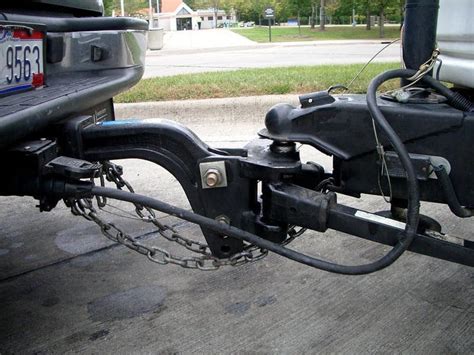
No. Installing a hitch does not increase the towing capacity assigned to your vehicle by its manufacturer. A higher-rated receiver can remove the receiver as the weakest component when the vehicle itself is already rated to tow more, but it cannot raise the vehicle’s maximum trailer-weight, gross combined weight, axle, payload, tire, or tongue-weight limits.
Your real towing limit is the lowest applicable rating in the complete system: the tow vehicle, receiver, ball mount, hitch ball, weight-distribution equipment (if permitted), trailer, tires, axles, and brakes. Never use the rating printed on a hitch as the vehicle’s towing capacity.
What a Stronger Hitch Can—and Cannot—Change
A receiver hitch is one component of the towing system. Replacing a lower-rated receiver with a correctly installed, vehicle-specific receiver may let you use more of a towing capacity the vehicle already has. It does not upgrade the engine cooling, transmission, brakes, frame, suspension, axle ratings, tires, or the manufacturer’s certified weight limits.
For example, suppose a vehicle is documented to tow up to 5,000 lb in its exact configuration, but its installed receiver is rated for only 3,500 lb. The safe limit is 3,500 lb while that receiver is the weakest link. A manufacturer-approved 5,000-lb receiver could remove that restriction, allowing use of the vehicle’s existing 5,000-lb rating. It would not make the vehicle safe or approved for 6,000 lb.
The reverse matters too: a 10,000-lb receiver installed on a vehicle rated to tow 3,500 lb does not create a 10,000-lb tow vehicle. The vehicle limit remains 3,500 lb or less after accounting for passengers, cargo, tongue weight, and other restrictions.
The Ratings That Set Your Actual Limit
| Rating | What it limits | Where to verify it |
|---|---|---|
| Maximum loaded trailer weight | The heaviest fully loaded trailer allowed for the vehicle’s exact configuration | Owner’s manual, manufacturer towing guide, VIN-specific towing tool, or dealer documentation |
| GCWR | Maximum combined weight of the loaded tow vehicle and loaded trailer | Manufacturer towing guide or owner documentation |
| GVWR | Maximum loaded weight of the tow vehicle | Certification label and owner’s manual |
| GAWR | Maximum load allowed on each axle | Certification label and owner’s manual |
| Payload / cargo capacity | Occupants, cargo, accessories, and the trailer’s tongue or pin weight carried by the vehicle | Tire-and-loading label and owner documentation |
| Receiver and vertical-load rating | Maximum trailer and tongue weight the receiver can carry in its stated configuration | Receiver label and hitch manufacturer instructions |
| Ball mount and hitch ball ratings | Limits for the removable connection components | Markings on each component |
| Trailer GVWR and component limits | Maximum loaded trailer and limits of its axles, tires, coupler, and brakes | Trailer certification label and component markings |
Ford’s current towing guidance defines GCWR as the maximum allowable weight of the loaded vehicle and loaded trailer, including passengers and cargo. Its model-specific towing guides also state that the combined vehicle-and-trailer weight must not exceed the listed GCWR. These limits remain in force even when the receiver has a higher number printed on it.
How to Find a Safe Towing Limit
- Identify the exact vehicle configuration. Year, model, engine, transmission, axle ratio, drive type, wheelbase, cab/bed layout, and factory tow package can change the rating. A generic model maximum is not automatically your vehicle’s rating.
- Use manufacturer documentation. Check the owner’s manual, towing guide, certification label, and tire-and-loading label. If the equipment is unclear, use a VIN-specific manufacturer tool or confirm with the manufacturer/dealer. Our guide to checking for a tow package by VIN explains what a VIN can and cannot establish.
- Record every component rating. Include the receiver, ball mount, hitch ball, coupler, safety chains, tires, axles, and any weight-distribution equipment.
- Load the vehicle and trailer as they will travel. Count passengers, fuel, cargo, accessories, and trailer tongue or pin weight. Tongue weight is carried by the tow vehicle and reduces available payload.
- Weigh the combination. A certified public scale is the most reliable way to compare actual vehicle, axle, trailer, and combined weights with their ratings.
- Use the lowest result. Do not average ratings or assume one high number cancels a lower limit.
A simple planning check is:
Available combined trailer allowance = GCWR − actual loaded tow-vehicle weight.
That result is only one ceiling. The allowed loaded trailer weight may still be lower because of the manufacturer’s trailer rating, remaining payload, rear-axle load, receiver rating, tongue-weight rating, tires, or trailer limits.
Does a Weight-Distributing Hitch Increase Towing Capacity?
A weight-distributing hitch can transfer part of the tongue-load effect across the tow vehicle and trailer axles, helping restore load distribution and handling when it is correctly sized and adjusted. Some receivers publish separate “weight carrying” and “weight distributing” limits.
That does not mean the equipment raises the vehicle manufacturer’s maximum towing capacity, GCWR, GVWR, GAWR, payload, or tire ratings. It may allow use of a higher receiver mode only when both the vehicle manufacturer and hitch manufacturer permit it. Some vehicles and trailers restrict or prohibit weight-distribution systems, so the owner’s manuals for both must control.
Can an Aftermarket Tow Package Raise the Rating?
A factory tow package may include more than a receiver: upgraded cooling, wiring, brakes or brake controller provisions, suspension components, mirrors, axle ratio, and software may be involved. Bolting on selected aftermarket parts does not automatically turn a non-tow-package vehicle into the manufacturer-rated factory configuration.
Only rely on a higher capacity when the vehicle manufacturer provides written documentation that the exact retrofit changes the applicable rating. A shop’s component rating or an advertisement is not a substitute for vehicle-specific approval.
Common Towing-Capacity Mistakes
- Using the hitch class as the vehicle rating. A class or receiver rating describes the component, not the whole vehicle.
- Quoting the model’s headline maximum. Marketing maximums often apply only to a specific configuration.
- Ignoring payload. Passengers, cargo, accessories, and tongue weight can reach GVWR or rear GAWR before the trailer reaches the advertised tow rating.
- Using dry trailer weight. Batteries, propane, water, options, food, tools, and luggage make the traveling weight higher.
- Assuming weight distribution creates capacity. It changes how load is distributed; it does not erase certified limits.
- Rating only the receiver. The ball mount, ball, coupler, tires, brakes, and trailer may have lower limits.
Frequently Asked Questions
Can I install a higher-class hitch than my vehicle’s tow rating?
Only if the hitch is designed for the vehicle and installed according to its instructions. The higher hitch rating still does not increase the vehicle’s documented towing capacity.
Does adding a hitch mean a vehicle can tow?
No. Some vehicles are not approved for trailer towing even if an aftermarket receiver physically fits. Follow the owner’s manual and manufacturer guidance for the exact model and configuration.
Can suspension helpers or airbags increase towing capacity?
No. They may change ride height or load support, but they do not increase GVWR, GAWR, GCWR, payload, tire ratings, or the manufacturer’s trailer-weight limit.
Can trailer brakes increase the vehicle’s tow rating?
Trailer brakes may be required above certain weights and can improve control, but they do not independently raise the vehicle manufacturer’s rating. Follow the vehicle and trailer manuals plus applicable local law.
What if the receiver rating is lower than the vehicle rating?
The receiver becomes the limiting component. A properly approved higher-rated receiver may let you use more of the vehicle’s existing capacity, but never more than the lowest remaining limit.
Bottom Line
A hitch can enable towing and a stronger receiver can remove a component bottleneck, but a hitch alone cannot increase the towing capacity of the vehicle. Verify the exact vehicle rating, load the combination realistically, weigh it, and stay below every applicable limit. If any rating or factory equipment is uncertain, confirm it with the vehicle manufacturer or an authorized dealer before towing.
Official Sources
- Ford: Towing Capacity, Towing Guides & GCWR
- Ford: 2026 RV & Trailer Towing Guide
- Ford: VIN-Specific Towing Calculator
- NHTSA: Manufacturer Towing and Hitch Rating Interpretation Records
Reviewed August 12, 2026. This article explains general towing-rating principles and is not a substitute for the owner’s manuals, labels, manufacturer instructions, professional installation requirements, or laws that apply to a specific vehicle and trailer.
Related Guides
2026 Toyota RAV4 Towing Capacity: Which Trims Can Tow 3,500 lb?
Can a VIN Tell You If a Vehicle Has a Tow Package?
How Do I Know If My F-150 Has a Heavy-Duty Tow Package? Check by Model Year
How Much Can I Tow by VIN? Find Your Vehicle-Specific Towing Limit