
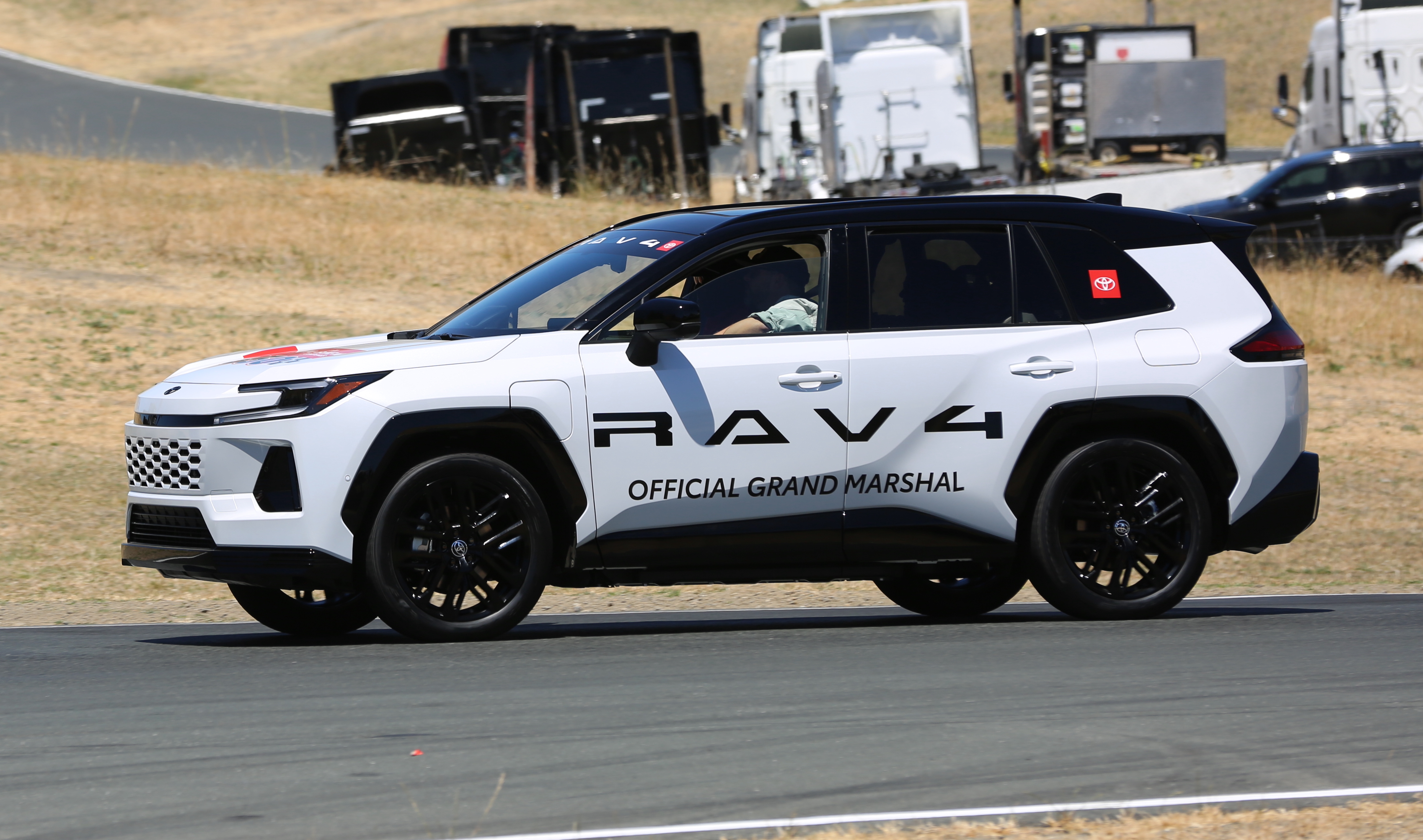
If you are shopping for a 2026 Toyota RAV4 because you need to tow, the headline number can be misleading. Toyota advertises a maximum towing capacity of 3,500 pounds, but that number does not apply to every RAV4.
For the U.S. lineup, the split is straightforward once you look at the exact grade and drivetrain: all front-wheel-drive models and the LE AWD are rated at 1,750 pounds, while the AWD versions of several other Hybrid and Plug-in Hybrid grades can tow up to 3,500 pounds. Toyota spells out that distinction in its 2026 RAV4 launch material, and the current RAV4 product page lists a 3,500-pound maximum.
That matters more than usual for 2026 because the RAV4 moved into a new generation and the U.S. lineup is now electrified. A surprising number of towing pages still mix in old Adventure, TRD Off-Road and previous-generation Prime specifications, which can send a buyer to the wrong trim.
2026 RAV4 towing capacity by trim
| 2026 RAV4 | Drivetrain | Maximum towing capacity |
|---|---|---|
| Hybrid LE | FWD | 1,750 lb |
| Hybrid LE | AWD | 1,750 lb |
| Hybrid SE | FWD | 1,750 lb |
| Hybrid SE | AWD | 3,500 lb |
| Hybrid XLE Premium | FWD | 1,750 lb |
| Hybrid XLE Premium | AWD | 3,500 lb |
| Hybrid Woodland | AWD | 3,500 lb |
| Hybrid XSE | AWD | 3,500 lb |
| Hybrid Limited | AWD | 3,500 lb |
| Plug-in Hybrid SE | AWD | 3,500 lb |
| Plug-in Hybrid XSE | AWD | 3,500 lb |
| Plug-in Hybrid Woodland | AWD | 3,500 lb |
| Plug-in Hybrid GR SPORT | AWD | Check the exact owner’s manual before towing |
The important exception is the LE AWD. Buying all-wheel drive by itself does not automatically give a RAV4 the 3,500-pound rating. The LE remains at 1,750 pounds whether it is front- or all-wheel drive.
Where the 3,500-pound rating starts
For Hybrid buyers, the higher tow rating begins with supported AWD grades above the LE. The SE AWD and XLE Premium AWD are the least complicated examples: their front-wheel-drive versions stay at 1,750 pounds, while the AWD versions move to 3,500 pounds. Woodland, XSE and Limited AWD are also in Toyota’s higher-capacity group.
Woodland is especially easy to understand because towing hardware is part of the grade’s identity. Toyota lists a 2-inch tow hitch receiver as standard equipment and gives the Woodland a 3,500-pound tow rating. That makes it a sensible starting point for someone who already knows a small camper, boat or utility trailer will be part of the ownership plan.
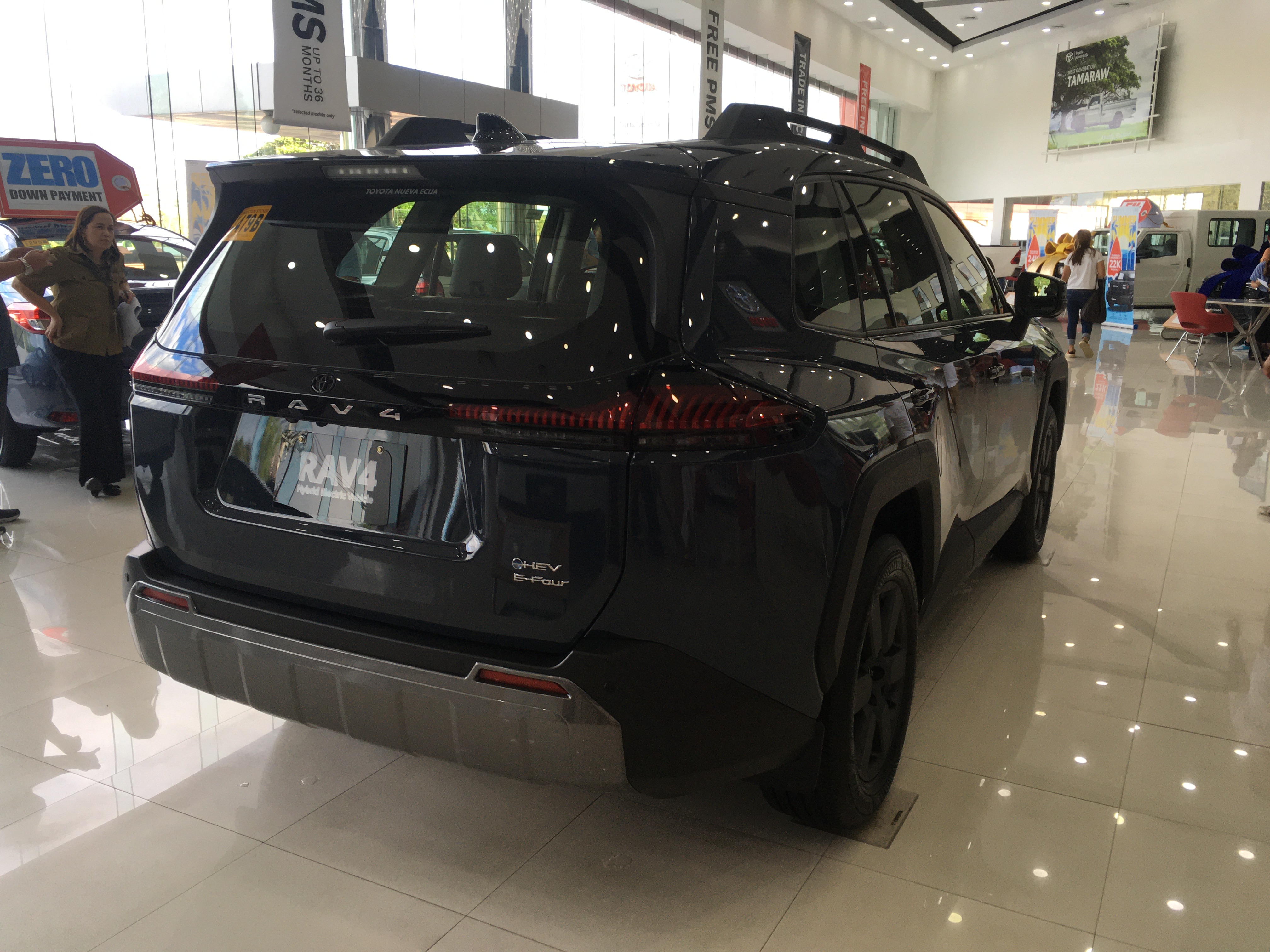
The Plug-in Hybrid SE, XSE and Woodland are also listed by Toyota in the 3,500-pound group. The GR SPORT is different: Toyota’s published U.S. towing breakdown does not include it in that list. That omission is enough reason not to assume the more powerful model automatically has the same tow rating. For that grade, the exact owner’s manual and vehicle documentation should settle the question.
Why some 2026 towing charts are already wrong
The main problem is recycled model-year data. The 2025 RAV4 still had gasoline Adventure and TRD Off-Road versions in the conversation, and the previous RAV4 Prime carried a different tow rating. Those numbers are easy to copy into a generic year-by-year chart, but they do not describe the redesigned 2026 U.S. lineup.
There are current search results that still show a 203-hp gasoline engine, Adventure and TRD Off-Road trims for 2026. Others put the old Prime figure into the new Plug-in Hybrid lineup. One result even lists unrelated trim names and a 3,600-pound maximum. For a buyer, the safer route is to match the exact 2026 grade and drivetrain against Toyota’s current documentation instead of assuming a number carried over from 2025.
Choosing between a 1,750- and 3,500-pound RAV4
When 1,750 pounds can be enough
A 1,750-pound RAV4 is still useful for light towing. Small utility trailers, some personal watercraft setups, lightweight motorcycle trailers and very small campers can fall into that range. The catch is that the brochure weight of the trailer is not the number you actually tow down the road.
Batteries, propane, water, tools, camping gear and anything loaded inside the trailer all count. If a trailer is already close to the RAV4’s limit before you load it for a trip, there is not much room left for real-world use.
What changes at 3,500 pounds
The 3,500-pound versions open the door to a wider range of compact campers, boats and utility trailers. They also give you more breathing room when a trailer’s empty weight looks acceptable but its loaded weight is considerably higher.
That does not make the RAV4 a substitute for a pickup. A 3,500-pound tow rating is still a ceiling, and the vehicle has other limits that matter at the same time. If you are looking at a small travel trailer, our guide on whether a RAV4 can tow an Airstream Basecamp shows why loaded weight matters more than the number printed on an empty trailer.
A hitch does not rewrite the vehicle’s tow rating
It is easy to confuse hitch capacity with vehicle capacity. A receiver may be physically rated for more weight than the RAV4 itself is allowed to tow. Installing that receiver does not turn a 1,750-pound LE AWD into a 3,500-pound vehicle.
The distinction is the same one covered in our guide to tow packages versus trailer hitches. The vehicle rating comes first. Hitch, ball mount, coupler, wiring and trailer-brake equipment then have to be appropriate for the trailer and for the RAV4’s approved limits.
If you are looking at a used vehicle and cannot tell what towing equipment it left the factory with, the VIN and tow-package guide explains what the VIN can confirm and what still requires a build record or a physical inspection.
Payload is the number people forget
Towing capacity is not the only limit that can stop the calculation. Part of the trailer’s weight presses down on the hitch, and that tongue weight becomes part of the load the RAV4 is carrying. Passengers, luggage and accessories are using the same available carrying capacity.
That means two owners with identical 3,500-pound RAV4s can have different practical margins. A driver traveling alone with an empty cargo area has more room than a family carrying four people, luggage and a roof box.
If tongue weight is new territory, Does Hitch Weight Count as Payload? is the useful next read. It is also worth checking what happens when a vehicle goes over its payload capacity before deciding that a trailer is safe just because it is under the headline tow number.
What to check before you commit
- Confirm the exact grade and drivetrain. LE AWD is still a 1,750-pound RAV4.
- Use the owner’s manual for the exact 2026 vehicle, not a 2025 chart or a generic RAV4 page.
- Work with the trailer’s loaded weight rather than its dry or shipping weight.
- Check the receiver, ball mount, coupler, wiring and trailer-brake requirements.
- Count tongue weight, passengers and cargo against the vehicle’s carrying limits.
- If a dealer listing is vague, verify the vehicle documentation before assuming the higher rating.
If towing is a regular part of how the RAV4 will be used, it makes more sense to buy one of the 3,500-pound AWD configurations from the start than to choose a 1,750-pound model and try to solve the difference with aftermarket hardware later. For light utility work, the lower-rated versions can still be perfectly adequate. The deciding factor is not the RAV4 badge on the tailgate; it is the exact configuration and the weight you actually plan to pull.
Featured photo: TaurusEmerald / Wikimedia Commons, CC BY-SA 4.0. Woodland photo: Captainmorlypogi1959 / Wikimedia Commons, CC BY-SA 4.0.
Related Guides
Can a VIN Tell You If a Vehicle Has a Tow Package?
How Do I Know If My F-150 Has a Heavy-Duty Tow Package? Check by Model Year
How Much Can I Tow by VIN? Find Your Vehicle-Specific Towing Limit
How to Verify a Factory Tow Package on a Used Vehicle