
Toyota Tundra 3.4L Twin-Turbo V6 Engine Failure: NHTSA Recall 24V-381, V35A Main Bearing Debris & Full Replacement Guide
Automotive Research, ASE Master Technicians & Fact-Checking
Direct Technical Summary
Diagnose and navigate the catastrophic Toyota Tundra 3.4L V6 engine failure. We dissect NHTSA Recall 24V-381, manufacturing swarf in crankshaft main bearings, DTCs P0524 & P0016, and free factory engine replacement procedures.
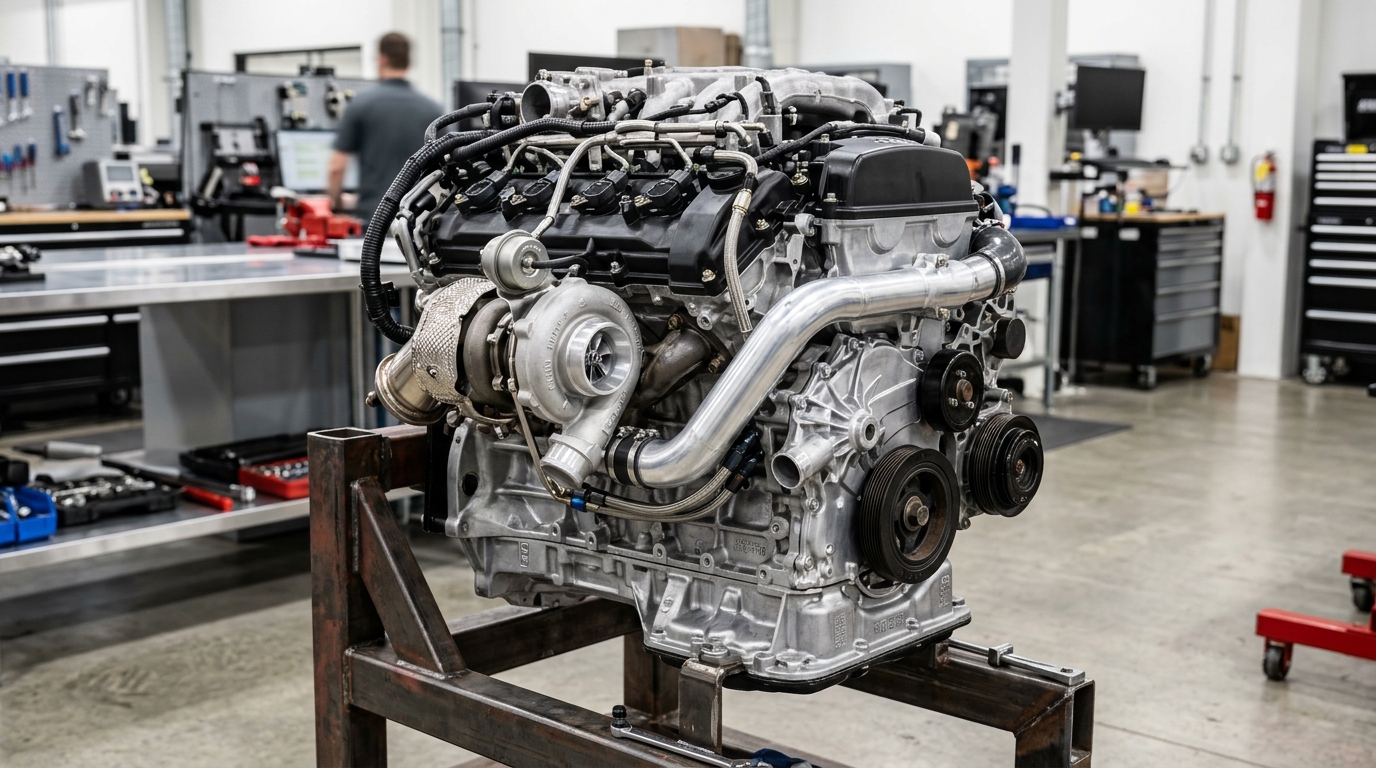
For generations of pickup truck buyers, the Toyota badge represented an unassailable bastion of bulletproof reliability, underpinned by the legendary naturally aspirated 5.7L 3UR-FE V8. However, the launch of the third-generation 2022–2024 Toyota Tundra and Lexus LX600—powered by the all-new 3.4-liter Twin-Turbo V6 (engine code V35A-FTS)—has triggered the most severe, costly, and reputational crisis in modern Toyota truck history: catastrophic engine seizure caused by crankshaft main journal bearing failure, often occurring with fewer than 30,000 miles on the odometer.
Following thousands of dealer warranty engine teardowns, viral videos of stranded owners, and an intensive federal defect investigation, the National Highway Traffic Safety Administration (NHTSA) published official Safety Recall 24V-381 (Toyota Recall 24TA07 / Lexus Recall 24LA07) on May 30, 2024, affecting over 102,000 vehicles. In July 2024, Toyota took the extraordinary step of expanding the remedy from inspection to complete engine replacement (new short-block sub-assembly) at zero cost to owners—a warranty undertaking estimated at over $2.5 billion. In this forensic engineering dossier, the AutoZonic Technical Research Desk synthesizes official NHTSA Part 573 defect filings, Toyota Alabama plant manufacturing records, and verified ASE Master Technician field teardowns to explain the exact metallurgical physics of why these V6 engines fail, how to detect early symptoms before catastrophic lockup, and how owners can navigate the dealership replacement protocol.
Quick Workshop Diagnostic: Toyota V35A-FTS Engine Failure at a Glance
- Primary Vehicles Recalled: 2022–2023 Toyota Tundra (conventional gas-only non-hybrid models, approx. 98,600 units) and 2022–2023 Lexus LX600 (approx. 3,500 units) produced between November 2021 and February 2023.
- Federal Recall Identifier: NHTSA Recall Campaign Number 24V-381 (PDF) | Toyota Safety Recall 24TA07 | Lexus Safety Recall 24LA07.
- Core Failure Symptoms: Dull rhythmic bottom-end engine knocking under light throttle, bronze/silver glitter in the oil filter pleats, engine shuddering, rapid loss of motive power at highway speeds, and a sudden "Low Engine Oil Pressure" dash cluster warning.
- Key Diagnostic Trouble Codes (DTCs): P0524 (Engine Oil Pressure Too Low), P0016 (Crankshaft Position - Camshaft Position Correlation Bank 1 Sensor A), P0017 (Crank/Cam Correlation Exhaust), and P0300 (Random/Multiple Cylinder Misfire).
- The Physical Root Cause: Metallic machining debris (sub-millimeter steel swarf) generated during cylinder block machining at Toyota Motor Manufacturing Alabama (TMMAL) was not completely flushed out during the industrial wash cycle. Under operating oil pressure, this abrasive debris enters the crankshaft main bearings, scoring the bimetal journal surfaces and precipitating boundary lubrication collapse.
- The Manufacturer Remedy: Complete replacement of the engine assembly (short-block sub-assembly including new crankshaft, bearings, connecting rods, and pistons) covered 100% under warranty with free dealer loaner vehicles.
- Related Truck Research: Cross-reference with our Is the 5.7L Tundra V8 Reliable? and Which Tundra Engine Is Most Reliable? dossiers.
1. Auditory Symptoms & Acoustic Signature: Normal Injector Tick vs. Catastrophic Rod Knock
One of the primary sources of owner anxiety on the V35A-FTS is distinguishing normal powertrain noise from imminent bearing destruction. Modern Toyota direct-injection engines are inherently noisy due to the high-pressure D-4S fuel injection system. To properly diagnose your engine, listen for these clear acoustic boundaries:
| Acoustic Condition | Sound Frequency & Tone | Location in Engine Bay | Mechanical Significance |
|---|---|---|---|
| Normal D-4S Fuel Injection | High-pitched, rapid metallic ticking / sewing machine sound (10–20 Hz at idle). | Upper valve covers and high-pressure fuel pump (HPFP) area on the right bank. | Normal Characteristic: Direct injectors firing at up to 2,900 PSI. Harmless. |
| Normal Wastegate / Cam Phaser Rattle | Brief 1–2 second buzz or light tinny rattle immediately on cold start. | Front timing cover or turbocharger wastegate actuator linkages. | Monitored Characteristic: Turbo wastegate flapper arm testing or hydraulic VVT prime. |
| Imminent Main Bearing Failure | Dull, heavy, rhythmic mechanical thumping or hollow metallic hammering. Scales directly with engine RPM. | Deep bottom end / lower crankcase beneath the engine, audible through front wheel wells. | CATASTROPHIC FAILURE: Main bearing spun or journal scored. Continued operation will seize the crankshaft. |
When a main journal bearing begins to fail in the V35A-FTS, the clearance between the crankshaft journal and the bearing shell increases from the factory spec of 0.0008–0.0018 inches (0.020–0.046 mm) to over 0.0050 inches. This excess play allows the crankshaft to physically deflect under combustion pressure, hammering the lower bedplate and creating a deep, resonant knock that cannot be silenced by thicker oil or warm engine temperatures.
2. Diagnostic Trouble Codes (DTCs) and ECU Telemetry Triggers
When the engine management system detects bearing breakdown and oil pressure loss, specific diagnostic codes are logged into the ECM freeze-frame memory:
-
DTC P0524: Engine Oil Pressure Too Low
The V35A-FTS utilizes a variable-displacement, solenoid-controlled vane oil pump managed by the ECM. When bearing clearance expands due to scoring, oil escapes rapidly through the enlarged bearing gap, dropping system oil pressure below the critical 14.5 PSI threshold at idle. The ECM triggers the instrument cluster warning and places the engine into reduced-power limp mode. -
DTC P0016 / P0017: Crankshaft - Camshaft Position Correlation (Bank 1 / Bank 2)
As metallic debris shreds from the bearing lining, magnetic and non-magnetic particles circulate through the cylinder heads and lodge inside the Variable Valve Timing (VVT-i) hydraulic control sprockets. This restricts hydraulic oil flow to the phaser advance chambers, preventing the intake or exhaust camshaft from achieving target timing angle and setting correlation faults. -
DTC P0300 through P0306: Random / Multi-Cylinder Misfire
Triggered when severe crankshaft drag or journal binding creates rotational speed deceleration at the reluctor ring, which the crank position sensor interprets as repeated cylinder misfire events.
3. Metallurgical & Fluid Dynamics Physics: The Huntsville Machining Debris Mechanism
To understand why a world-class engine builder suffered widespread bearing failure, we must examine the manufacturing environment at Toyota Motor Manufacturing Alabama (TMMAL) in Huntsville. The V35A-FTS engine block is a high-pressure die-cast aluminum alloy cylinder block with cast-iron cylinder liners, utilizing a high-rigidity structural aluminum bedplate.
During the automated machining phase, hundreds of drilling, boring, and tapping operations cut oil passages, main oil galleys, and head bolt threads into the raw block. In engines assembled between late 2021 and early 2023, Toyota's post-machining industrial pressure wash cycle failed to dislodge microscopic metallic swarf (curled steel chips and aluminum burrs) that had wedged into the dead-ends of the deep oil galleys.
⚠️ Engineering Analysis: The 0W-20 Hydrodynamic Oil Wedge Breakdown
The V35A-FTS is engineered to operate on ultra-low-viscosity SAE 0W-20 (or 0W-16 in select operating profiles) engine oil to meet federal CAFE fuel economy targets. Under normal hydrodynamic lubrication, the rotating crankshaft journal creates an oil wedge that floats the journal with an oil film thickness of just 1.5 to 2.5 microns (0.0015 to 0.0025 mm). However, the machining debris particles measured in seized Alabama engines range from 15 to over 100 microns. Because these metallic particles are up to 40 times thicker than the protective oil film, they physically bridge the clearance, gouging the soft aluminum-tin-silicon overlay on the bearing shells and initiating direct metal-to-metal boundary friction.
Once boundary contact begins, frictional heating at the journal exceeds 350°C (662°F) within seconds. At this temperature, the bearing lining softens, micro-welds to the forged steel crankshaft journal, shears its anti-rotation locking tang, and spins inside the bedplate housing. This instantly cuts off the oil supply hole, starving the connected rod bearings and inducing total rotational seizure.
4. Official NHTSA Safety Recall 24V-381 Timeline and Replacement Remedy
Toyota's official response evolved over multiple phases as field data revealed the scale of the defect:
| Date / Milestone | Official Action | Remedy Status |
|---|---|---|
| March 2022 – Fall 2023 | Initial dealer field reports of seized Tundra engines with low mileage. Technicians replace short-blocks on case-by-case basis. | Handled under 5-year/60,000-mile powertrain warranty. No safety recall. |
| May 30, 2024 | Toyota formally submits Part 573 Safety Defect Report to NHTSA (Recall 24V-381) covering 102,092 vehicles. | Safety recall announced; remedy listed as "under development". |
| July 25, 2024 | Toyota files amended recall report with NHTSA announcing the definitive remedy: Full Engine Replacement for all affected vehicles. | Toyota commits to replacing the complete engine assembly free of charge, regardless of whether failure has already occurred. |
| Late 2024 – 2025 | Dealership rollout begins phased parts distribution, prioritizing failed trucks followed by high-mileage operating units. | Dealers replace engines using newly manufactured crate sub-assemblies produced with verified ultra-clean wash cycles. |
The replacement remedy is extensive: Toyota dealerships receive a new engine short-block assembly (Part Number 11400-F0010 or superceding revision) that includes a factory-balanced crankshaft, new main/rod bearings, connecting rods, pistons, and bedplate, assembled under clean-room conditions in Japan or newly certified lines in Alabama. Dealership master technicians transfer the cylinder heads, twin turbochargers, fuel injection rails, and accessories, which are rigorously flushed before reinstallation.
5. Workshop Warnings & Field Notes from the Service Bay
⚠️ Workshop Warning 1: Oil Filter Forensic Pleat Inspection
If your 2022–2023 Tundra has not yet experienced engine knock, do not assume your engine is clear of debris. During every oil change, technicians must use an oil filter cutting tool to slice open the cartridge filter element (OEM 04152-YZZA1). Spread the paper pleats under bright LED light. A healthy engine will show zero debris. If you detect magnetic iron flakes (which cling to a neodymium magnet) or coppery bronze specks larger than 0.5 mm, bearing delamination has already initiated. Field protocol: Do not drive the vehicle on highway road trips; photograph the filter pleats immediately, preserve the filter element in a sealed Ziploc bag, and contact your Toyota service director to initiate priority recall intake before the engine locks up.
⚠️ Workshop Warning 2: The Hybrid "i-FORCE MAX" Recall Loophole
Many owners are confused why the Tundra i-FORCE MAX Hybrid and 2023+ Toyota Sequoia were initially excluded from NHTSA Recall 24V-381, despite utilizing the exact same V35A-FTS engine block produced at the exact same Huntsville Alabama plant. The reason is a legal regulatory definition under federal safety statutes: NHTSA Safety Recall 24V-381 was mandated because an engine stall in a conventional vehicle results in immediate loss of motive power, power steering assist, and vacuum braking assist. On hybrid models, the 48-hp transmission motor generator and high-voltage nickel-metal hydride battery maintain power steering, power brakes, and motive limp-home capability even if the gasoline engine seizes. However, metallurgically, the hybrid V35A-FTS blocks share identical machining debris risk. If you own an i-FORCE MAX hybrid and hear bottom-end knock, escalate immediately under Toyota Customer Support Program or state lemon law provisions.
6. Diagnostic Verification Protocol: Telemetry Monitoring
If you wish to monitor your engine health prior to receiving your official recall replacement notification, connect an OBD-II diagnostic tool capable of reading Toyota proprietary enhanced PIDs via the CAN bus:
| Parameter Identifier (PID) | Healthy Engine Value (Warm Oil @ 85°C) | Degraded Bearing Warning Threshold |
|---|---|---|
| Engine Oil Pressure (Idle, 650 RPM) | 18 – 28 PSI (124 – 193 kPa) | < 14.0 PSI (Imminent bearing clearance leak) |
| Engine Oil Pressure (2,000 RPM) | 40 – 65 PSI (275 – 448 kPa) | < 32.0 PSI (Pump unable to overcome bearing leakage) |
| VVT Target vs Actual Angle (Bank 1 / 2) | Within ± 2.0 degrees of target advance | > 8.0 degrees deviation (Debris clogging phaser spool valves) |
Recommended Diagnostic & Preventative Service Gear
To monitor oil pressure telemetry, detect metal particles during routine maintenance, and document evidence for dealership warranty claims under NHTSA 24V-381, every Tundra and Lexus LX owner should utilize these professional-grade tools:
BlueDriver Bluetooth Pro OBD-II Diagnostic Scan Tool
Live telemetry logging for proprietary Toyota enhanced PIDs (Oil Pressure PSI, VVT cam timing deviation, and freeze-frame misfire data).
Check Price on Amazon →Magnetic Billet Oil Drain Plug (M12x1.25) & Filter Cutter
High-intensity neodymium magnet captures ferrous debris between oil services, providing tangible visual proof before spun bearing lockup.
Explore Filter Tools on Amazon →7. Owner Decision Matrix: Dealer Replacement vs. Trade-In vs. Lemon Law
If your vehicle is included in NHTSA Recall 24V-381, you face three primary strategic pathways:
-
Pathway 1: Complete Dealer Engine Replacement (Recommended for Long-Term Keepers)
Allow Toyota to perform the full warranty recall. You receive a brand-new, zero-mile short block produced after the verified Alabama clean-cycle implementation, along with new gaskets, fluids, and filters. The retail invoice value of this repair ranges from $23,000 to $28,000, fully absorbed by Toyota. Ensure the dealership provides documentation confirming the engine serial number and requests that the replacement engine carries an extended powertrain warranty warranty extension. -
Pathway 2: Manufacturer Buyback / State Lemon Law Claim
If your Tundra has experienced total engine failure and has spent more than 30 consecutive business days out of service waiting for replacement engine parts, most U.S. state lemon laws entitle you to demand a full manufacturer repurchase (buyback) or vehicle replacement, refunding your purchase price minus a statutory mileage offset. -
Pathway 3: Trade-In Post-Replacement
Industry wholesale data indicates that Tundra models with documented, dealer-completed engine replacements under Recall 24V-381 suffer minimal long-term depreciation penalty compared to trucks with open, unperformed recall statuses. Completing the recall restores Carfax title clarity and wholesale auction confidence.
Frequently Asked Questions (FAQ)
Does the Toyota 3.4L engine recall affect 2024 models?
Official NHTSA Recall 24V-381 specifically covers 2022–2023 model year vehicles built prior to February 2023. Toyota instituted upgraded automated cleaning machines at the Huntsville plant in early 2023. However, field warranty claims on select late 2023 and early 2024 models are currently being monitored by NHTSA investigators.
Can I prevent bearing failure by changing oil every 3,000 miles?
While frequent oil changes with premium synthetic oil (0W-20 or 5W-30) remove suspended particles, they cannot prevent failure if large machining debris is trapped inside the crankshaft oil galleys. When high-load oil pressure dislodges the particle, it enters the bearing clearance instantly, irrespective of recent oil service.
What should I do if my Tundra engine starts knocking on the road?
Pull over immediately to a safe shoulder, turn off the engine, and do not attempt to restart it. Continued cranking will seize the rotating assembly and can punch a connecting rod through the aluminum block, increasing safety hazards. Contact Toyota Roadside Assistance (1-800-331-4331) for flatbed towing directly to the nearest certified Toyota dealership.
Researching this vehicle or comparing used inventory?
Always cross-reference factory service bulletins, verify warranty coverage, and compare dealer financing rates or insurance quotes before purchasing.
Reader Feedback
Was this technical guide helpful?
Your verification vote informs our ongoing automotive research schedule.