
3rd Gen Tacoma 3.5L Timing Cover Oil Leak & Crossover Pipe: Seepage Test & $4,500 Reseal Guide
Lead Automotive Systems Diagnostician
ASE Certified Master Automobile Technician (A1–A8, L1 Specialist)
Direct Technical Summary
Step-by-step mechanic diagnostic guide for the 2016-2023 Toyota Tacoma 3.5L V6 (2GR-FKS) timing cover oil leak and rear plastic coolant crossover pipe failure. Learn how to run the 500-mile brake cleaner wipe test to distinguish harmless RTV seepage from an active drip before paying $4,500 for an engine-out reseal.
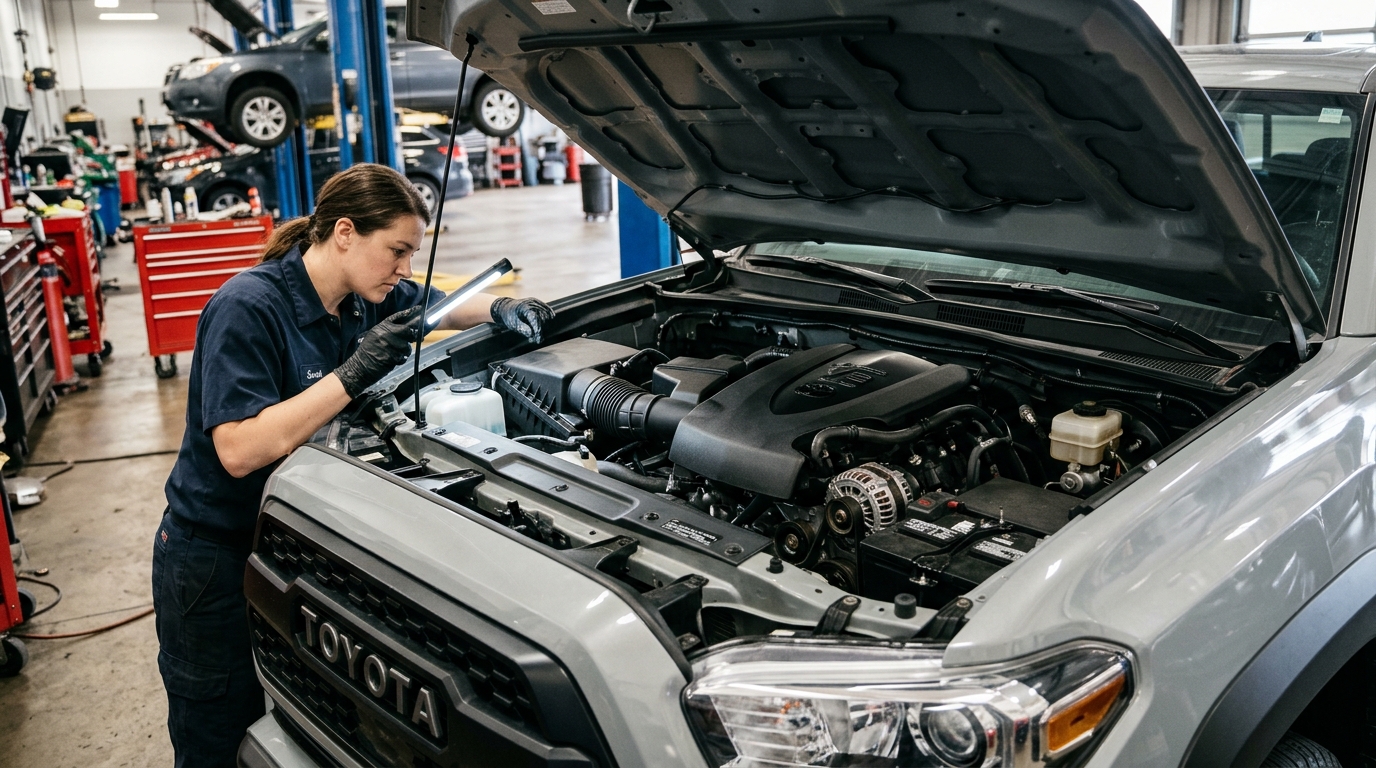
If a Toyota dealership or independent shop just quoted you $4,000 to $6,300 to reseal the timing cover on your 2016–2023 Toyota Tacoma 3.5L V6 (2GR-FKS), stop before authorizing the teardown. Most 3rd Gen Tacomas develop minor oily dust accumulation along the passenger-side timing cover seam—and Toyota's own warranty guidelines classify light, non-dripping RTV seepage as normal wear that does not require pulling the engine.
Follow this four-step shop inspection to separate harmless timing cover sweating from an active drip, check the rear plastic coolant crossover pipe at the same time, and avoid paying double labor if a real reseal is required.
Workshop Warning: Why a $50 Tube of RTV Costs $4,500 in Labor
The 2GR-FKS timing chain cover seals against both the engine block and cylinder heads using factory FIPG (Formed-In-Place Gasket) silicone rather than a rubber gasket. Because the front cover bolts tie into the upper oil pan, valve covers, and water pump housing, resealing it properly requires dropping the front differential/subframe or pulling the entire V6 engine out of the bay. Labor accounts for roughly 85% to 90% of the total shop bill.
Step 1: Inspect Behind the Passenger Wheel Well Liner
You do not need a lift to inspect the timing cover seam. Perform this check on cold engine metal with a bright LED flashlight:
- Turn the Steering Wheel Full Lock Left: This swings the passenger front tire out of the way and opens direct access to the inner fender apron.
- Pull Back the Rubber Splash Flap: Pop two plastic push-clips off the rubber inner apron shield behind the passenger front shock tower.
- Locate the Power Steering Pump Bracket: Shine your light straight through the opening at the aluminum corner where the vertical timing cover meets the passenger cylinder head and engine block, right behind the power steering pump and alternator bracket.
- Check the Skid Plate Underneath: Slide under the front bumper and inspect the top surface of the steel skid plate and lower control arm bushings for fresh, wet oil pooling.
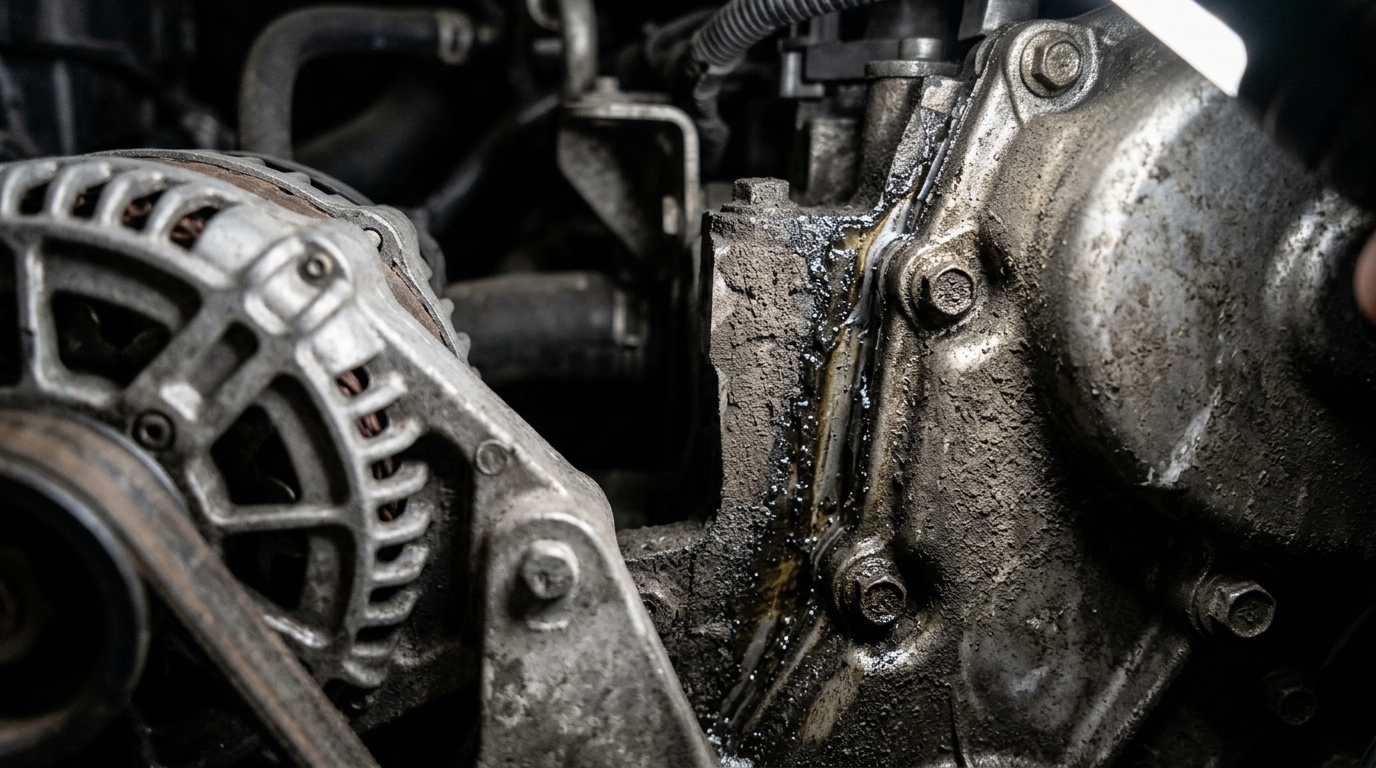
Step 2: Run the Brake Cleaner & 500-Mile Wipe Test
Never rely on a single visual glance at years of accumulated road grime. Dealers often photograph 60,000 miles of dusty oil sweat to sell a $4,800 engine-out job. Run this verification test first:
- Spray and Degrease the Seam: Use a straw-nozzle can of non-chlorinated brake cleaner and shop rags to wash all oil film and road dust completely off the timing cover corner and power steering bracket.
- Verify Your Oil Level: Check the 0W-20 dipstick on level ground and mark the exact level.
- Drive 500 Miles and Re-Inspect: Pull the fender flap back after 500 miles. If the aluminum seam is still dry or shows only a faint damp sheen with zero hanging drops, leave it alone and recheck at each 5,000-mile oil change. If fresh, wet 0W-20 oil is actively running down onto the alternator housing or dripping onto the skid plate, you have a confirmed active leak.
Step 3: Check the Rear Plastic Coolant Crossover Pipe
While inspecting your 2GR-FKS for leaks, always check the rear of the engine at the transmission bellhousing. On 2016–2023 Tacomas, Toyota used a black plastic rear coolant crossover/bypass pipe connecting the back of both cylinder heads above the bellhousing. Under repeated heat cycles, the plastic flange warps or cracks and leaks pink Toyota Super Long Life Coolant (SLLC) down the back of the block.
- Check the Overflow Tank: Look at the white coolant reservoir mounted near the radiator fan shroud. Steady drops from Full to Low with no front radiator leak point directly to the rear pipe.
- Inspect the Bellhousing Drain: Crawl underneath and shine a light at the bottom seam where the engine block bolts to the transmission bellhousing. Dried pink or chalky red crusty stalactites confirm a cracked rear coolant crossover pipe.
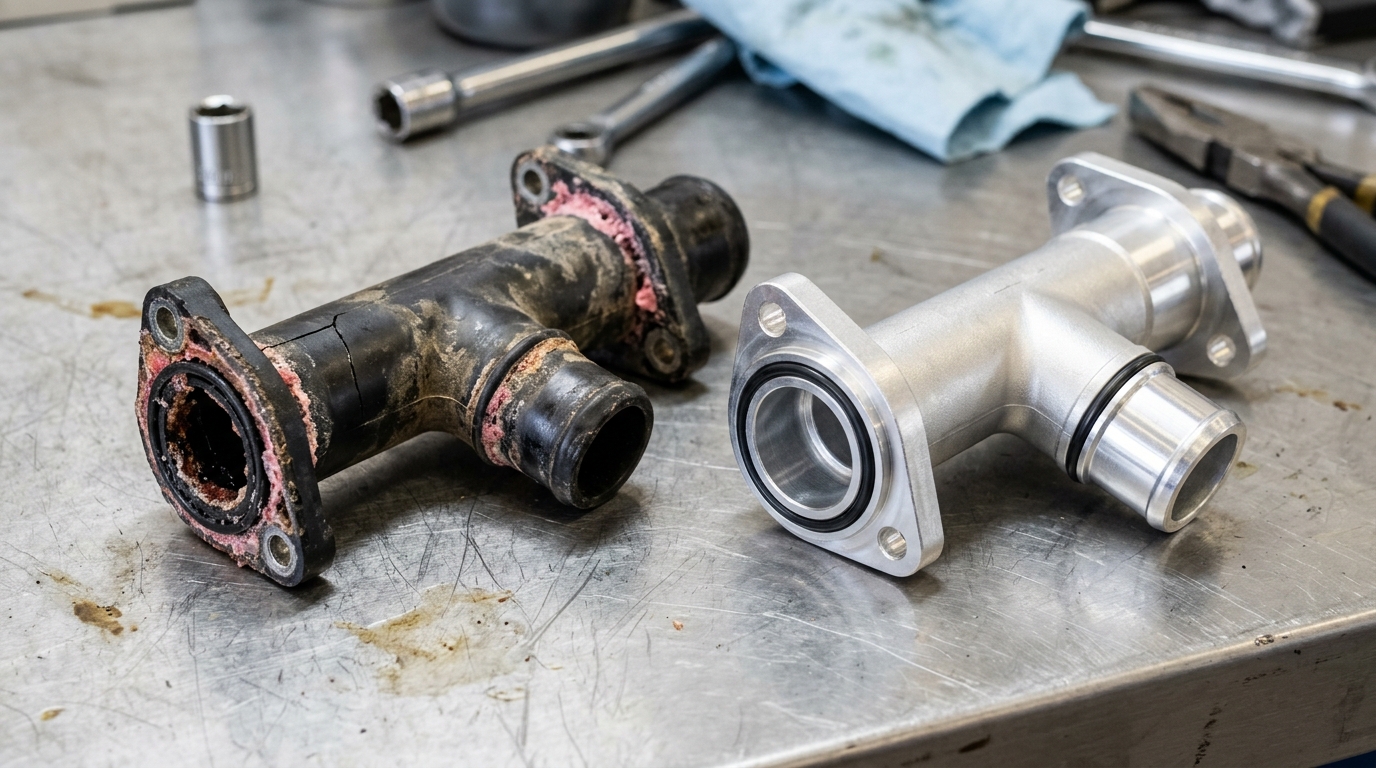
Critical Rule: Never Pay Twice for Timing Cover & Crossover Labor
If you confirm an active timing cover oil leak and pay a shop to pull the engine or drop the front subframe, insist that they replace the rear plastic coolant crossover pipe with an all-aluminum aftermarket upgrade (plus the water pump and thermostat) while the engine is out. Doing the crossover pipe separately later requires pulling the intake manifold and wiper cowl for another $800 to $1,200 in labor.
Diagnostic Matrix: Seepage vs. Active Leak vs. Crossover Pipe
Compare your inspection findings against this workshop triage table to decide whether to monitor, schedule warranty work, or replace parts immediately:
| Inspection Finding | Normal / Monitor Only | Active Timing Cover Leak | Rear Coolant Crossover Leak |
|---|---|---|---|
| Visual Seam Condition | Dry dust + dark damp stain | Wet oil droplets forming at 500 mi | Pink/white coolant crust at bellhousing |
| Driveway / Skid Plate | Completely dry | Fresh oil pooling on skid plate | Sweet odor + pink drips behind trans |
| Fluid Loss (5,000 Mi) | Zero measurable dipstick drop | 0.5+ quart loss or fouled alternator | Overflow tank drops below Low mark |
| Typical Shop Cost | $0 (Wipe & monitor) | $2,800 – $4,200 Indep. / $4,500+ Dealer | $750 – $1,200 (or $200 during reseal) |
Step 4: Warranty Coverage & Independent Shop Checklist
- Check Your 5-Year / 60,000-Mile Powertrain Warranty: If your 2021–2023 Tacoma is still inside the 5yr/60k factory powertrain window (or covered by a Toyota Platinum VSA extended warranty), do not wipe the oil off. Take it in with visible droplets forming on the cover or skid plate so Toyota covers the entire engine-out reseal under warranty.
- Specify Toyota Genuine FIPG Black Sealant: If paying an independent Toyota specialist out of pocket, verify they use factory Toyota FIPG 103 (00295-00103) or updated ThreeBond silicone rather than generic parts-store RTV, and clean every oil-contaminated bolt hole with brake cleaner before torqueing.
- Bundle the Crossover Pipe & Belt Tensioner: Have the technician swap the OEM plastic rear crossover pipe for a cast-aluminum unit, replace the water pump, and install a new serpentine belt while the engine is accessible.
Frequently Asked Questions (3rd Gen Tacoma 3.5L Leaks)
Is the 3rd Gen Tacoma timing cover oil leak covered by a Toyota recall?
No. Toyota has never issued a safety recall or extended warranty campaign for the 2GR-FKS timing cover seepage. It is covered only under the standard 5-year / 60,000-mile powertrain warranty or an active extended service contract, and Toyota requires an active drip rather than minor sweating to authorize the repair.
Can you fix the 2GR-FKS timing cover leak from the outside with RTV?
Slathering silicone on the outside of the seam rarely holds permanently because pressurized oil splashes behind the timing chain and pushes through from the inside. However, if you have a minor seep and do not want to spend $4,500, cleaning the corner thoroughly and monitoring the oil level is far safer than letting an inexperienced shop pull the engine unnecessarily.
How urgent is the rear plastic coolant crossover pipe leak on a 2016–2023 Tacoma?
A coolant crossover leak is much more urgent than timing cover oil seepage. While you can drive for years with a minor oil seep, a cracked plastic coolant pipe can split wide open under 16 PSI boost/heat load and dump your coolant rapidly, leading to warped aluminum cylinder heads. Fix pink coolant crust as soon as you spot it.
Found this repair guide useful?
Mark AutoZonic as a preferred source and our technical teardowns show up first in your Google results. One click, no account.
Researching this vehicle or comparing used inventory?
Always cross-reference factory service bulletins, verify warranty coverage, and compare dealer financing rates or insurance quotes before purchasing.
Reader Feedback
Was this technical guide helpful?
Your verification vote informs our ongoing automotive research schedule.