
Toyota RAV4 & Camry 2.5L Coolant Bypass Valve Failure: 'Engine Maintenance Required', P2681 / P26CB Diagnostic & DIY Repair Guide
Automotive Research, ASE Master Technicians & Fact-Checking
Direct Technical Summary
Diagnose the sudden 'Engine Maintenance Required' warning and DTC P2681 / P26CB on 2018-2023 Toyota RAV4, Camry, and Avalon 2.5L models. Learn the root cause of coolant bypass valve actuator failure, Toyota T-SB-0112-24, warranty CSP 24TE04, and step-by-step DIY replacement.
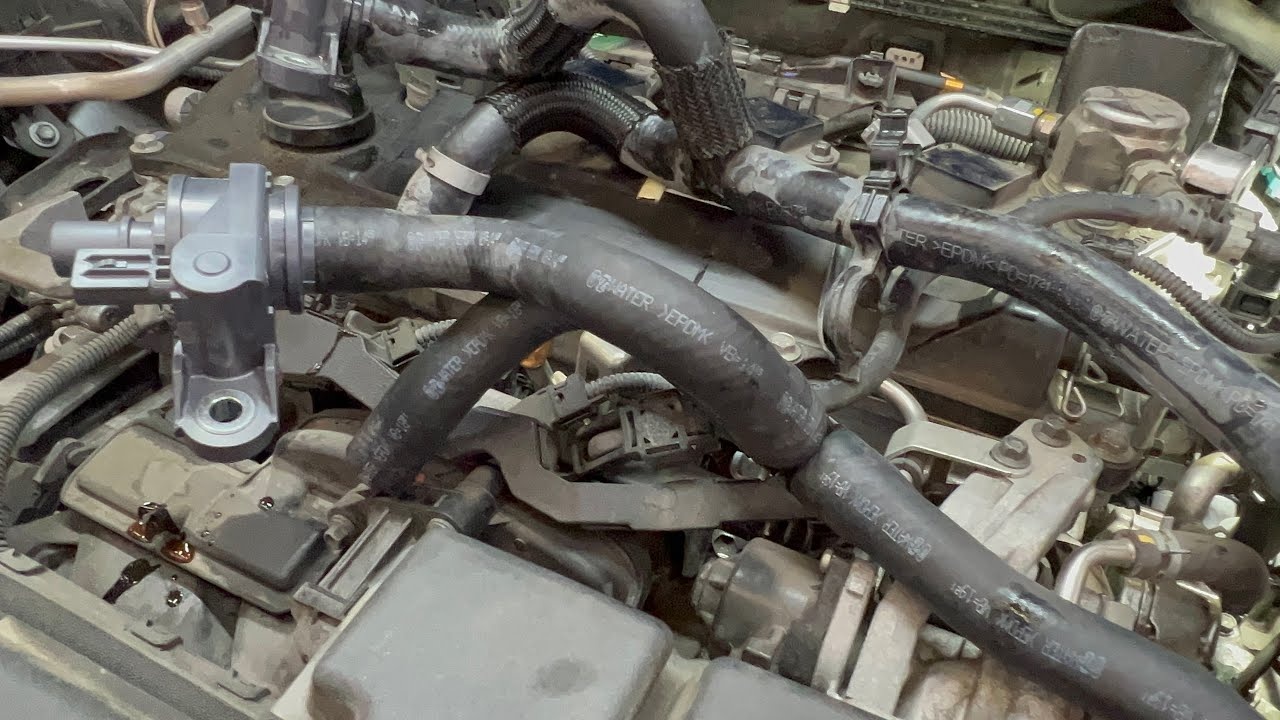
It is one of the most alarming moments a modern Toyota owner can experience: while cruising smoothly down the highway in a late-model 2019–2023 Toyota RAV4, 2018–2024 Camry, Avalon, or Highlander, a prominent amber master warning triangle illuminates on the instrument cluster, accompanied by an urgent pop-up message across the Multi-Information Display (MID): "Engine Maintenance Required. Visit Your Dealer." Unlike the standard, routine "Maintenance Required" message that simply counts down 5,000 miles for an oil change, this specific message indicates that the Engine Control Module (ECM) has detected an active powertrain fault code within the engine thermal management circuit.
When an OBD-II diagnostic scanner is connected to the vehicle, technicians invariably pull two specific fault codes: DTC P2681 (Engine Coolant Bypass Valve Control Circuit Open / Short)—often categorized with manufacturer sub-codes P268111 or P268115—and occasionally DTC P26CB (Engine Coolant Bypass Valve 'A' Performance / Stuck Open). Dealership service advisors routinely quote between $950 and $1,350 to replace the valve and purge the cooling system. However, in this forensic engineering dossier, the AutoZonic Powertrain Research Desk analyzes official Toyota Technical Service Bulletin T-SB-0112-24, the extended warranty coverage under Customer Support Program CSP 24TE04, the internal seal breakdown physics of OEM part 16260-25010 / 16260-F0010, and provides a comprehensive step-by-step DIY repair blueprint that allows any owner to resolve the defect in under two hours for less than $100.
Forensic Summary: Dynamic Force Coolant Bypass Valve Failure
- ● Primary Manifestation: Sudden Multi-Information Display (MID) alert reading "Engine Maintenance Required. Visit Your Dealer" accompanied by the master caution yellow triangle and check engine light (CEL).
- ● Root Mechanical Defect: Pressurized Toyota Super Long Life Coolant (SLLC) breaches the internal rotary shaft lip seal of the 3-way water bypass valve (OEM 16260-25010), flooding the internal DC stepper motor and potentiometer feedback circuit.
- ● Active Diagnostic Trouble Codes: DTC P268111 (Control Circuit Short to Ground), P268115 (Control Circuit Short to Battery or Open), P26CB71 (Actuator Stuck).
- ● Official Manufacturer Bulletins: Toyota T-SB-0112-24 (Rev 1 & Rev 2) and Customer Support Program CSP 24TE04 (extended warranty coverage for eligible 2019–2021 VINs up to 10 years / unlimited mileage).
- ● Permanent Technical Countermeasure: Installation of superseding Toyota revised valve assembly 16260-F0010 / 16260-25011 featuring upgraded fluorosilicone internal barrier seals and vacuum air-bleeding the cooling jacket.
To eliminate the 'Engine Maintenance Required' message, clear active and permanent DTCs (P268115 / P26CB), and install the factory-updated leak-proof valve assembly without paying $1,100+ at dealership service departments, Master Technicians recommend these verified workshop tools:
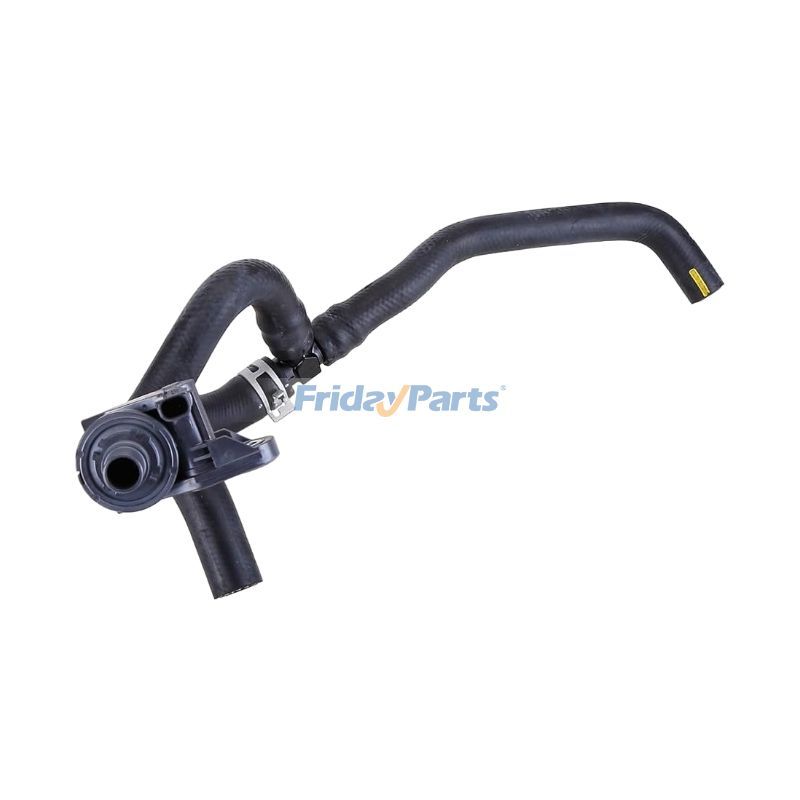
Toyota OEM Updated Engine Coolant Bypass Valve & Hose Assembly
Eliminates 'Engine Maintenance Required' & P2681 / P26CB Codes
- ✓Revised Internal Shaft Seals: Upgraded fluorosilicone seals prevent pressurized coolant intrusion into actuator motor.
- ✓Direct OEM Fitment: Exact replacement for factory part numbers 16260-25010, 16260-F0010, and 16260-25011.
- ✓Complete Molded Assembly: Pre-installed quick-connect coolant hoses and electronic rotary position sensor.

BlueDriver Bluetooth Pro OBD-II Diagnostic Scan Tool
Technician Recommended for Enhanced OEM PIDs
- ✓Enhanced Diagnostics: Reads proprietary manufacturer ABS, Airbag, transmission, and body codes.
- ✓Real-Time Telemetry: Graph live oil pressure, coolant temp (ECT), and cam phaser angular deviation.
- ✓Wireless Bluetooth: Full iOS & Android integration with zero monthly subscription fees.
1. Deconstructing the Warning: 'Maintenance Required' vs. 'Engine Maintenance Required'
One of the most widespread sources of confusion among Toyota owners is the linguistic subtlety of the cluster warning. Toyota vehicles employ two distinct maintenance notification hierarchies:
- "Maintenance Required" (Routine Service Reminder): This message is purely a software countdown timer triggered every 5,000 miles (8,000 km). It indicates that the vehicle is due for a tire rotation, engine oil and filter change, or multipoint inspection. It does not set an OBD-II diagnostic trouble code and can be cleared in five seconds via the steering wheel instrument cluster settings menu.
- "Engine Maintenance Required. Visit Your Dealer" (Active Powertrain Fault): This message represents a Tier-1 thermal management fault. The ECM continuously monitors the electric coolant flow shut-off valves, thermostat heater circuits, and electric water pump telemetry. When the ECM commands the coolant bypass valve to open or close and detects zero current draw (circuit open) or excessive resistance (circuit short), it immediately commands this warning to alert the driver that the engine's thermal regulation loop has defaulted to fail-safe mode.
When this warning appears, the ECM locks the thermal management system into a defensive program: the radiator cooling fans may run at continuous high speed, the air conditioning compressor output may be dialed back to reduce thermal load on the condenser, and the cabin heater core may experience fluctuating or reduced heat output during cold idle conditions.
2. Mechanical Architecture & The Root Cause of Valve Failure
To meet ultra-stringent global emissions and thermal efficiency targets (reaching a world-leading 40% thermal efficiency in standard models and 41% in hybrids), Toyota's Dynamic Force engine family (2.5L A25A-FKS naturally aspirated, A25A-FXS hybrid, and 2.0L M20A-FKS) abandoned traditional purely mechanical wax-pellet cooling circuits in favor of an electronically controlled multi-flow thermal management architecture.
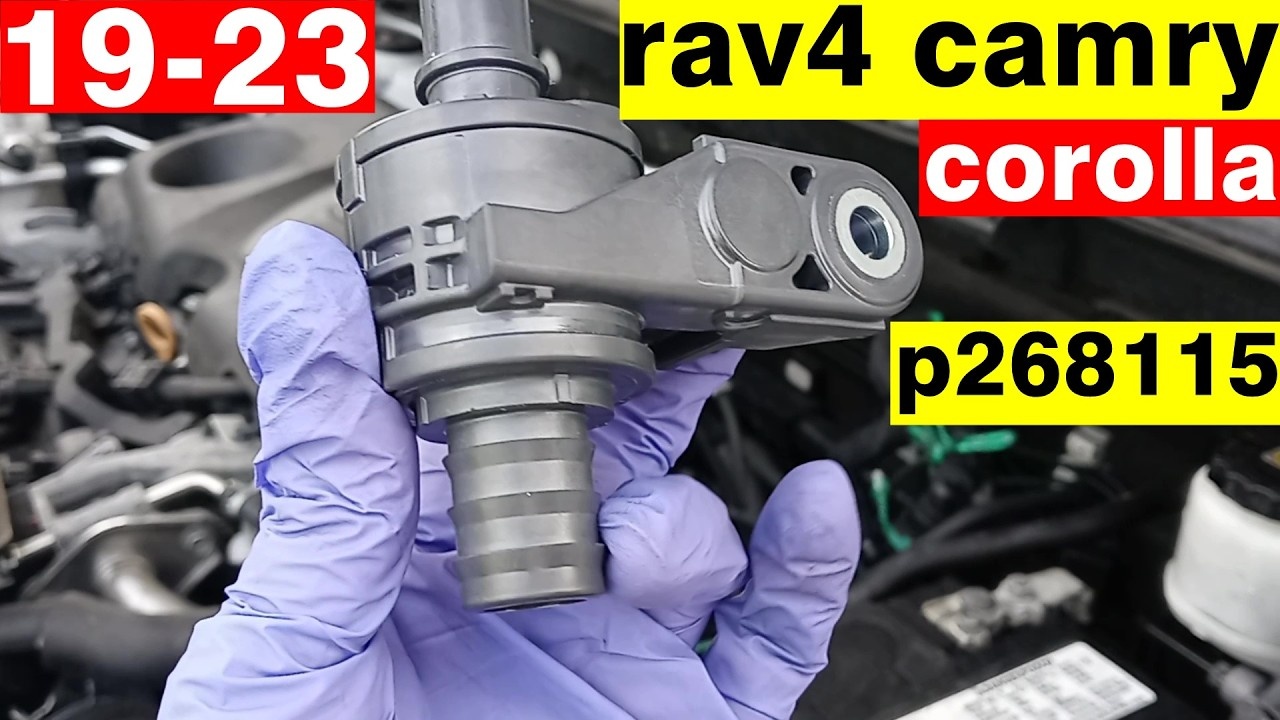
In this architecture, the Water By-Pass Valve (Part # 16260-25010) acts as an electronic traffic controller. Mounted beneath the air intake ducting and adjacent to the cylinder head outlet, this three-way motorized rotary ball valve routes engine coolant dynamically between three critical circuits: the engine block warm-up loop, the cabin heater core, and the transmission fluid warmer/cooler heat exchanger. By keeping the valve completely closed during a cold start, engine coolant remains stagnant inside the cylinder head, allowing combustion chambers to reach optimal 195°F (90°C) operating temperature in half the time, drastically cutting cold-start hydrocarbon emissions.
However, teardowns of hundreds of failed valves reveal a fatal mechanical vulnerability in early factory units (manufactured between 2018 and late 2021):
- Shaft Lip Seal Hydrolytic Degradation: The rotating ceramic/plastic valve ball is driven by a miniature stainless steel drive shaft connected to an electric DC stepper motor. The primary barrier preventing 16 psi (1.1 bar) pressurized hot ethylene glycol from entering the dry motor chamber is a single elastomeric lip seal. Over 30,000 to 60,000 miles of continuous heat cycling between -20°F cold starts and 215°F highway operation, this seal hardens, micro-cracks, and loses its radial tension.
- Pressurized Coolant Intrusion: Pressurized pink Toyota Super Long Life Coolant (SLLC) seeps along the rotating drive shaft directly into the sealed upper electronic housing.
- Electrochemical Corrosion of Circuit Tracks: Once inside, the conductive coolant floods the miniature circuit board, the optical/potentiometer rotary position encoder, and the motor brush terminals. The electrical current passing through the terminals causes rapid galvanic oxidation, leaving telltale crusty pink and white carbonate deposits across the PCB tracks.
- Total Circuit Open / Short: Eventually, the motor windings short-circuit or the ground trace burns open. When the ECM pulses a 12V pulse-width modulated (PWM) signal to adjust the valve angle and reads an implausible position feedback voltage (outside the 0.5V to 4.5V window), it triggers DTC P268115 and illuminates the instrument cluster warning.
Many DIY owners inspect their translucent coolant expansion reservoir, notice the coolant level is sitting perfectly at the "FULL" mark, and assume the code is a false sensor alarm. This is a dangerous misconception. The internal seal leak that destroys the bypass valve consumes less than 5 to 10 milliliters of coolant—a tiny volume virtually invisible on the expansion bottle dipstick. However, if left unresolved, complete valve seizure in the closed position can cause localized cylinder head hot spots, coolant cavitation, and cabin heater failure during freezing winter conditions.
3. Official Toyota Bulletins: T-SB-0112-24 & Customer Support Program CSP 24TE04
Recognizing the widespread nature of this failure across hundreds of thousands of vehicles, Toyota Motor North America has issued multiple technical documents governing diagnostic validation and warranty assistance:
A. Toyota Technical Service Bulletin T-SB-0112-24 (Revisions 1 & 2)
Released under the title "2019-2023 RAV4, Camry: Engine Maintenance Required with DTC P268111 / P268115", this bulletin instructs dealership technicians to bypass conventional wiring harness continuity tests and directly inspect the bypass valve connector. If any trace of pink coolant residue, moisture, or pin corrosion is observed inside the 2-pin or 3-pin harness plug, technicians are instructed to replace the complete water bypass valve assembly with the revised part number 16260-F0010 and inspect the wiring harness connector pins for terminal damage.
B. Customer Support Program CSP 24TE04 (Extended Warranty Coverage)
Due to intense consumer feedback and NHTSA defect submissions, Toyota introduced Customer Support Program 24TE04. Key parameters of this coverage include:
- Applicable Vehicles: Select 2019–2021 Toyota RAV4 (Gasoline, Hybrid, and Prime) and select 2018–2021 Toyota Camry models.
- Coverage Terms: Extended coverage for the coolant bypass valve replacement up to 10 years from the original in-service date or unlimited mileage (whichever occurs first for primary coverage periods).
- Reimbursement Policy: Owners who previously paid out-of-pocket at an independent repair shop or Toyota dealership prior to the program launch are eligible to submit receipts for full parts and labor reimbursement via Toyota's official customer portal (Toyota Owner Center).
4. Live Diagnostic Telemetry: Normal vs. Failure Thresholds
For independent technicians and advanced DIYers utilizing bidirectional OBD-II scan tools (such as BlueDriver or Techstream), the operational health of the coolant bypass valve can be definitively verified before unbolting any hardware:
| Telemetry Parameter / PID | OEM Normal Operating Specification | Degraded / Impending Failure | Catastrophic Valve Failure (DTC Set) |
|---|---|---|---|
| Actuator Circuit Resistance | 12.5 – 16.5 Ω across pins at 68°F (20°C) | 18.0 – 45.0 Ω (internal corrosion bridging) | > 100 kΩ (Open Circuit) or < 2.0 Ω (Dead Short) |
| Actuator Command vs. Target Angle | ± 2° angular tracking across all duty cycles | 5° – 12° sluggish tracking lag | Static 0° (Motor frozen or unpowered) |
| Coolant Temp Rise Rate (Cold Start) | 68°F → 185°F within 4.5 – 6.0 minutes | Extended warm-up time (> 10 mins) | Delayed warm-up + intermittent cabin heat |
| Active DTC Flags | None (Status: Complete / Monitor Ready) | P2681 Pending in Mode $07 | P268115, P268111, P26CB Confirmed + MIL ON |
5. Step-by-Step DIY Replacement Blueprint (2.5L Dynamic Force)
If your vehicle is outside the CSP 24TE04 warranty parameters or you prefer the speed and satisfaction of performing the repair in your own garage, replacing the valve is a straightforward job requiring basic hand tools. Follow this standardized procedure:
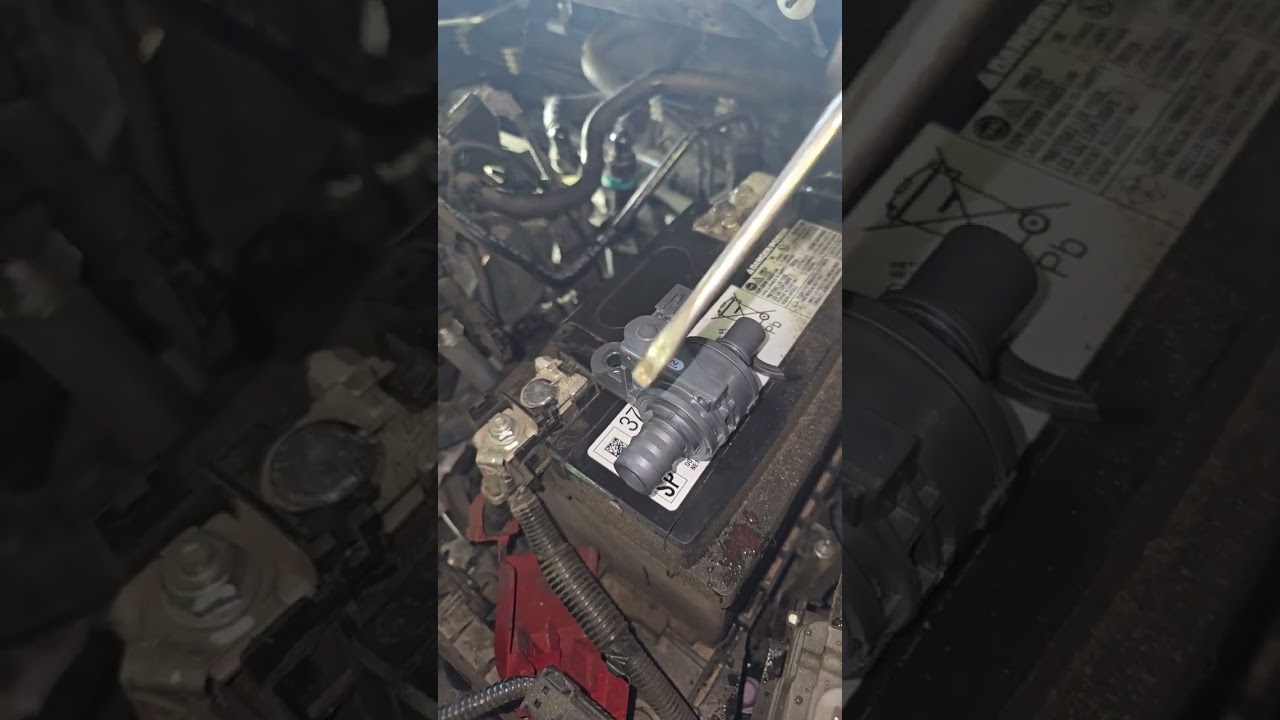
Required Tools & Materials:
- 1x Revised Toyota OEM Water By-Pass Valve & Hose Assembly (Part # 16260-F0010 or verified high-grade aftermarket).
- 1 Gallon Genuine Toyota Super Long Life 50/50 Pre-Diluted Antifreeze/Coolant (Pink).
- 10mm and 12mm metric sockets with 6-inch extension and 3/8-inch ratchet.
- Hose clamp pliers (or locking flat-band hose clamp pliers).
- Fluid catch pan and safety eye protection.
- OBD-II scanner capable of clearing permanent and active Toyota powertrain codes.
Step 1: Vehicle Prep & Safety Depressurization
Ensure the vehicle has sat with the engine off for at least two hours until the cooling system is completely cool to the touch. Slowly loosen the radiator cap or coolant reservoir cap to release any residual pressure. Disconnect the negative terminal of the 12V auxiliary battery using a 10mm wrench to prevent any short-circuiting during electrical plug disconnection.
Step 2: Air Intake Removal for Working Clearance
On gasoline 2.5L models (A25A-FKS), the bypass valve is located on the rear driver-side of the cylinder head below the air intake plumbing. Unplug the Mass Air Flow (MAF) sensor harness connector, loosen the 10mm clamp securing the intake hose to the throttle body, release the upper air box clips, and lift the entire intake duct and upper air box out of the engine bay. This immediately exposes the three-way coolant valve and its mounting bracket.
Step 3: Coolant Hose Clamping & Electrical Disconnection
Place your fluid catch basin directly beneath the transmission bellhousing area. Using hose clamp pliers, compress the spring tension clamps on the three rubber coolant hoses attached to the valve body and slide them back two inches onto the hose necks. Carefully depress the locking tab on the electrical connector and pull it free from the valve actuator. Inspect the harness-side pins: if green corrosion or pink coolant crust is visible, spray thoroughly with electrical contact cleaner and allow to dry completely.
Step 4: Unbolting the Bracket & Valve Extraction
Using a 10mm socket, remove the two mounting bolts securing the metal valve bracket to the engine block. Gently twist and pull each of the three rubber hoses off the plastic valve barbs. Approximately 200–300 mL of coolant will spill out; catch it in your drain pan. Lift the old, failed valve assembly out of the vehicle.
Step 5: Installing the Revised Valve (16260-F0010)
Position the new, updated valve assembly into place. Reconnect the three molded coolant hoses, ensuring each hose is pushed past the raised barb stop, and reposition the spring clamps into their original wear grooves. Fasten the two 10mm bracket mounting bolts to 84 in-lb (9.5 Nm). Reconnect the electrical harness plug until an audible click confirms positive locking.
Because the bypass valve sits near the high point of the cylinder head cooling loop, replacing it inevitably introduces air pockets into the heater core and cylinder head water jacket. Never simply refill the reservoir and drive off. To purge air: fill the expansion reservoir to the FULL mark, turn the cabin climate control to MAXIMUM HEAT (HI) with fan speed on LOW, start the engine, and allow it to idle until the radiator fan cycles on twice (approximately 15–20 minutes). Squeeze the upper radiator hose carefully with a gloved hand to burp trapped air. Once cool, top off the reservoir with Toyota SLLC pink coolant to the FULL line.
6. Code Clearing Protocol & Road Verification
After reinstalling the air intake assembly and reconnecting the 12V battery terminal, turn the ignition to the "ON" position (engine off). Connect your OBD-II scan tool and navigate to the ECM trouble code menu. Clear DTC P268115 / P26CB.
Note that on Toyota vehicles equipped with modern Denso Gen-4 ECMs, P2681 is stored as a Permanent Diagnostic Trouble Code (PDTC) in non-volatile EEPROM memory. A standard generic scanner code clear will immediately extinguish the instrument cluster "Engine Maintenance Required" message and master caution light. However, the permanent code flag will only be officially cleared by the ECM after the vehicle completes one complete Universal Drive Cycle (a 15-minute drive including both steady-state highway cruising at 55–65 mph and stop-and-go city driving with full engine warm-up to 195°F).
7. Financial Breakdown & Technician Verdict
| Repair Pathway | Parts Cost | Labor Cost | Total Investment | Expected Longevity |
|---|---|---|---|---|
| Dealership Out-of-Warranty Replacement | $320 – $450 (OEM Valve + SLLC Coolant) | $600 – $850 (3.0 hrs book time) | $920 – $1,300 | 100,000+ miles (with updated 16260-F0010) |
| Toyota Customer Support Program (CSP 24TE04) | $0 (Covered by Toyota Corporate) | $0 (Covered by Toyota Corporate) | $0.00 | 100,000+ miles (with updated 16260-F0010) |
| DIY Garage Replacement with Revised Valve | $98 – $125 (Updated Assembly + 1 Gal SLLC) | $0 (1.5 hrs owner labor) | $98 – $125 | 100,000+ miles (Permanent Repair) |
The "Engine Maintenance Required" warning on a 2.5L Toyota RAV4 or Camry is an intimidating sight, but it does not signify catastrophic engine failure. It is the predictable consequence of an early-generation motorized coolant valve with an inadequate shaft seal. By verifying your eligibility under CSP 24TE04 or performing a straightforward two-hour DIY replacement with the revised 16260-F0010 valve assembly, you permanently neutralize the defect, protect your engine's thermal regulation system, and save over $1,000 in dealership repair bills.
Researching this vehicle or comparing used inventory?
Always cross-reference factory service bulletins, verify warranty coverage, and compare dealer financing rates or insurance quotes before purchasing.
Reader Feedback
Was this technical guide helpful?
Your verification vote informs our ongoing automotive research schedule.