
Jeep & RAM 3.6L Pentastar V6 Rocker Arm Failure: Camshaft Tick, Misfires (P0300–P0306) & Complete DIY Repair Guide
Automotive Research, ASE Master Technicians & Fact-Checking
Direct Technical Summary
Diagnose the notorious 3.6L Pentastar valvetrain tick in Jeep Wrangler, Grand Cherokee, and RAM 1500. We dissect collapsed rocker needle bearings, wiped camshaft lobes, P0300–P0306 misfires, and the Miller 10202 timing wedge repair trick.
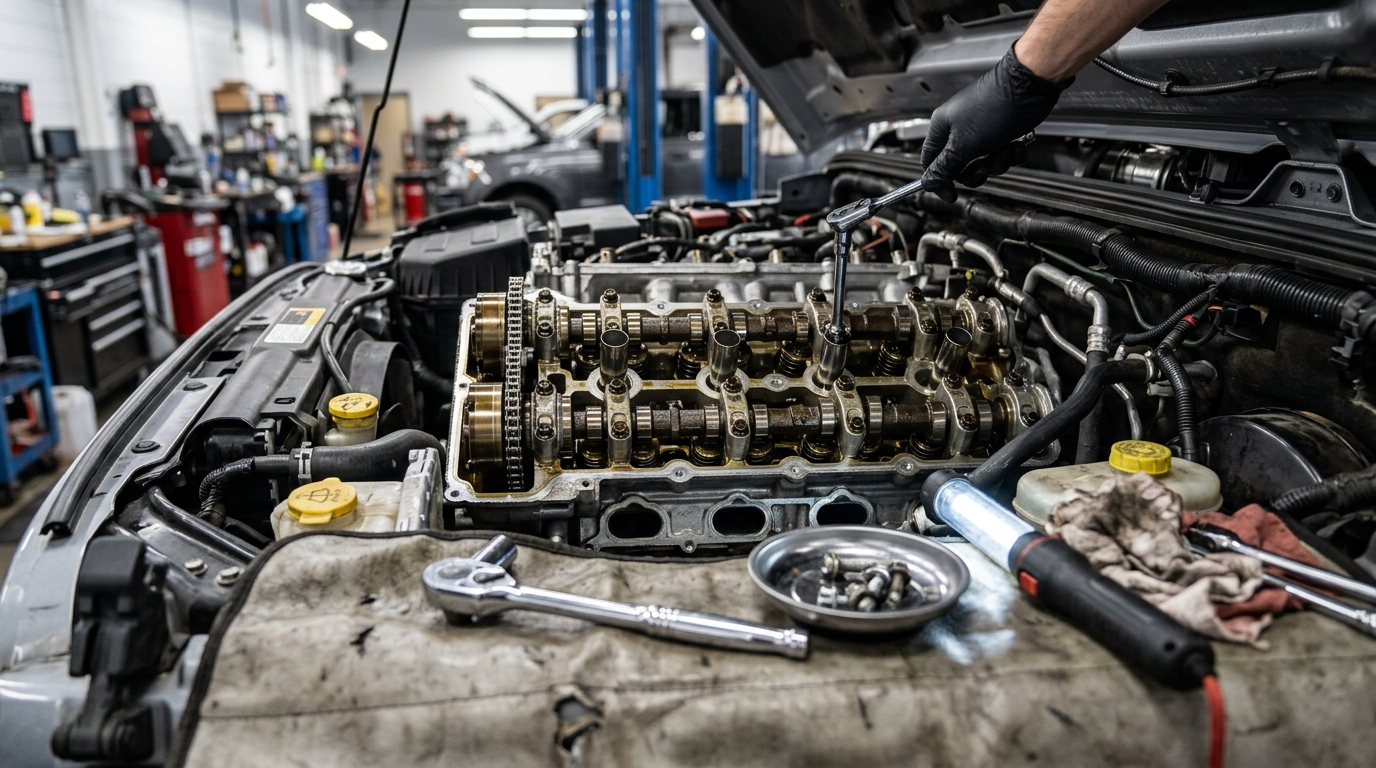
Across North America, more than 12 million vehicles—including the Jeep Wrangler (JK & JL), Jeep Grand Cherokee (WK2 & WL), Jeep Gladiator (JT), RAM 1500, Dodge Charger, Challenger, Durango, and Chrysler Pacifica—are powered by the ubiquitous Chrysler 3.6-liter Pentastar DOHC 24-valve V6 engine. Celebrated for smooth variable-valve power delivery and competitive fuel economy, the Pentastar harbors one of the most widely reported and costly valvetrain failure modes in modern American automotive history: the infamous "Pentastar Valvetrain Tick" caused by collapsed roller rocker arm needle bearings and wiped camshaft lobes.
What begins as a faint, rhythmic ticking noise at half-engine speed beneath the passenger or driver valve cover often escalates rapidly into severe mechanical devastation. When the microscopic uncaged needle bearings inside a finger-follower rocker arm seize or escape from their race, the roller stops rotating and acts as a stationary carbide chisel against the spinning camshaft. Within 500 to 1,500 miles of driving, the hardened case-layer of the camshaft lobe is completely ground flat, reducing valve lift, starving the combustion chamber of air, and triggering violent check engine misfire codes (P0300 through P0306). Dealership service departments routinely quote $2,500 to $3,800 to tear down the front timing assembly and replace camshafts.
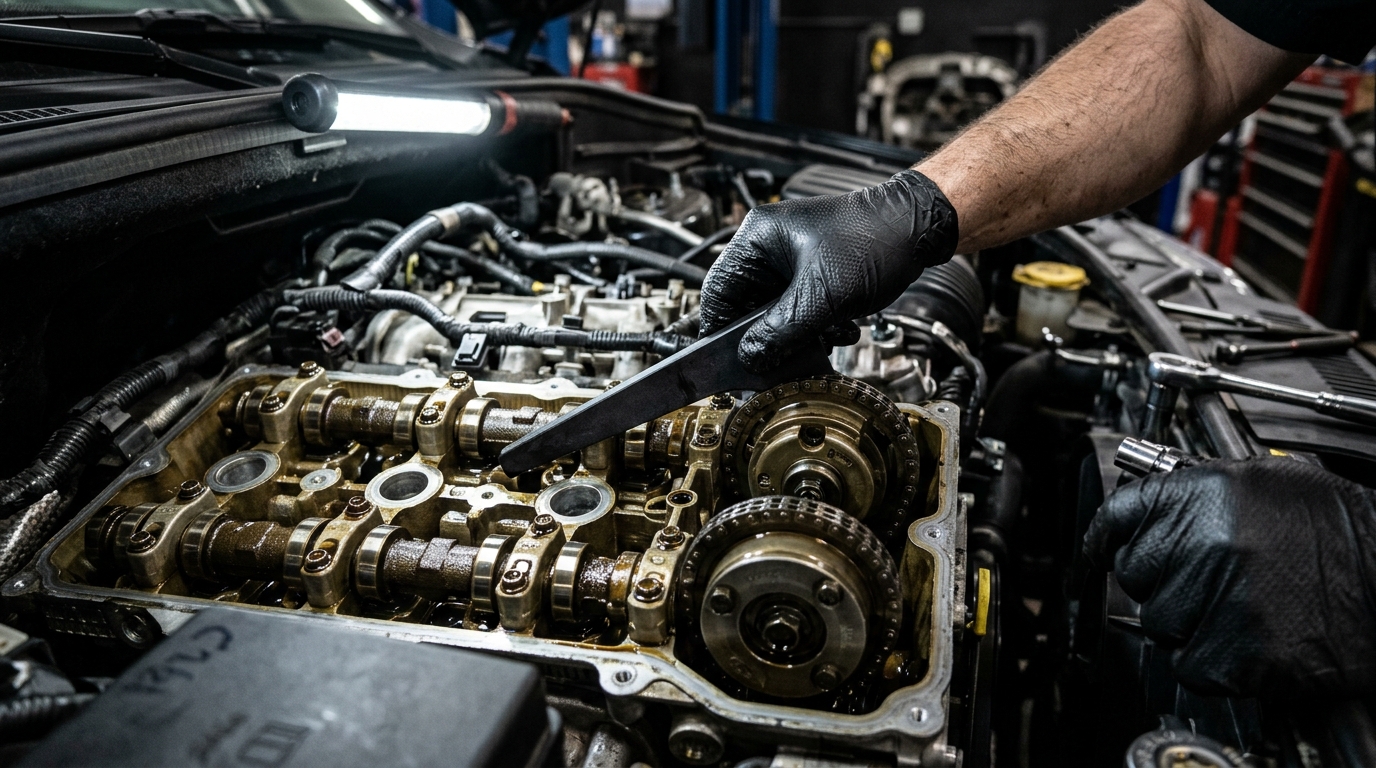
However, armed with the specialized Miller 10202 / 10369 timing chain wedge tools, knowledgeable owners and independent technicians can safely replace collapsed rocker arms and hydraulic lash adjusters in under three hours without removing the front timing cover, harmonic balancer, or cooling system. Based on official Chrysler Star Cases (S1309000004), OEM Service Bulletins (TSB 09-002-14), and dozens of master-technician valvetrain teardowns, AutoZonic provides the authoritative forensic diagnostic manual for the 3.6L Pentastar valvetrain.
Quick Workshop Diagnostic: 3.6L Pentastar Rocker Arm Failure at a Glance
- Affected Powertrains: 2011–2024 FCA / Stellantis 3.6L Pentastar V6 (Standard ERB & upgraded eTorque ERC engines across Jeep, RAM, Dodge, Chrysler platforms).
- Root Cause Mechanism: Oil-film breakdown and mechanical fatigue cause miniature needle bearings inside the rocker arm center roller to collapse. The seized roller gouges into the camshaft lobe, grinding off the 0.050-inch induction-hardened surface.
- Auditory Signature: Sharp, metallic "tick-tick-tick" noise pulsating at 1/2 crankshaft speed (approx. 6–8 ticks per second at 750 RPM idle), loudest when listening directly against the plastic valve cover or wheel well liner.
- Associated OBD-II Fault Codes:
P0300(Multiple Cylinder Misfire),P0301–P0306(Cylinder 1–6 Specific Misfire, most commonly Cyl 1 or 3 on Bank 1, Cyl 2 on Bank 2),P000A / P000C(Slow Camshaft Position Response due to metal swarf in VVT phasers). - OEM Superseded Part Numbers: Mopar Rocker Arm
5184296AH(replaces superseded revisions AA through AG); Mopar Hydraulic Lifter / Lash Adjuster5184332AA; Upper Intake Gasket KitMS97204.
1. Auditory Telemetry: Differentiating Normal Injector Click from Terminal Valvetrain Tick
Because the Pentastar V6 utilizes high-pressure fuel injectors and variable valve timing solenoids, owners often confuse harmless direct-injection and solenoid clicking with mechanical failure. A calibrated acoustic inspection protocol is essential:
| Acoustic & Physical Symptom | Normal Pentastar Operation | Collapsed Rocker / Wiped Cam Lobe Failure |
|---|---|---|
| Idle Acoustic Signature | Soft, high-frequency "chatter" resembling a quiet sewing machine from 12 port fuel injectors. | Loud, pronounced, metallic mechanical hammer strike ("clack-clack-clack") clearly audible from 10 feet outside the vehicle hood. |
| Frequency vs Engine RPM | Consistent injector clicking synchronized directly to engine load. | Pulsates at strictly half crankshaft speed (camshaft speed); frequency accelerates proportionally as throttle is blipped to 1,500–2,000 RPM. |
| Mechanic's Stethoscope Location | Equal, muted pulse across the upper plastic intake manifold plenum. | Sharp, deafening metallic strike concentrated specifically over a single spark plug tube on the valve cover ridge. |
| Engine Load & Acceleration | Smooth torque response across 2,000–5,500 RPM powerband. | Engine shudder, hesitation, and flashing Check Engine light under load due to severe valve lift reduction on the affected cylinder. |
| OBD-II Live Telemetry Data | 0 to 2 intermittent misfire counts per driving cycle across all cylinders. | Consistent, escalating misfire counter exceeding 50+ counts per 200 revolutions on a specific cylinder (e.g., Cylinder 1 or 3). |
2. Metallurgical Teardown: Why Do the Needle Bearings Fail?
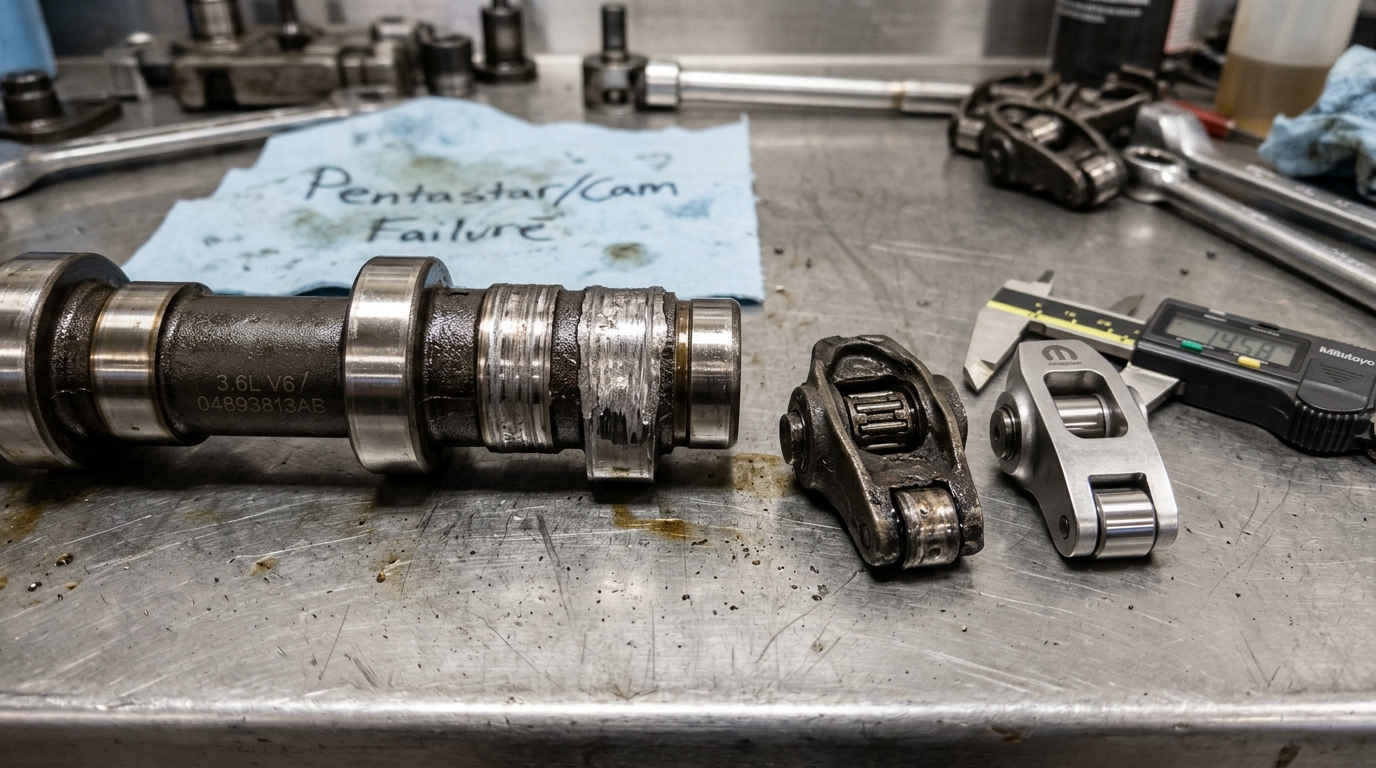
The 3.6L Pentastar valvetrain employs finger-follower rocker arms designed to reduce frictional drag compared to traditional flat-tappet or slider designs. Between the stamped steel rocker body and its center roller sits an array of miniature needle bearings measuring less than 1.5mm in diameter, held by a pressed steel center pin.
Forensic metallurgical failure analysis reveals three converging engineering factors that trigger bearing collapse:
-
1. Uncaged Bearing Design & Side-Pin Migration
In earlier revisions of the rocker arm (part numbers ending in AA through AF), the needle bearings were uncaged and restrained only by minor swaging on the outer pin flanges. Under thousands of hours of engine heat cycles and valvetrain harmonic vibration, the swaged pin works loose. The pin shifts laterally, allowing individual needle bearings to skew, bind, and ultimately pop free into the cylinder head oil drain holes. -
2. Low Idle Oil Pressure & Galley Starvation
The Pentastar engine utilizes a dual-displacement, two-stage oil pump controlled by a solenoid valve in the oil pan. To maximize fuel economy, the PCM commands low-pressure mode (approx. 25–30 PSI) below 3,500 RPM. In vehicles subject to extended idling (police cruisers, delivery vans, urban commuters), oil flow to the highest point of the engine—the cylinder head rocker arm oil galleys—is minimized. Without an unbroken hydrodynamic oil cushion, the tiny needle bearings experience metal-to-metal boundary friction, generating extreme localized heat that anneals and softens the needle rollers. -
3. The 0.050-Inch Camshaft Hardening Depth Limit
Once the rocker roller stops spinning, the friction coefficient multiplies tenfold. The camshaft lobes on the Pentastar are made from cast ductile iron with an induction-hardened surface layer approximately 0.040 to 0.050 inches (1.0 to 1.25 mm) thick. Once the seized rocker roller wears through this razor-thin outer case, it reaches the softer core iron underneath. The core iron disintegrates rapidly, flaking off microscopic metal swarf that circulates into the engine oil and wipes out the remaining lifters and VVT phaser screens.
3. Step-by-Step Diagnostic Protocol: How to Verify Wiped Camshafts
Before unbolting components, Master Technicians follow this structured verification sequence to determine whether you can save the engine with a simple rocker arm replacement or if a new camshaft is mandatory:
-
Step 1: OBD-II Enhanced Misfire Logging
Connect a bidirectional scan tool (such as BlueDriver) and navigate to Live Data → Misfire Monitor. Idle the engine up to operating temperature (200°F ECT). Note which specific cylinder is accumulating misfire counts. Bank 1 cylinders are 1, 3, 5 (passenger side on RWD / rear bank on FWD); Bank 2 cylinders are 2, 4, 6 (driver side on RWD / front bank on FWD). Cylinder 1 and Cylinder 3 on Bank 1 experience over 65% of all documented failures due to oil galley distribution topology. -
Step 2: Acoustic Stethoscope Isolation
Place the metallic probe of an automotive stethoscope directly against the valve cover bolt bosses above the suspected cylinder. If the internal needle bearings have collapsed, you will hear a sharp, deafening impact each time the camshaft lobe strikes the loose rocker roller. -
Step 3: Upper Intake Plenum & Valve Cover Removal
Disconnect the negative battery terminal. Remove the upper plastic intake manifold (eight 8mm bolts) and disconnect ignition coils and fuel injector harnesses. Unbolt the valve cover perimeter fasteners (approx. 25 bolts per side). -
Step 4: Manual Rocker Arm Clearance & Roller Inspection
With the valve cover off, rotate the crankshaft pulley clockwise until the camshaft lobes for the target cylinder are pointing straight UP (off the base circle, placing zero pressure on the rocker arm). Using your thumb and index finger, attempt to wiggle the center roller of each rocker arm.- Healthy Condition: Center roller is tightly centered, rolls freely with zero side-to-side slop, and exhibits zero vertical movement.
- Failed Condition: Center roller drops downward 1 to 3 millimeters, exhibits loose radial slop, or refuses to rotate at all because the needle bearings have disintegrated.
-
Step 5: Cam Lobe Micrometer Measurement
Wipe all oil from the camshaft lobes. Run your fingernail across the tip of each lobe. If your fingernail catches in a groove, or if the polished peak feels concave, measure the base-to-peak height using a digital vernier caliper and compare it to an adjacent unworn lobe. If lobe height is reduced by more than 0.010 in (0.25 mm), the camshaft must be replaced. Installing a new rocker arm against a grooved or flat camshaft lobe will destroy the new rocker within 500 miles.
4. Workshop Warnings & Field Notes from Master Technicians
If you must remove the camshaft sprockets, note that the Variable Valve Timing (VVT) Oil Control Valves (OCVs) that bolt the phaser to the camshaft are LEFT-HAND REVERSE THREADED on Bank 2 (driver side), while Bank 1 uses conventional right-hand threads. Technicians who mistakenly use an impact wrench clockwise on Bank 2 will instantly snap the hollow solenoid bolt off inside the camshaft snout, requiring a $400 camshaft replacement or machine shop extraction.
When a single rocker arm fails on Bank 1, the remaining 11 rocker arms and 12 hydraulic lash adjusters on that cylinder head have endured identical oil temperature and fatigue cycles. Always replace all 12 rocker arms and all 12 lifters on that cylinder head as a complete matched set. 90% of DIYers who replace only the single noisy rocker arm find themselves tearing the intake manifold off again within 3,000 miles when an adjacent factory rocker arm collapses.
Executing this valvetrain service without removing the front timing cover requires the specialized Chrysler timing wedge blocks and live telemetry logging to pinpoint misfiring cylinders:
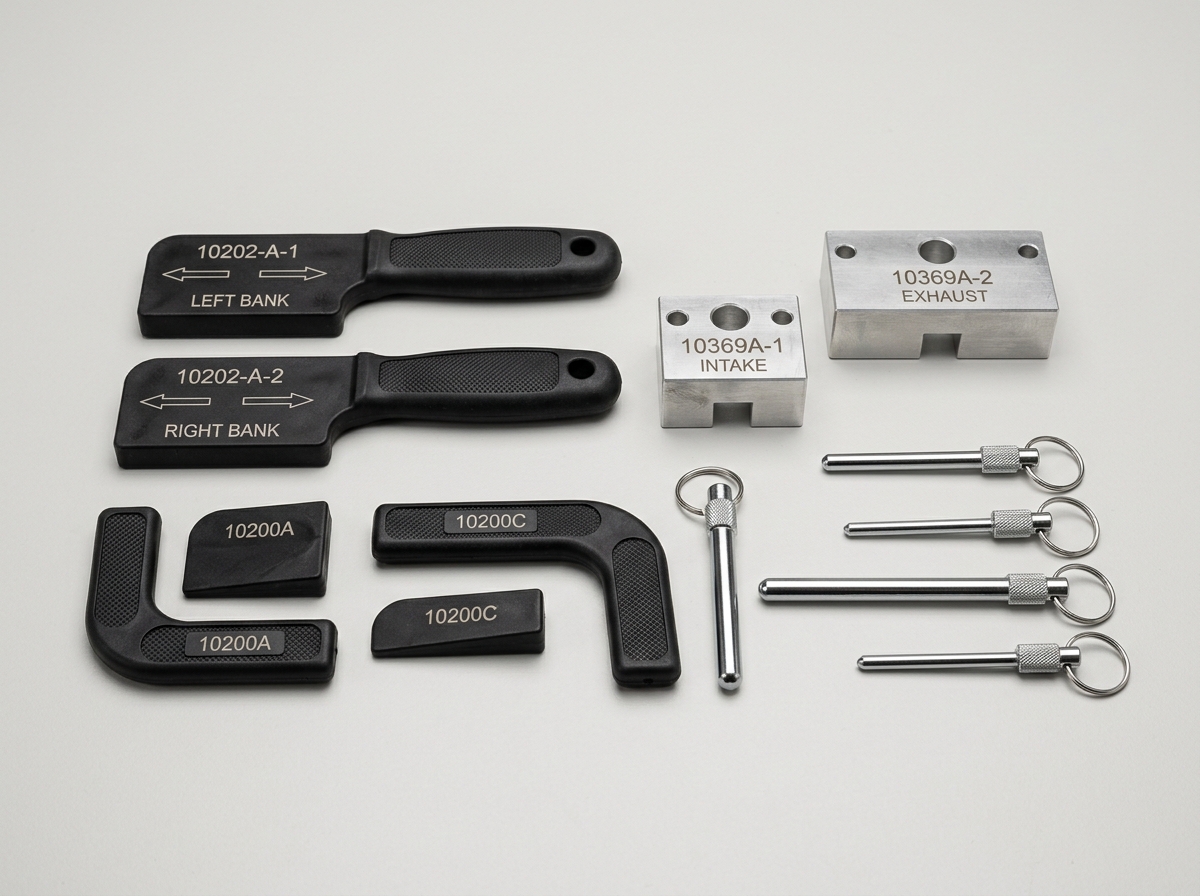
Chrysler / Jeep 3.6L Pentastar Camshaft & Timing Chain Wedge Tool Kit
Miller 10202 & 10369 Equivalent • Prevents Timing Cover Removal
- ✓Heavy-Duty Reinforced Nylon: Locks secondary timing chain against tensioner without scarring aluminum guides.
- ✓Phaser Lock Blocks Included: 10369A blocks lock dual VVT sprockets securely at Top Dead Center.
- ✓Saves 8 Hours Labor: Enables rocker arm and camshaft replacement without dropping the front timing cover.

BlueDriver Bluetooth Pro OBD-II Diagnostic Scan Tool
Technician Recommended for Enhanced OEM PIDs
- ✓Enhanced Diagnostics: Reads proprietary manufacturer ABS, Airbag, transmission, and body codes.
- ✓Real-Time Telemetry: Graph live oil pressure, coolant temp (ECT), and cam phaser angular deviation.
- ✓Wireless Bluetooth: Full iOS & Android integration with zero monthly subscription fees.
5. Repair Cost Analysis: DIY vs. Independent Specialist vs. Dealership
The cost to remediate the Pentastar valvetrain tick depends heavily on whether the failure was caught early before the camshaft lobe suffered mechanical gouging:
Timing Wedge Shortcut (Cam Intact)
Rocker tick caught immediately; zero cam lobe wear.
- Parts: 24x Mopar Rockers & Lifters, intake gaskets ($180 – $260).
- Tools: Miller 10202 Wedge Kit ($49.99).
- Labor: 3.0 to 4.5 DIY hours in home garage.
- Total Cost: $230 – $320.
Complete Bank 1 & 2 Overhaul
Professional replacement of all 24 rockers and 24 lifters.
- Parts: OEM Mopar components & new synthetic oil ($350 – $450).
- Labor: 4.5 to 6.0 book hours ($700 – $950).
- Total Cost: $1,050 – $1,400.
- Outcome: 12-month / 12,000-mile warranty.
Full Timing Teardown + Camshafts
Driven with tick for 1,000+ miles; wiped cam lobes.
- Parts: New camshafts, 24 rockers, lifters, front cover seals ($1,200 – $1,600).
- Labor: 12.0 to 15.0 flat-rate dealer hours ($1,800 – $2,400).
- Total Cost: $3,000 – $4,000.
Frequently Asked Questions (FAQ)
Can I keep driving my Jeep or RAM if the engine has developed the Pentastar tick?
No. When you hear the distinct metallic ticking sound, the hardened needle bearings have already disintegrated. At this stage, you have a narrow grace period of roughly 100 to 300 miles before the seized steel roller grinds through the thin 0.050-inch induction-hardened layer of the camshaft lobe. If you stop driving immediately, you can resolve the issue with a $250 rocker arm and lifter kit. If you continue driving for several weeks, you will destroy the camshaft, requiring an additional $400 in parts and 8 hours of labor.
Do the upgraded Mopar rocker arms (revision AH) fix the problem permanently?
Yes. Mopar revision 5184296AH features heavily reinforced internal needle bearing cages, improved bearing pin retention swaging, and micro-honed roller surfaces that resist oil boundary starvation. Independent teardowns of fleet vehicles with over 150,000 miles on AH-revision rockers demonstrate virtually zero needle bearing failure when maintained with quality full synthetic 0W-20 or 5W-20 engine oil.
What oil change interval should I use to protect the Pentastar valvetrain?
While the Chrysler dashboard Oil Life Monitor suggests oil change intervals up to 10,000 miles, forensic technicians strongly advise against this. To maintain critical hydrodynamic oil film strength across the upper valvetrain, change your oil every 5,000 miles (or 6 months) using a high-quality API SP / ILSAC GF-6 certified synthetic oil (such as Pennzoil Ultra Platinum or Mobil 1) that meets Chrysler Material Standard MS-6395.
Researching this vehicle or comparing used inventory?
Always cross-reference factory service bulletins, verify warranty coverage, and compare dealer financing rates or insurance quotes before purchasing.
Reader Feedback
Was this technical guide helpful?
Your verification vote informs our ongoing automotive research schedule.