
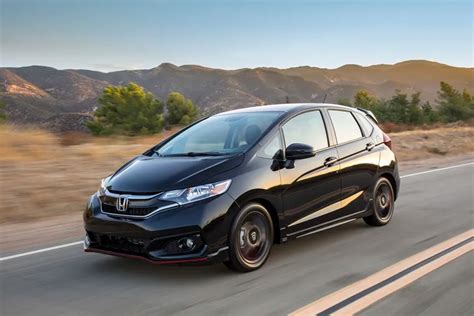
For ordinary commuting, city driving and steady highway use, the U.S.-market Honda Fit is adequately powered rather than genuinely underpowered. The final 2020 U.S. Fit made 130 horsepower with the six-speed manual and 128 horsepower with the CVT, plus 114 lb-ft of torque. Its modest output is most noticeable when the car is fully loaded, climbing a steep grade or making a short high-speed pass.
2020 Honda Fit power
| Specification | 2020 U.S. Honda Fit |
|---|---|
| Engine | 1.5-liter four-cylinder |
| Horsepower | 130 hp with 6MT; 128 hp with CVT |
| Torque | 114 lb-ft |
| Transmission | Six-speed manual or CVT, depending on trim |
These figures apply to the final U.S. model year. Overseas Fit and Jazz versions can use different gasoline or hybrid powertrains.
Why the Fit can feel slow
The Fit makes its peak power at higher rpm, so light-throttle driving can feel leisurely, especially with the CVT. Several passengers, luggage, air conditioning, a steep incline or a short freeway entrance ramp make the lack of low-rpm torque more obvious.
That is part of the car’s efficiency-focused character rather than proof of a fault. A useful test drive should include the kind of merge, hill and passenger load you actually encounter.
Manual vs CVT
The six-speed manual lets the driver choose a lower gear before a hill or pass and carries Honda’s 130-hp rating. The CVT is rated at 128 hp and changes its ratio automatically to keep the engine in an effective operating range. Under strong acceleration, higher engine speed and a steady engine note are normal CVT behavior.
When the Fit has enough power
For urban commuting, suburban errands and steady highway travel, the Fit’s performance is generally well matched to its purpose. It becomes less satisfying if you regularly drive steep grades with a full passenger load, use very short freeway ramps or expect the response of a turbocharged car.
What to check on a used Fit
If a particular Fit feels dramatically slower than comparable cars, misfires, hesitates or shows warning lights, treat that as a maintenance or diagnostic issue rather than normal model behavior. On a test drive, try a moderate hill and highway merge, confirm smooth transmission response and review the maintenance history.
Related: Honda Fit size, Fit vs Jazz naming, and why the Fit left the U.S. market.
Related Guides
Is a Honda Pilot Considered a Standard SUV? Why Classifications Differ
How to Improve Honda Fit Fuel Economy: 15 Safe Steps
Why Was the Honda Fit Discontinued in the U.S.?
How Long Does a Honda Fit Last? Mileage and Lifespan Guide