
Hyundai & Kia Theta II Engine Failure: P1326 Knock Sensor Limp Mode, Rod Bearing Seizure & Lifetime Warranty Replacement Guide
Automotive Research, ASE Master Technicians & Fact-Checking
Direct Technical Summary
Diagnose the massive Hyundai & Kia Theta II 2.4L/2.0L engine crisis. We dissect DTC P1326 limp home mode, crankshaft deburring swarf, rod bearing clearance tests, and how to qualify for free lifetime engine replacement.
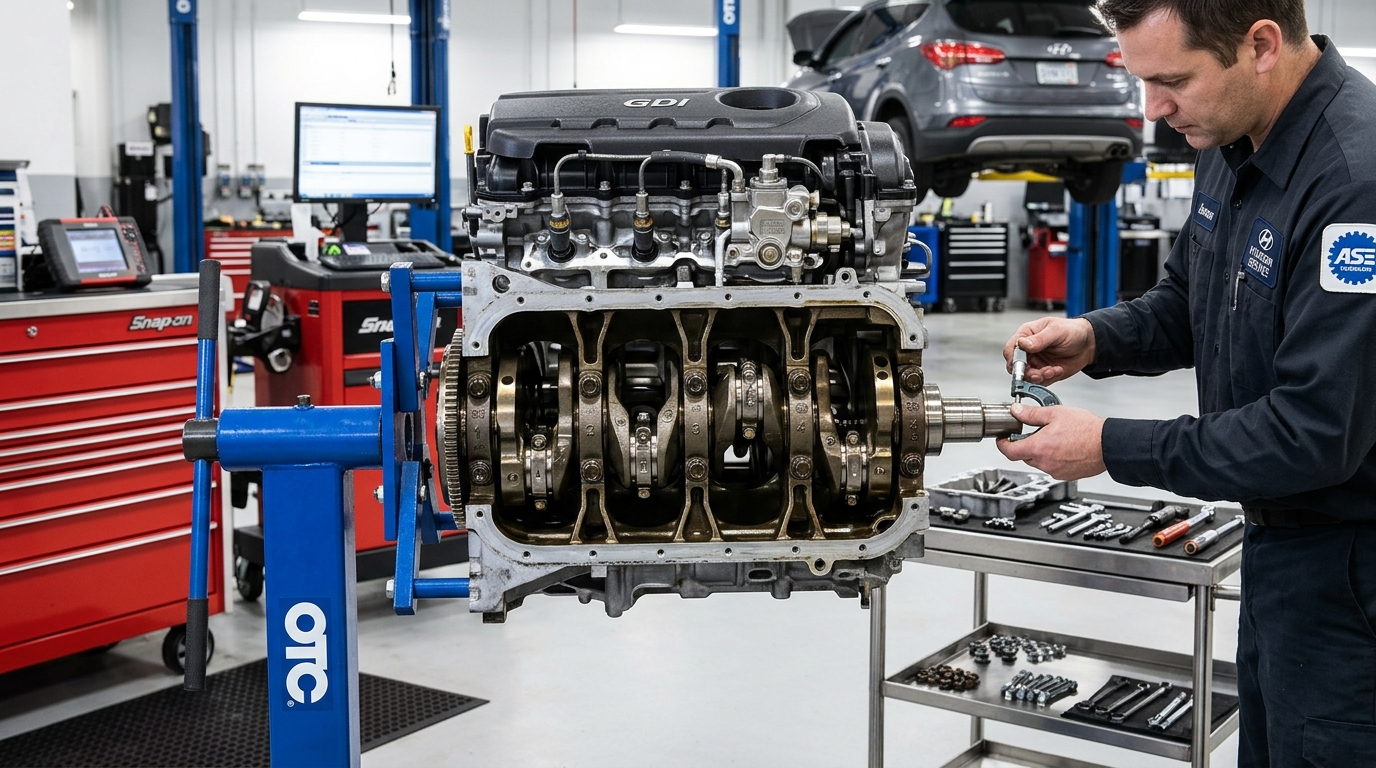
Over the past decade, Hyundai Motor America and Kia America have engineered one of the most remarkable brand ascents in modern automotive history, winning accolades for sharp exterior design, class-leading infotainment, and long-term powertrain warranties. Yet beneath this commercial triumph lies the largest, costliest, and most contentious automotive defect scandal in modern Korean manufacturing history: the catastrophic failure of the 2.4-liter and 2.0-liter turbocharged Theta II Gasoline Direct Injection (GDI) engines, affecting over 4.2 million vehicles across North America.
For millions of owners driving the Hyundai Sonata, Santa Fe, Tucson, and Kia Optima, Sorento, and Sportage, the nightmare begins without warning: while cruising at highway speeds, the Check Engine Light begins blinking continuously, the vehicle loses acceleration, and the engine enters a restrictive 1,800 to 2,000 RPM 'Limp Home Mode' governed by diagnostic trouble code DTC P1326. In severe cases, the connecting rod bearings delaminate completely, seizing the rotating assembly and punching a connecting rod through the aluminum block, occasionally sparking vehicle fires. In response to federal defect investigations by the National Highway Traffic Safety Administration (NHTSA Recalls 15V-568, 17V-226, 21V-726) and a landmark class-action settlement (In re: Hyundai and Kia Engine Litigation), the automakers agreed to provide a Lifetime Powertrain Engine Warranty covering connecting rod bearing failure.
However, navigating dealership service departments to obtain an authorized $6,500–$8,500 factory engine replacement is fraught with bureaucratic pitfalls, oil maintenance record disputes, and failed electronic clearance tests. In this comprehensive forensic engineering dossier, the AutoZonic Research Desk synthesizes official Hyundai Technical Service Bulletins (TSB 21-01-052H), Kia Service Campaign PI1803 / Hyundai Campaign 953, and ASE Master Technician teardowns to demystify the metallurgy of why Theta II bearings fail, how the Knock Sensor Detection System (KSDS) operates, and the exact step-by-step blueprint to secure your free factory replacement engine.
Quick Workshop Diagnostic: Hyundai & Kia Theta II Engine Failure at a Glance
- Covered Powertrains: 2.4L GDI (Theta II non-turbo) and 2.0L T-GDI (Theta II Turbocharged) in 2011–2019 Hyundai Sonata, 2013–2019 Santa Fe Sport, 2014–2015/2018–2019 Tucson; 2011–2019 Kia Optima, 2012–2019 Sorento, and 2011–2019 Sportage.
- The Core Metallurgical Culprit: Incomplete manufacturing deburring of crankshaft oil journals at the Alabama (HMMA) and Hwaseong engine assembly plants, leaving residual metallic swarf that restricts oil flow and shears the bi-metal aluminum-tin connecting rod bearing shells under high BMEP loads.
- The Signature Fault Code:
DTC P1326(Knock Sensor Detection System - Bearing Abnormal Wear). Triggers flashing Check Engine Light, chime alarms, and cuts throttle output above 2,000 RPM. - Mandatory Legal Precondition: To qualify for the court-ordered Lifetime Engine Warranty, vehicles MUST have previously received the KSDS Software Update (Hyundai Campaign 953 / Kia Action PI1803) before total engine seizure.
- Official Manufacturer Testing Protocol: Hyundai/Kia TSB
21-01-052HEngine Bearing Clearance Test (audio knock sensor signal processing via GDS scan tablet).
1. Auditory Symptoms & Acoustic Signature: The Tell-Tale Theta II Knock vs. Normal GDI Tick
Modern GDI engines operate at high fuel injection pressures (often exceeding 2,000 PSI), producing an inherent, rapid high-frequency ticking noise from the mechanical high-pressure fuel pump (HPFP) and solenoid direct injectors mounted atop the cylinder head. Many owners misinterpret this normal clicking as engine failure. Here is how to distinguish normal direct injection acoustics from terminal connecting rod bearing knock:
| Acoustic Diagnostic Metric | Normal GDI High-Pressure System | Theta II Rod Bearing Delamination |
|---|---|---|
| Sound Timber & Pitch | High-pitched, rapid "sewing machine" metallic tick or soft buzzing. | Deep, rhythmic, hollow "thump-thump" or heavy hammer tap echoing from the lower crankcase. |
| Load & RPM Dependency | Consistent clicking across idle; remains proportional to cam speed without changing volume under torque load. | Loudest under light acceleration between 1,800 and 2,500 RPM (the harmonic peak of rod journal lash). Increases dramatically under engine load. |
| Dash Indication | No warning lights; steady instrument cluster. | Blinking Check Engine Light (flashes 1x per second) paired with immediate throttle cut (Limp Home Mode). |
| Stethoscope Probe Location | Loudest when placed directly on the stainless steel high-pressure fuel pump housing on top of the valve cover. | Loudest when probing the lower oil pan perimeter or engine block skirt near cylinder 2 or 3. |
| Oil Dipstick Visual Evidence | Translucent golden to dark brown oil; level steady. | Microscopic sparkling silver and bronze metallic glitter suspended in oil; severe fuel dilution odor. |
2. Metallurgical & Fluid Dynamics Physics: The Alabama Plant Swarf Defect
To understand why millions of Theta II engines fail prematurely while older naturally aspirated Beta and Delta engines achieved 250,000+ miles, we must examine the manufacturing defect identified in federal safety filings by the NHTSA.
During the rapid expansion of Hyundai Motor Manufacturing Alabama (HMMA) in Montgomery and the Hwaseong engine line in South Korea between 2011 and 2014, an automated mechanical blast-cleaning process was utilized to deburr oil passages drilled through the forged steel crankshafts. This process suffered from two critical engineering breakdowns:
-
1. Incomplete Deburring Swarf Evacuation
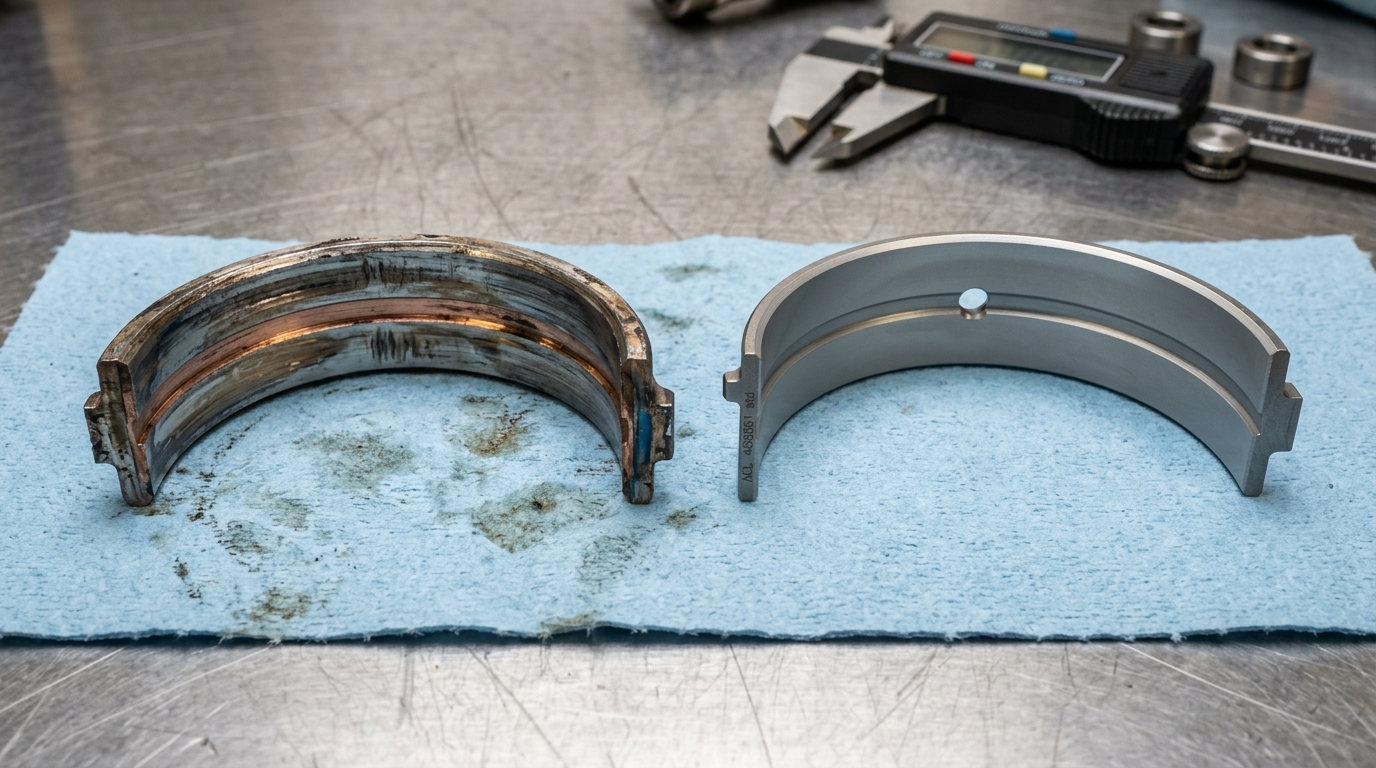
Microscopic metallic steel shavings, grinding grit, and swarf were not thoroughly flushed out of the internal crankshaft oil galleys before final engine block assembly. Once the engine was filled with factory 5W-20 oil and run under load, oil pump pressure washed these abrasive metal particles directly into the tight 0.0012 to 0.0018-inch clearance between the crankshaft connecting rod journals and the bearing shells. -
2. Surface Roughness & Hydrodynamic Film Rupture
Additionally, the finish surface roughness on the crankshaft rod journals exceeded factory micro-inch specifications (Ra). Under heavy brake mean effective pressure (BMEP)—particularly in high-load, low-RPM driving conditions—the hydrodynamic oil film was punctured by rough journal peaks. Instead of riding on a pressurized wedge of synthetic oil, the connecting rod bearing made direct metal-to-metal contact with the spinning crankshaft journal. -
3. Frictional Heat Spikes & Bearing Spin
As frictional temperatures surged past 500°F (260°C), the soft tin-aluminum babbitt layer softened and smeared across the oil holes, blocking secondary oil feed. Once lubrication ceased entirely, the rod bearing friction seized against the crankshaft journal. The immense mechanical torque sheared the locating tabs on the back of the bearing shell, spinning the bearing inside the connecting rod big-end bore. This excessive clearance created the violent mechanical rod knock, eventually resulting in the connecting rod snapping in two and puncturing the cast aluminum engine block.
3. The Knock Sensor Detection System (KSDS) & DTC P1326 Telemetry
Facing catastrophic engine lockups and federal investigations into fire hazards, Hyundai and Kia engineered a software patch known as the Knock Sensor Detection System (KSDS), deployed under Hyundai Service Campaign 953 and Kia Service Action PI1803.
Rather than redesigning and physically recalling 4 million engines simultaneously, the automakers reprogrammed the engine control unit (ECU) to repurpose the existing piezoelectric knock sensor mounted to the engine block under the intake manifold:
-
The 6.5–7.0 kHz Acoustic Filter Algorithm:
Standard engine knock sensors monitor acoustic frequencies to detect pre-ignition (spark knock). The KSDS software update installs a specialized digital signal processing (DSP) bandpass filter calibrated specifically to identify the unique harmonic vibration signature of connecting rod bearing play (typically occurring between 6.5 kHz and 7.0 kHz). -
DTC P1326 Trigger Criteria & Limp Home Mode:
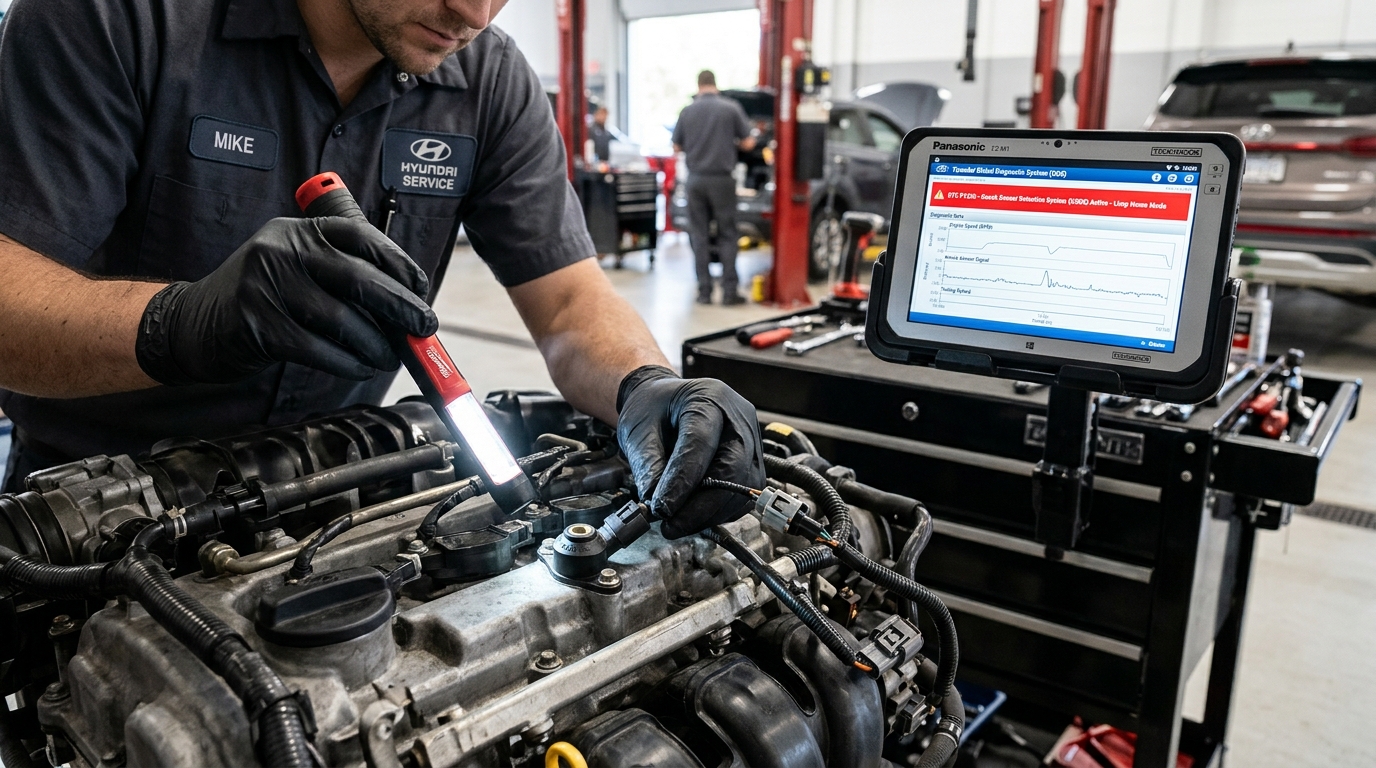
When the ECU detects vibrations exceeding the pre-set threshold continuously over a calibrated duration, it recognizes that bearing delamination has commenced. The ECU immediately sets permanent codeP1326, activates a flashing Check Engine Light, sounds an audible chime, and engages Limp Home Mode. Throttle plate opening is electronically limited to 20%, maximum engine speed is capped at 1,800–2,000 RPM, and maximum vehicle road speed is restricted to approximately 55–60 mph to prevent the rod from throwing through the block before the driver reaches safety.
4. Official NHTSA Recalls & The Lifetime Warranty Qualification Framework
Under the landmark federal class-action settlement (In re: Hyundai and Kia Engine Litigation, No. 8:17-cv-00838), Hyundai and Kia established an unprecedented Lifetime Engine Warranty for qualifying original and subsequent (used) vehicle owners. However, qualifying for a free replacement long-block engine requires satisfying rigid legal criteria:
| Warranty Qualification Parameter | Mandatory Requirement | Dealership Denial Risk Factor |
|---|---|---|
| KSDS Campaign 953 / PI1803 Status | MUST be installed prior to engine failure. | Instant Denial. If the software update was neglected, corporate warranty will reject the claim under the "failure to complete mandatory safety campaign" clause. |
| Active Trouble Code | DTC P1326 stored in freeze-frame memory. | If clearing codes using an aftermarket scanner without documenting freeze-frame data, dealers cannot verify bearing knock telemetry. |
| Electronic Bearing Clearance Test (BCT) | GDS tablet acoustic test must return a 'FAIL' result. | If BCT returns 'PASS', dealers are only authorized to replace the knock sensor wiring harness (TSB 21-01-052H), not the engine block. |
| Oil Maintenance Records & Sludge Inspection | Oil changes performed within reasonable interval tolerances (3,000–7,500 miles). | Exceptional sludge accumulation under valve cover can trigger an "owner neglect / lack of lubrication" denial unless contested via oil analysis. |
5. Workshop Warnings & Field Notes from the Service Bay
When your vehicle enters limp home mode on the highway, it is tempting to use a generic handheld code reader to erase DTC P1326 and restore normal throttle response. Do not do this. The official Hyundai/Kia warranty claim submission portal requires a full GDS scan snapshot showing an active, uncleared P1326 stored in permanent freeze-frame memory. If you clear the code, the dealership cannot bill corporate for warranty intake and will charge you an upfront diagnostic fee of $180–$250, forcing you to drive the car until the code re-triggers. Document the freeze-frame data, leave the code active, and flatbed tow the car to the dealer.
Under warranty bulletin rules, dealerships are instructed to photograph the top of the cylinder head under the oil filler cap or valve cover. Because direct-injection Theta II engines run high soot levels, normal oil varnish is frequently misclassified by aggressive service advisors as "sludge from owner neglect" to deny warranty coverage. Your counter-measure: Preserve your last oil change receipt and use a billet oil filter cutter to inspect the filter pleats. If metal flakes are trapped in the pleats, bearing delamination—not carbon sludging—is the primary failure mode, rendering warranty denial legally indefensible under the class-action settlement terms.
To capture real-time freeze-frame telemetry when DTC P1326 triggers limp mode, and to inspect oil filter pleats for non-ferrous bearing flakes before taking your vehicle to a Hyundai or Kia dealership, Master Technicians recommend these verified diagnostic tools:

BlueDriver Bluetooth Pro OBD-II Diagnostic Scan Tool
Technician Recommended for Enhanced OEM PIDs
- ✓Enhanced Diagnostics: Reads proprietary manufacturer ABS, Airbag, transmission, and body codes.
- ✓Real-Time Telemetry: Graph live oil pressure, coolant temp (ECT), and cam phaser angular deviation.
- ✓Wireless Bluetooth: Full iOS & Android integration with zero monthly subscription fees.
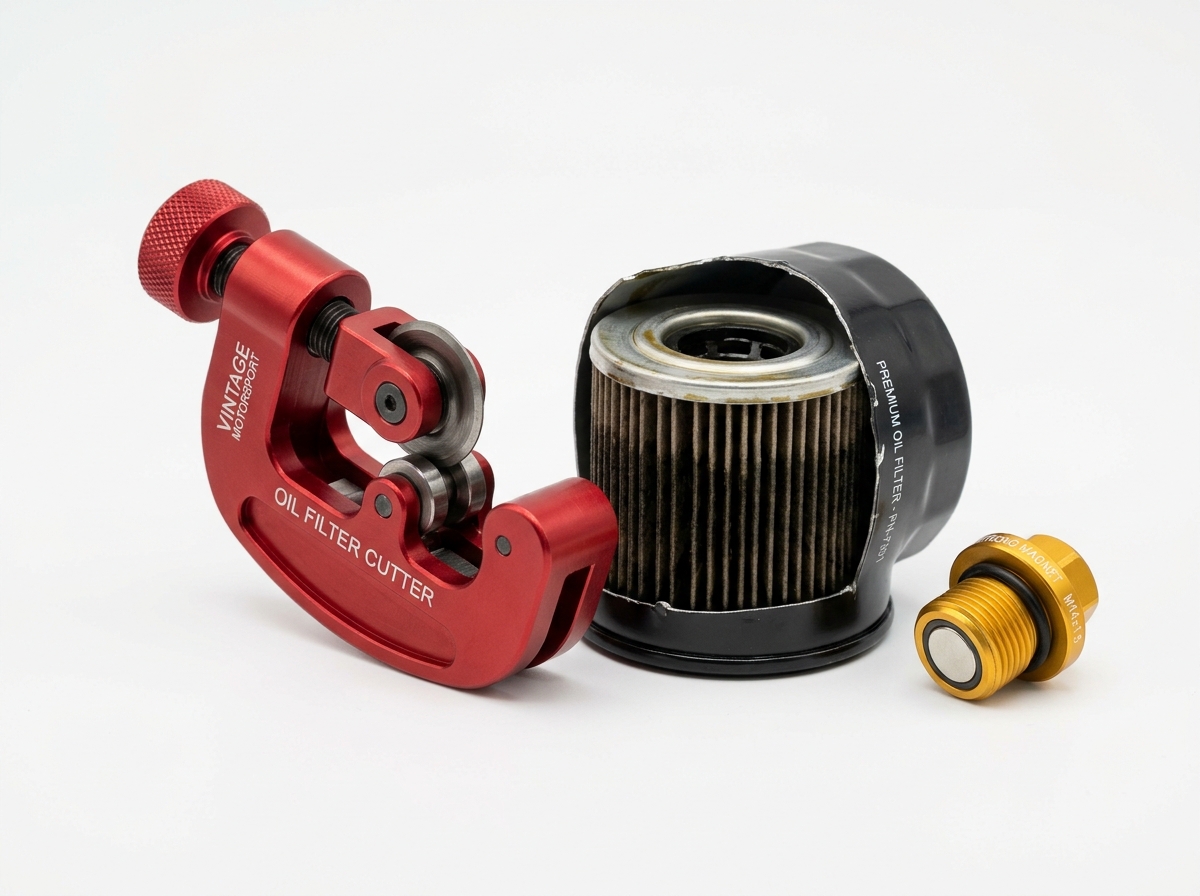
Billet Aluminum Oil Filter Inspection Cutter Tool
Early Metal Swarf & Bearing Flake Detection
- ✓Clean Billet Cutting: Hardened roller bearings slice filter canister without creating metal filings.
- ✓Irrefutable Dealer Proof: Microscopic inspection of paper pleats for copper/bronze bearing flakes.
- ✓Universal Fitment: Accommodates spin-on and cartridge filters from 2-3/8" to 5" diameter.
6. Step-by-Step Action Blueprint: How to Navigate Dealer Engine Replacement
If your Hyundai or Kia vehicle triggers DTC P1326 or exhibits bottom-end rod knock, follow this exact four-stage protocol to ensure your warranty claim is approved smoothly:
-
Stage 1: Verify KSDS Update & VIN Recall Status
Visit the official NHTSA recall portal (nhtsa.gov/recalls) or Hyundai/Kia owners portal. Input your 17-digit VIN. Confirm that Service Campaign 953 (Hyundai) or Service Action PI1803 (Kia) shows a status of "COMPLETED." If open, you must get the update completed immediately before total seizure occurs. -
Stage 2: Flatbed Towing (Do Not Drive in Limp Mode)
Call Hyundai Roadside Assistance (1-800-243-7766) or Kia Roadside Assistance (1-800-333-4542). Demand a flatbed tow. Driving in limp mode for extended distances will weld the rod bearing to the journal, destroying all rotational evidence required for the electronic bearing clearance test. -
Stage 3: Dealership Bearing Clearance Test (BCT) Protocol
Request that the technician perform the official Bearing Clearance Test per TSB 21-01-052H. If the test fails, corporate automatically issues Prior Approval (PA) for a complete sub-assembly (short-block or long-block engine assembly, OEM part21101-2GK00-QQH). If the test passes, the dealer will replace the knock sensor and harness under warranty, returning the vehicle for monitoring. -
Stage 4: Loaner Car & Rental Reimbursement Rights
Under the class-action settlement agreement, Hyundai and Kia are legally obligated to provide a complimentary dealer loaner vehicle or reimburse rental car expenses up to $40 per day while your vehicle is out of service awaiting engine backorder shipment. Retain all rental receipts.
Frequently Asked Questions (FAQ)
Does the Theta II Lifetime Engine Warranty apply to used (second) owners?
Yes. Under the terms of the federal class-action settlement (In re: Hyundai and Kia Engine Litigation), the Lifetime Warranty for connecting rod bearing failure transfers automatically to all subsequent owners, regardless of whether you bought the vehicle from an independent dealer or private seller, provided the KSDS update was performed.
Can I drive my vehicle safely while DTC P1326 is active?
No. Limp Home Mode is an emergency fail-safe intended solely to allow you to pull off a busy interstate or reach a safe shoulder. Operating the engine with an active P1326 can cause sudden total seizure at speed, loss of power steering assist, and extreme thermal heat that can ignite engine oil mist.
What if the dealer denies my engine replacement claim due to lack of service records?
Under the court settlement, dealerships cannot deny a claim solely for missing oil receipts unless they prove that catastrophic carbon sludge—not bearing delamination—directly caused the failure. If an advisor attempts a summary denial, immediately request a factory Field Technical Specialist (FTS) review and contact the Class Action Claims Administrator (kiaengineclasssettlement.com or hyundaiengineclasssettlement.com).
Researching this vehicle or comparing used inventory?
Always cross-reference factory service bulletins, verify warranty coverage, and compare dealer financing rates or insurance quotes before purchasing.
Reader Feedback
Was this technical guide helpful?
Your verification vote informs our ongoing automotive research schedule.