
Can a VIN Tell You If a Vehicle Has a Tow Package?
Automotive Research, ASE Master Technicians & Fact-Checking
Direct Technical Summary
A VIN alone does not confirm a factory tow package. Learn how to decode build sheets, identify hitch wiring, and verify true towing capacity before buying.

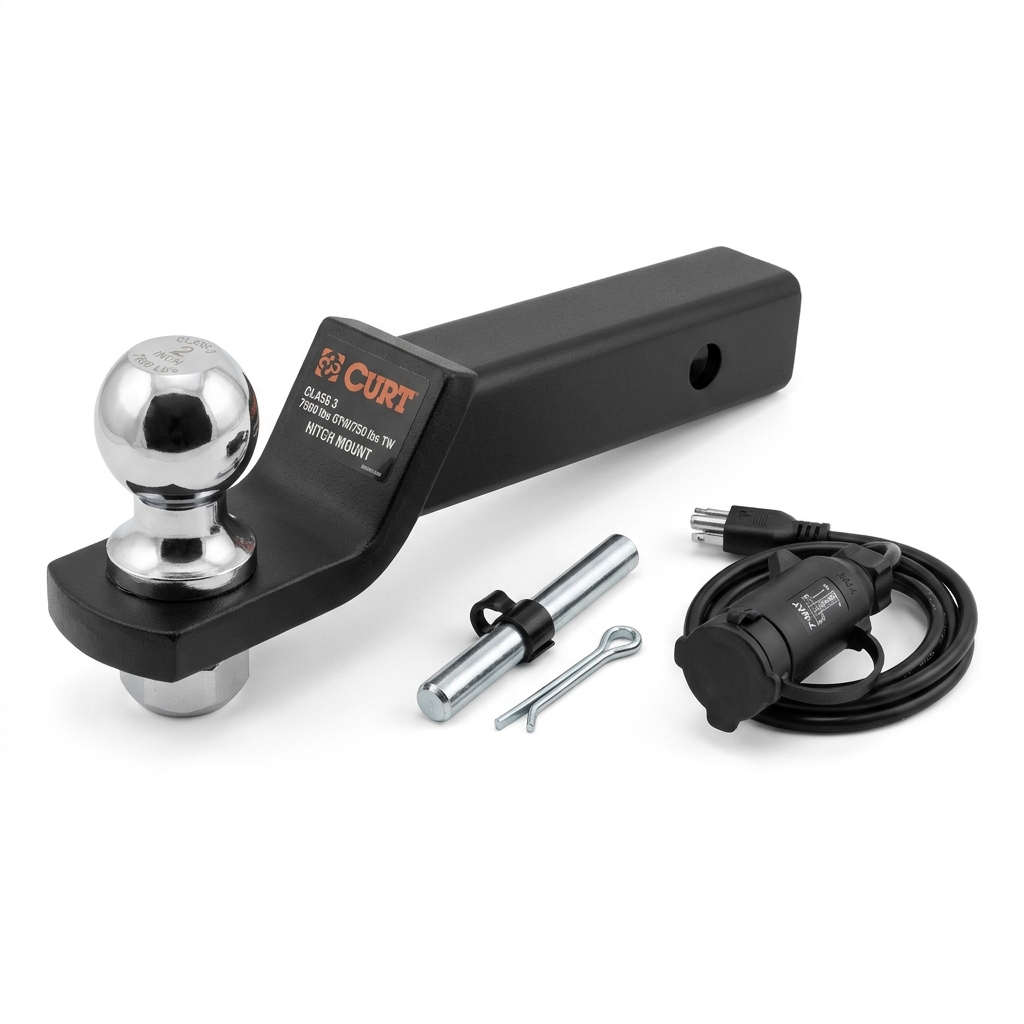
CURT Class 3 Trailer Hitch & 2-Inch Ball Mount Starter Kit
Whether your vehicle came with a factory tow package or aftermarket receiver, this all-in-one starter kit provides everything needed to hook up a utility trailer, camper, or boat.
- ✓Universal 2-Inch Receiver Shank: Fits standard Class 3 and Class 4 pickup, SUV, and crossover hitch receivers.
- ✓Pre-Torqued Factory 2" Chrome Ball: 2-inch drop / 3/4-inch rise with heavy-duty hitch pin and retaining clip included.
- ✓Dual 7-Way / 4-Way Wiring Adapter: Plug-and-play electrical connection for trailer running lights, turn signals, and brakes.
Key takeaways
- A VIN identifies a specific vehicle; it is not a universal factory-options list.
- Do not assume the 8th, 10th or 11th VIN character proves a tow package without make/model-specific documentation.
- The strongest evidence is a manufacturer build record, window sticker, build sheet or dealer equipment record tied to the VIN.
- A receiver hitch or trailer wiring can be added later, so physical hardware alone does not prove a factory tow package.
- Tow-package verification and towing-capacity verification are related but separate questions.
The best way to check a tow package by VIN
nStart with the VIN because it anchors every later check to the exact vehicle. Then work through the evidence in this order:n- Identify the vehicle correctly. Decode the VIN with an official or manufacturer-supported source. NHTSA’s VIN Decoder is useful for basic manufacturer-reported vehicle information.
- Retrieve factory equipment data. Look for the original window sticker, build sheet, manufacturer account, dealer equipment report or another OEM record tied to that VIN.
- Find the exact towing-package name or option. Manufacturers may use names such as Trailer Tow Package, Tow/Haul Package, Max Tow, Max Trailering or a brand-specific option code.
- Inspect the vehicle as it exists today. Confirm the receiver, electrical connector, brake-controller equipment and any model-specific towing hardware.
- Verify the actual towing rating separately. Use the owner’s manual, certification/tire labels and the manufacturer’s towing guide or VIN-specific towing tool where available.
What NHTSA’s VIN decoder can—and cannot—tell you
nNHTSA explains that the 17-character VIN encodes specific information about a particular vehicle and that the information displayed by its decoder is reported by the manufacturer. The vPIC system is designed around manufacturer-submitted VIN-decoding data.nnThat makes NHTSA useful for establishing basic vehicle identity and decoded attributes. It does not mean every retail option or package will appear as a dedicated field. NHTSA’s decoder also warns that a missing decoded value should not be interpreted as proof that a feature is unavailable.nnThat distinction is important for tow packages. A generic decoder may identify the engine, drivetrain, model year or other characteristics that affect towing, while still not listing the retail package name you are trying to confirm.nnFor a deeper explanation of decoder limitations, read what a VIN can and cannot confirm about a tow package.nWhy one VIN digit is not enough
nLegacy advice often claims that one character—commonly the 8th, 10th or 11th position—can tell every owner whether a vehicle has a tow package. That is not a safe universal rule.nnVIN positions have defined functions, but the meaning of vehicle-description characters depends on the manufacturer’s VIN scheme. An engine code may help establish a powertrain, and a plant code may identify where the vehicle was assembled, but neither automatically proves that a particular towing package was installed.nnIf a manufacturer publishes a model-year-specific code that identifies a package, use that manufacturer documentation. Otherwise, treat a single-character shortcut as insufficient evidence.nWhat actually proves a factory tow package?
| Evidence | What it tells you | How strong is it? |
|---|---|---|
| Original window sticker/build sheet | Factory packages and options for the VIN | Strong |
| Manufacturer or franchised-dealer equipment record | Original build configuration tied to the VIN | Strong |
| OEM VIN-specific towing tool | Vehicle-specific towing data where the manufacturer supports it | Strong for the ratings it reports |
| Owner’s manual/towing guide | Rules and ratings for the relevant configuration | Strong when matched to the exact vehicle |
| Receiver hitch and wiring | What equipment is on the vehicle today | Useful, but does not prove factory installation |
| Generic VIN decoder | Basic decoded attributes | Useful starting point, not always a complete options record |
A hitch is not the same as a tow package
nA receiver hitch is only one component. It may have been factory-installed, dealer-installed or added by a later owner. The same is true for trailer wiring and brake-controller equipment.nnA factory towing package can include different equipment depending on the vehicle and model year: cooling upgrades, axle ratios, software, electrical equipment, trailer-brake controls or other components may be involved. On another vehicle, the package may be much simpler.nnAlso remember that a stronger hitch does not rewrite the manufacturer’s ratings. Our guide Can a Hitch Increase Towing Capacity? explains why the lowest applicable vehicle/component limit still controls.nCan the VIN tell you exactly how much you can tow?
nSometimes an OEM can use the VIN to return vehicle-specific towing information. Ford, for example, provides a Towing Calculator for supported 2020-and-newer F-Series pickups that accepts a VIN and then calculates maximum loaded trailer weight and tongue weight after the user enters occupants, cargo and accessories.nnThat is different from “calculating towing capacity from the VIN digits.” The VIN is being used to identify the exact build in the manufacturer’s system.nnFor the capacity workflow, use our separate guide: How Much Can I Tow by VIN?Ford F-150 example: why model year and configuration matter
nFord’s current F-150 information illustrates why a generic VIN shortcut is risky. Package names, included equipment and maximum ratings vary by model year and configuration. For 2026, Ford lists an available Tow/Haul Package on applicable F-150 models, while the exact towing limit still varies with engine, cab/bed configuration, drivetrain, axle setup, passengers, cargo and accessories.nnIf you are checking an F-150 specifically, use the model-year documentation rather than applying a universal rule. Our F-150 tow-package identification guide shows the vehicle-specific process.nUsed-vehicle checklist before you tow
- Factory configuration: verify the package or option from a VIN-linked factory record.
- Current equipment: inspect the receiver, connector, brake-controller setup and any required model-specific hardware.
- Vehicle labels: check GVWR/GAWR and the tire-and-loading information for the exact vehicle.
- Payload: include passengers, cargo, accessories and trailer tongue/pin weight carried by the tow vehicle.
- Towing guide: confirm the model-year/configuration limit and required equipment.
- Trailer: verify loaded trailer weight, tongue/pin weight, brakes, tires and component ratings.
Frequently asked questions
Can a dealer tell from the VIN whether my vehicle has a tow package?
nOften, a franchised dealer can use the VIN to retrieve original equipment or build information. The exact data available varies by manufacturer and vehicle age.nDoes the 8th VIN digit mean tow package?
nThere is no universal rule that makes the 8th character a tow-package indicator across all makes and models. Use manufacturer-specific documentation for the exact vehicle.nIf a VIN decoder does not list a tow package, does that mean I do not have one?
nNo. NHTSA notes that missing decoded values should not automatically be interpreted as a feature being unavailable. Check the factory build record and manufacturer documentation.nIf my vehicle has a factory hitch, does that prove its towing capacity?
nNo. Towing capacity depends on the complete vehicle configuration and applicable ratings, not the receiver alone.nOfficial sources
Reviewed August 17, 2026 by the AutoZonic Editorial Team. This guide separates VIN decoding, factory-equipment verification and towing-capacity verification so those three questions are not treated as the same thing.Researching this vehicle or comparing used inventory?
Always cross-reference factory service bulletins, verify warranty coverage, and compare dealer financing rates or insurance quotes before purchasing.
Reader Feedback
Was this technical guide helpful?
Your verification vote informs our ongoing automotive research schedule.