
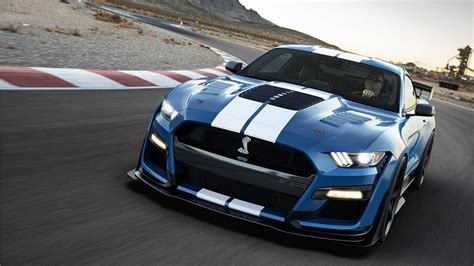
A stock Tesla Model S Plaid is quicker from 0–60 mph than Ford’s modern Shelby GT500 using the manufacturers’ own headline figures. Tesla lists the Model S Plaid at 1.99 seconds to 60 mph with rollout subtracted, while Ford described the 2020–2022 GT500 as reaching 60 mph in a little over three seconds. The comparison changes when you move from launch acceleration to top speed, repeated track use, braking, handling or modified cars.
The previous AutoZonic article treated “Tesla” as one vehicle, mixed Model S Performance and Plaid specifications, gave the GT500 the wrong transmission and then contradicted itself about which car accelerates faster. This revision compares the modern GT500 specifically with the Model S Plaid.
GT500 vs Model S Plaid: factory figures
| Specification | 2020–2022 Shelby GT500 | Tesla Model S Plaid |
|---|---|---|
| Powertrain | 5.2L supercharged V8 | Tri-motor all-wheel drive |
| Peak power | 760 hp | 1,020 hp |
| Transmission | 7-speed dual-clutch | Single-speed EV drive |
| 0–60 manufacturer figure | Ford: a little over 3 seconds | Tesla: 1.99 seconds, rollout subtracted |
| Top-speed context | Ford high-speed aero reference: 180 mph | Tesla: up to 200 mph with required hardware upgrade; otherwise lower |
Which is quicker from a stop?
Using the manufacturers’ published figures, the Model S Plaid has the clear launch-acceleration advantage. Its tri-motor all-wheel-drive system can apply power through four driven wheels, and Tesla lists a 1.99-second 0–60 time with rollout subtracted.
Ford’s GT500 remains extremely quick, but the old AutoZonic statement that it accelerates faster than the Plaid is not supported by these factory figures.
Quarter-mile
Tesla currently lists the Model S Plaid at 9.23 seconds at 155 mph for the quarter-mile. Ford described the modern GT500 as capable of a quarter-mile in under 11 seconds. Test methodology matters, but on manufacturer headline numbers the Plaid is the stronger stock straight-line acceleration reference.
Top speed needs an important Tesla footnote
Tesla lists a 200-mph maximum for Model S Plaid, but states that this speed requires a paid hardware upgrade. Without that upgrade, Tesla lists a lower limit. The exact configuration therefore matters.
Ford’s aerodynamic development material for the modern GT500 uses 180 mph as its high-speed reference. This is why AutoZonic no longer mixes older 200-plus-mph GT500 generations into a comparison with the 2020–2022 car.
Road-course performance is not decided by 0–60
The GT500 was designed with massive Brembo brakes, MagneRide, extensive cooling and an available Carbon Fiber Track Package. Tesla’s current Plaid also offers track-oriented hardware such as optional carbon-ceramic brakes. Lap results depend on track layout, brake/tire configuration, thermal management, battery state, driver and conditions.
A drag-race result should not automatically be turned into a road-course verdict.
Modified cars change everything
GT500 pulley/tune/fueling changes and Tesla hardware/software configurations can materially change performance. This page compares factory configurations and manufacturer-published performance context only.
Related Shelby GT500 guides
References
- Tesla — Model S Plaid specifications
- Ford Performance Parts — GT500 engine output
- Ford Media Center — GT500 acceleration
- Ford Media Center — GT500 aerodynamics
About this article
Updated August 9, 2026 by the AutoZonic Editorial Team. This legacy AI comparison was rebuilt to compare a defined Tesla model—Model S Plaid—with the modern GT500 and to separate launch acceleration, quarter-mile, top speed and track use.
Related Guides
Shelby GT500 vs Camaro ZL1: Power, Acceleration & Track Focus
Shelby GT500 vs Challenger SRT Hellcat: Which Is Quicker?
2020 Ford Mustang Shelby GT500: Launch-Year Specs & Track Hardware
Can a Shelby GT500 Beat a Corvette? It Depends Which Corvette